English
 Deutsch
 中文简体
中文简体Content
- Quick Answer: Yes, the Roman Chair Is a Good Exercise
- What Muscles Does the Roman Chair Work?
- Why Trainers Recommend the Roman Chair
- How to Perform Roman Chair Hyperextensions Correctly
- Common Mistakes That Reduce Its Effectiveness
- Roman Chair vs. Other Core and Back Exercises
- Who Should Use Caution With the Roman Chair?
- What to Look for in a Quality Roman Chair
- Conclusion: A Simple, High-Value Addition to Any Routine
Quick Answer: Yes, the Roman Chair Is a Good Exercise
The Roman chair is a highly effective piece of equipment for building the posterior chain — the lower back, glutes, and hamstrings — while also engaging the core. Performed with correct form and a controlled range of motion, Roman chair hyperextensions strengthen the erector spinae muscles that support the spine, which makes the exercise valuable both for athletic performance and for reducing the risk of lower back strain in daily life.
Like any strength exercise, its benefit depends on proper setup, appropriate loading, and consistent use — a poorly adjusted Roman chair or rushed technique reduces its value and increases injury risk. The rest of this guide breaks down exactly which muscles it targets, how to use it correctly, and what to look for in a well-built machine.
What Muscles Does the Roman Chair Work?
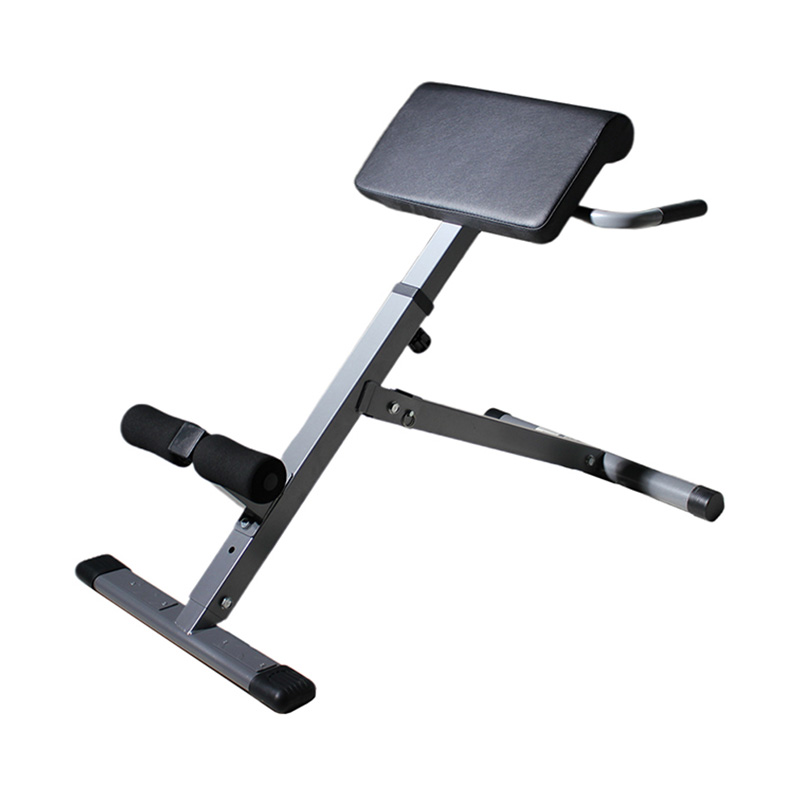
A Roman chair — also called a hyperextension bench or back extension machine — positions the hips on a padded support while the legs are anchored, allowing the upper body to hinge forward and rise back up. This movement pattern recruits several muscle groups simultaneously:
- Erector spinae — the primary muscles running along the spine that extend the back
- Gluteus maximus — activated heavily during the upward extension phase
- Hamstrings — assist hip extension, especially when the hips are hinged past parallel
- Core and obliques — stabilize the pelvis and spine throughout the movement, particularly during rotational or weighted variations
Because it trains the entire posterior chain in one motion, the Roman chair is frequently used alongside squats and deadlifts to build balanced lower-body and spinal strength.
Why Trainers Recommend the Roman Chair
1. It builds a genuine strength deficit most people have
The posterior chain is chronically undertrained relative to the front of the body in most gym routines, which lean heavily on squats, presses, and crunches that emphasize the front of the torso and legs. The Roman chair directly addresses this imbalance by isolating the muscles that extend the hip and spine.
2. It reduces common lower back pain risk factors
Weak lower back extensors are commonly cited as a contributing factor in non-specific lower back pain. Strengthening the erector spinae with controlled hyperextensions can improve the back's ability to tolerate load during lifting, bending, and everyday movement.
3. It scales from bodyweight to heavily loaded
Beginners can use bodyweight alone, while advanced lifters add a weight plate held against the chest or a barbell across the upper back, making the Roman chair suitable across a wide range of strength levels.
How to Perform Roman Chair Hyperextensions Correctly
Follow these steps to get the full benefit of the exercise while protecting the lower back:
- Adjust the pad height so the hip crease sits just above the edge of the pad, allowing full range of motion without pinching
- Secure the ankles under the foot support and cross the arms over the chest or place hands behind the head
- Lower the torso by hinging at the hips, keeping the spine neutral rather than rounding the back
- Descend until the torso is roughly parallel to the floor or slightly beyond, depending on flexibility
- Drive through the glutes and hamstrings to raise the torso back to a straight line with the legs
- Avoid hyperextending past a straight line at the top, since overextension places unnecessary stress on the lumbar spine
A common recommendation is 2 to 3 sets of 10 to 15 repetitions, performed slowly and with control, two to three times per week as part of a balanced strength routine.
Common Mistakes That Reduce Its Effectiveness
| Mistake | Effect on Training | Fix |
|---|---|---|
| Rounding the lower back | Shifts load from muscle to spinal discs | Keep a neutral spine throughout the movement |
| Overextending at the top | Increases lumbar compression, no added benefit | Stop at a straight line with the legs |
| Using momentum or bouncing | Reduces muscle tension, raises injury risk | Slow down both the lowering and raising phase |
| Incorrect pad height | Limits range of motion or pinches the hips | Adjust so the hip crease clears the pad edge |
Roman Chair vs. Other Core and Back Exercises
The Roman chair is often compared with other popular core and posterior chain movements. Here is how it stacks up:
| Exercise | Primary Focus | Spinal Loading |
|---|---|---|
| Roman chair hyperextension | Lower back, glutes, hamstrings | Low to moderate, adjustable |
| Conventional deadlift | Full posterior chain | High, technique-dependent |
| Plank | Anterior core, isometric stability | Minimal |
| Standard crunch | Rectus abdominis | Low, but repetitive flexion can irritate discs |
The Roman chair fills a specific gap: it trains hip and spinal extension under load with far less technical complexity and skill requirement than a deadlift, making it accessible to a broader range of gym users.
Who Should Use Caution With the Roman Chair?
The Roman chair is safe for most healthy adults, but a few groups should take extra care or consult a professional first:
- People with an acute lower back injury or a recent disc issue should get clearance before loading spinal extension
- Beginners with very limited hip mobility should start with a shallow range of motion and build up gradually
- Anyone experiencing sharp pain, rather than muscular fatigue, during the movement should stop immediately
For the majority of users, starting with bodyweight-only repetitions and progressing slowly is the safest approach to building a strong, resilient posterior chain.
What to Look for in a Quality Roman Chair
The benefit of the exercise depends heavily on the stability and adjustability of the equipment. When evaluating a Roman chair for home or commercial use, prioritize:
- Adjustable pad height and angle — to fit different body heights and training goals
- A sturdy steel frame — commercial-grade units typically support well over 300 lbs (136 kg) of combined body and added weight
- Thick, non-slip padding — reduces pressure discomfort on the hips during longer sets
- A wide, stable base — prevents tipping during the extension phase, especially under added load
- Foldable design (for home use) — allows the unit to be stored compactly between sessions
Nantong Dingfeng Fitness Equipment Co., Ltd. manufactures Roman chairs built for both home gyms and commercial facilities, including foldable hyperextension models with adjustable height and angle settings designed for durable, long-term daily use. Product specifications and configuration options are available on the Roman Chair product page.
Conclusion: A Simple, High-Value Addition to Any Routine
The Roman chair earns its place in a well-rounded strength program because it targets a muscle group most routines neglect — the lower back, glutes, and hamstrings that make up the posterior chain. Used with correct form, a controlled range of motion, and progressive loading, it delivers real strength and injury-prevention benefits without requiring complex technique.
Whether the goal is athletic performance, general back health, or simply filling a gap in an existing workout plan, the Roman chair remains one of the most efficient single-piece tools for building a stronger, more resilient posterior chain.