English
 Deutsch
 中文简体
中文简体Content
- Are Box Jumps Effective for Weight Loss? The Direct Answer
- How Jump Box Training Burns Calories
- The Science Behind Plyometric Box Jump Workouts and Fat Loss
- How to Structure a Jump Box Workout for Weight Loss
- Choosing the Right Jump Box for Weight Loss Training
- Safety Considerations When Using a Jump Box
- Combining Jump Box Training with Diet and Other Habits
- Why Gyms and Training Facilities Invest in Custom Jump Boxes
- Common Questions About Box Jumps and Weight Loss
- Putting It All Together
Are Box Jumps Effective for Weight Loss? The Direct Answer
Yes, box jumps are effective for weight loss. A properly structured jump box workout combines explosive lower-body power with sustained cardiovascular demand, which raises heart rate quickly and keeps the body burning energy long after the session ends. Because box jumps recruit large muscle groups such as the glutes, quadriceps, hamstrings, and calves at the same time, they burn more calories per minute than many isolated strength movements performed one muscle group at a time.
That said, box jumps alone will not guarantee fat loss on their own. Weight loss ultimately depends on maintaining a consistent caloric deficit over time. What a jump box does exceptionally well is make that deficit far easier to reach, because it increases total daily energy expenditure, improves metabolic conditioning, and helps preserve lean muscle mass better than steady-state cardio alone. In other words, box jumps are a highly efficient tool inside a broader weight loss strategy, not a standalone miracle solution.
Key takeaway: A 20-minute jump box interval session can burn as many calories as 20 minutes of jogging, while also building explosive strength that steady-state cardio does not provide.
How Jump Box Training Burns Calories
Box jumps belong to a category of exercise known as plyometrics, which relies on rapid stretch-shortening cycles of the muscles and tendons. This type of explosive movement forces the body to recruit fast-twitch muscle fibers, which are more metabolically expensive to activate than the slow-twitch fibers used during walking or light jogging. The result is a higher calorie burn rate per minute of exercise, even though the total workout time may be shorter than a traditional cardio session.
Calorie Burn Compared to Other Cardio
Research on high-intensity interval training and plyometric circuits generally shows that explosive bodyweight movements such as box jumps can burn approximately 8 to 12 calories per minute for an average adult during active work intervals, depending on box height, body weight, and rest periods used. This range is comparable to sprinting and often higher than a moderate-pace jog performed over the same duration.
| Activity | Approx. Calories Burned (20 min) | Muscle Groups Engaged |
|---|---|---|
| Jump Box Intervals | 160-240 | Glutes, quads, hamstrings, calves, core |
| Jogging (moderate pace) | 140-180 | Quads, hamstrings, calves |
| Cycling (moderate resistance) | 150-190 | Quads, glutes, calves |
| Bodyweight Circuit Training | 130-170 | Full body |
| Brisk Walking | 80-110 | Legs, glutes |
This comparison shows that although jump box intervals take less total time, they can match or exceed the calorie output of longer, lower-intensity activities, making them a time-efficient option for people with busy schedules who still want meaningful fat-loss results.
The Science Behind Plyometric Box Jump Workouts and Fat Loss
Beyond the immediate calorie burn during the workout itself, box jumps trigger a physiological response known as excess post-exercise oxygen consumption, commonly referred to as EPOC. After a high-intensity plyometric session, the body continues consuming oxygen at an elevated rate in order to repair muscle tissue, replenish energy stores, and return hormone levels to baseline. This extends calorie burn for several hours after the workout has ended, an effect that is far smaller after low-intensity steady-state cardio.
Because box jumps also stress fast-twitch muscle fibers, consistent training helps build and maintain lean muscle mass over time. Lean muscle tissue burns more calories at rest than fat tissue does, so a jump box routine that preserves or builds muscle while the body is in a caloric deficit supports a healthier long-term metabolic rate compared to dieting without any resistance-based training.
Why Explosive Movement Matters
Explosive movements like box jumps also improve neuromuscular efficiency, meaning the nervous system becomes better at recruiting large numbers of muscle fibers quickly. This improved efficiency carries over into other workouts and everyday activities such as climbing stairs or lifting objects, indirectly supporting a more active lifestyle overall, which remains one of the strongest long-term predictors of successful weight management according to general exercise physiology research.
Hormonal Response to High-Intensity Jumping
Short, intense bursts of activity like box jumps also stimulate the release of growth hormone and catecholamines such as adrenaline, which help mobilize stored fat for use as energy. While a single workout will not dramatically change body composition, repeated exposure to this hormonal environment over weeks and months contributes meaningfully to a fat-loss-friendly internal state.
How to Structure a Jump Box Workout for Weight Loss
To get the fat-burning benefits of a jump box without overtraining the joints, most coaches recommend interval-based structures rather than continuous, unbroken jumping. A simple and effective approach follows this general pattern:
- Warm up for 5 minutes with light cardio and dynamic stretching for the ankles, hips, and calves.
- Perform box jump intervals of 20 to 30 seconds of work followed by 30 to 60 seconds of rest.
- Repeat for 8 to 12 rounds, adjusting box height as fatigue increases to maintain safe landing mechanics.
- Combine with 1 to 2 strength exercises such as squats or lunges to extend the metabolic demand of the session.
- Cool down with light walking and static stretching for 5 minutes to support recovery.
Training this way 2 to 3 times per week is generally enough to see noticeable conditioning and fat-loss benefits without excessive joint strain, especially when paired with adequate recovery days and other forms of movement throughout the week.
| Week | Sessions per Week | Rounds per Session | Box Height Focus |
|---|---|---|---|
| 1-2 | 2 | 6-8 | Low, form-focused |
| 3-4 | 2-3 | 8-10 | Low to medium |
| 5-6 | 3 | 10-12 | Medium, controlled progression |
Choosing the Right Jump Box for Weight Loss Training
The effectiveness and safety of a jump box workout depend heavily on the equipment itself. A stable, appropriately sized jump box reduces injury risk and allows users to focus on explosive output rather than worrying about balance or slipping during repeated landings.
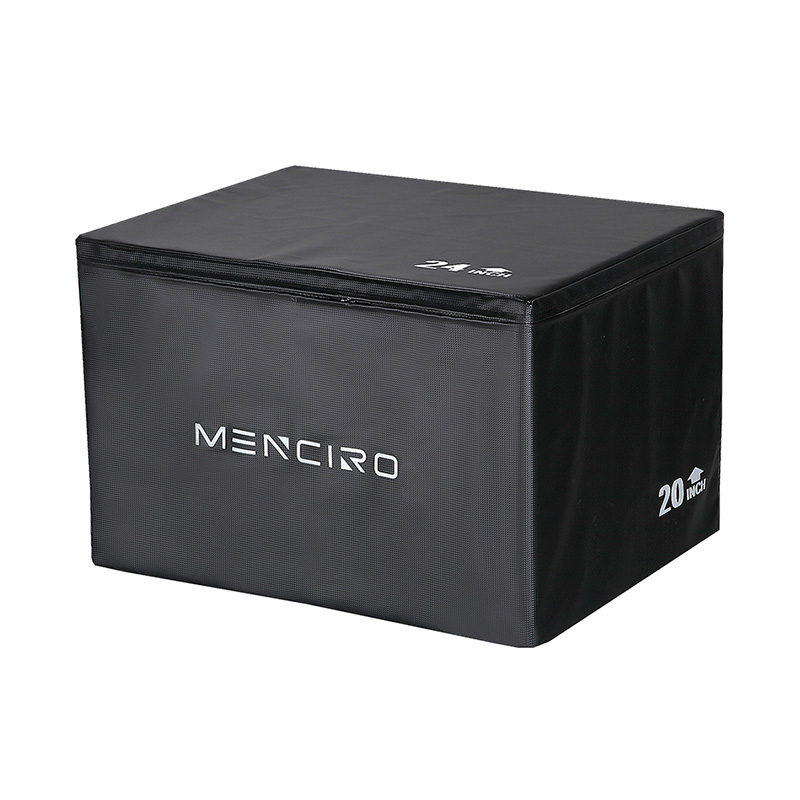
- Multiple height options: A 3-in-1 or adjustable jump box allows beginners to start low and progress safely as conditioning improves over time.
- Non-slip surface: A textured top surface helps prevent slipping during repeated landings, which becomes especially important as fatigue builds late in a session.
- Sturdy construction: Reinforced frames or heavy-duty foam-wrapped construction maintain stability under repeated high-impact loading.
- Suitable dimensions: A wide enough landing platform gives users the confidence to jump explosively rather than jumping short out of fear of missing the box.
- Commercial-grade durability: For gym or studio settings, a box that can withstand daily high-repetition use across many members is essential for long-term reliability.
Facilities looking to equip a group training area or personal training studio can review a range of custom jump box options built specifically for commercial gym use on this jump box product page, where different heights, materials, and finishes are available to match a variety of training environments and member needs.
Safety Considerations When Using a Jump Box
Box jumps are a high-impact movement, and safety should never be sacrificed for intensity. The following practices help minimize injury risk while still capturing the fat-loss benefits of jump box training.
- Start with a lower box height and only progress once landing mechanics are consistently controlled and comfortable.
- Land softly with bent knees to absorb impact through the hips and knees rather than the lower back.
- Step down from the box rather than jumping backward off it, which reduces unnecessary joint stress on landing.
- Avoid training to failure; stop a set if landing form starts to break down from fatigue.
- Wear supportive athletic footwear with adequate grip to reduce the risk of slipping on takeoff or landing.
- Individuals with existing knee, ankle, or lower back issues should consult a medical professional before starting box jump training.
Safety note: Most box jump injuries occur from misjudging box height or landing with locked knees, not from the jumping motion itself. Controlled progression is the single most important safety factor.
Combining Jump Box Training with Diet and Other Habits
Even the most effective jump box program will not overcome a calorie surplus created through diet. For sustainable weight loss, jump box training works best as one part of a broader routine that also includes a moderate caloric deficit, adequate protein intake to support muscle repair, consistent sleep, and general daily movement outside of structured workouts.
Many people find that pairing 2 to 3 jump box sessions per week with 1 to 2 strength training sessions and daily walking creates a well-rounded routine that supports fat loss while also improving strength, coordination, and cardiovascular health simultaneously, rather than relying on cardio or jumping alone.
Why Gyms and Training Facilities Invest in Custom Jump Boxes
As group fitness and functional training programs continue to grow in popularity, more commercial gyms are adding jump box stations to their equipment lineups. A durable, correctly sized jump box supports a wide range of members, from beginners building foundational leg strength to advanced athletes training for explosive power and speed.
NT Sporting manufactures commercial-grade fitness equipment, including custom jump boxes designed for high-repetition, high-impact use in gyms and training facilities. Their jump box products are built with reinforced frames and non-slip surfaces to withstand daily commercial use while supporting the safety needs of members using them for weight loss and conditioning programs across different fitness levels.
Common Questions About Box Jumps and Weight Loss
How often should I do box jumps to lose weight?
Most people see good results training with a jump box 2 to 3 times per week, allowing at least one rest day between sessions for the joints and connective tissue to recover from the repeated impact.
What box height should beginners use?
Beginners should generally start with a low box height, often in the range of 12 to 16 inches, focusing on clean landing mechanics before progressing to a taller box as strength and confidence improve.
Can box jumps replace running for weight loss?
Box jumps can be an effective alternative or complement to running, since both activities elevate heart rate significantly. However, combining both movement types often produces better overall conditioning than relying on either one exclusively.
Putting It All Together
Box jumps are genuinely effective for weight loss because they combine strength, power, and cardiovascular conditioning into a single explosive movement. When performed consistently within a structured program and supported by a moderate caloric deficit, jump box training can accelerate fat loss, help preserve lean muscle, and improve overall athletic performance at the same time.
The key to long-term success is choosing a stable, appropriately sized jump box, progressing height gradually, and pairing interval-based sessions with proper recovery and nutrition. Done correctly, a jump box becomes one of the most time-efficient tools available for anyone serious about losing weight while building real functional strength.