English
 Deutsch
 中文简体
中文简体Content
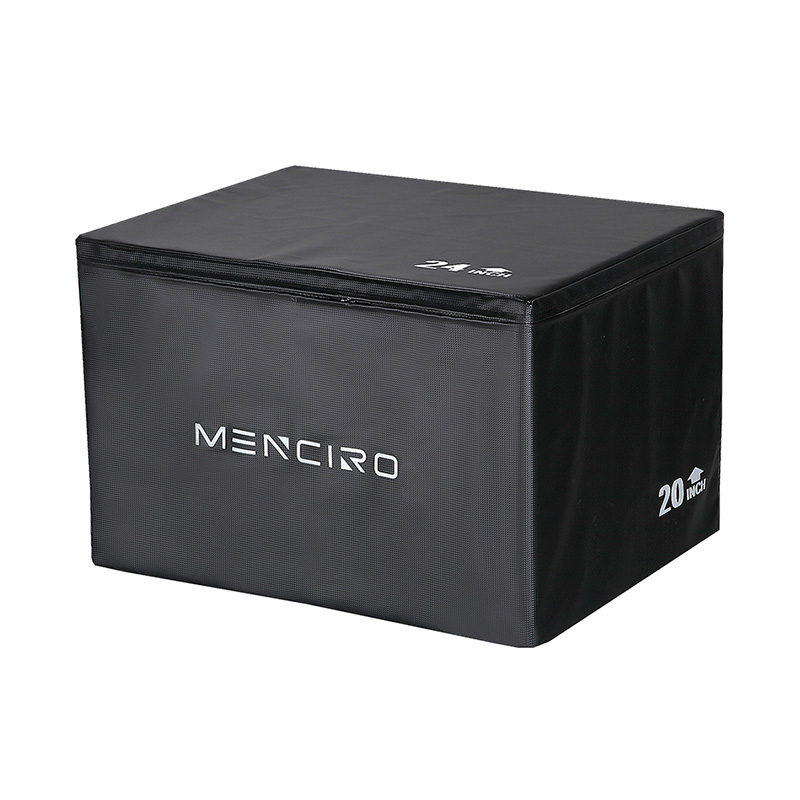
Your gym has a plyometric box in the corner, but today it feels too high, too crowded, or simply unavailable. Maybe you are training in a low-ceiling apartment, your knees are asking for a gentler landing, or you are just starting out and want to learn a safe progression before stepping up. You still want the leg power, the fast-twitch activation, and the athletic carryover that box jumps provide.
A well-chosen box jump substitute delivers most of that value while reducing risk. The secret is matching the alternative to your current ability. The right replacement is not the hardest one but the one that preserves the movement pattern and intensity your body can handle today.
Why You Might Need a Box Jump Substitute
Box jumps are a staple of athletic training for good reason. They build reactive strength, improve vertical jump, and coordinate the muscles used in sprinting and cutting. But they also come with real constraints:
- Missed landings are the biggest practical risk. A slip can cause shin scrapes, ankle sprains, or a bruised ego.
- Low ceilings make plyo boxes a liability. If your ceiling is under 2.4 meters, an ambitious box jump becomes dangerous.
- Plyo boxes take up space. In a home gym, they are often the first piece of equipment to be cut.
- Joint health matters. High-impact landings are not appropriate during return-to-training or early rehab phases.
A substitute is not a downgrade. It is a smart way to keep the training stimulus while controlling the risk.
What Makes a Good Box Jump Substitute
Before choosing an exercise, you need to know what produces results. The best box jump substitutes share four characteristics:
- They replicate triple extension: hips, knees, and ankles extend powerfully in sequence.
- They train reactive strength: the muscle-tendon system learns to store and release elastic energy.
- They can be scaled: you can move from easy technique work to loaded power without changing tools.
- They fit your environment: modest space, no complicated setup, and a short learning curve.
Here is a direct comparison of the most popular options:
| Exercise | Movement Pattern | Impact Level | Primary Muscles | Equipment |
|---|---|---|---|---|
| Box Jump | Vertical | High | Quads, Glutes, Calves | Plyo box |
| Squat Jump | Vertical | Medium | Quads, Glutes | None |
| Step-Up | Vertical | Low | Quads, Glutes | Step platform |
| Broad Jump | Horizontal | Medium | Glutes, Hamstrings | None |
| Lateral Skater Jump | Lateral | Medium | Glutes, Adductors | None |
| Kettlebell Swing | Hinge | Low | Glutes, Hamstrings, Core | Kettlebell |
| Tuck Jump | Vertical | High | Quads, Hip Flexors | None |
This table shows the key differences. If you choose the exercise that matches your goal and environment, you will get very close to the training effect of a box jump.
Low-Impact Substitutes When You Want to Protect Your Joints
Step-ups are the most underrated substitute. You still move your body through the full squat-to-extension pattern, and you still have to stabilize on a single leg. The difference is that the landing is controlled, not forced. This makes step-ups one of the best entry-level box jump substitutes.
To get the most from them, choose a platform height that lets your chest stay tall and your working knee track over your toes. Start with a 15–20 cm platform and keep your hips level throughout the movement. A stepper board with multiple height settings is ideal because you can adjust the difficulty without adding impact. As you progress, you can add external load with dumbbells or a weighted vest.
Squat jumps are the closest bodyweight replacement. The take-off mimics a box jump, and the landing is entirely in your control. The key is to land softly: touch down quietly, flex your knees, and pause for a beat. This turns a high-force plyo into a strength-power hybrid that is far more forgiving.
Use a tempo of 2 seconds up, 1 second pause, and 3 seconds down when you are learning the movement. This develops control at the bottom position and protects the knees during the early weeks.
Explosive Substitutes That Build Real Power
If you want to keep the high-intensity feel, kettlebell swings are one of the best box jump substitutes. The swing trains explosive hip extension, which is the very muscle action that powers a box jump. It also strengthens your posterior chain and core without vertical impact on your knees.
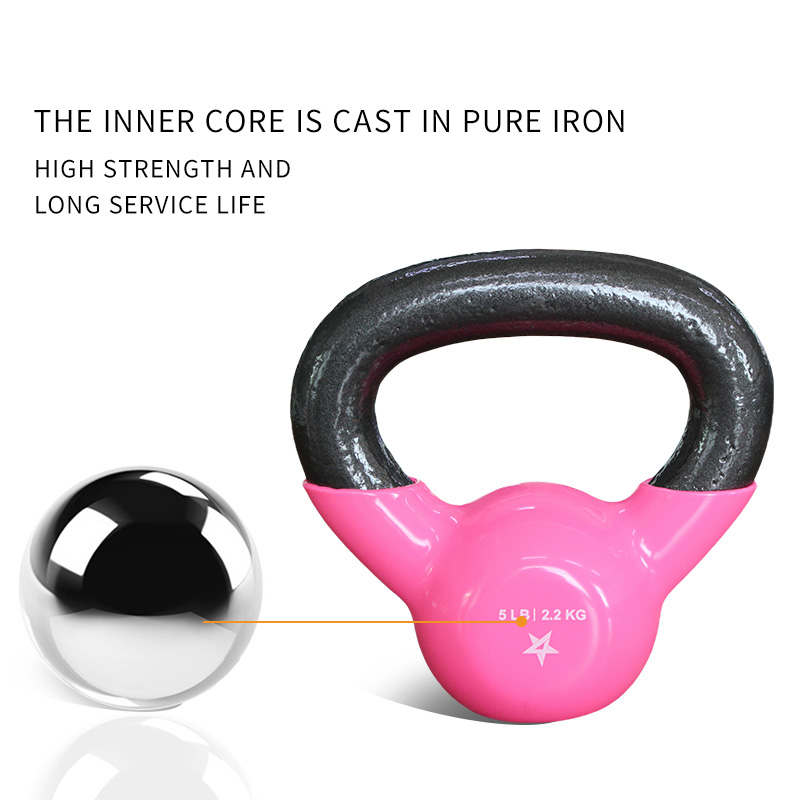 Vinyl Cast Iron Kettlebell1. Full-body training effect: The classic swing movement effectively targets upper body muscles (such as the rhomboids, trapezius, deltoids and forearms), posterior ch...View Product →
Choose a bell weight that lets you reach hip height without rounding your lower back. Swing from the hips, not the knees, to protect your lumbar spine. A 16 kg kettlebell is a common starting point for men; 8–12 kg works well for women. If you want to see whether kettlebell swings really deliver on the booty-building and core benefits they are famous for, this article answers that question with practical analysis.
Read the complete kettlebell swings guide here.
Broad jumps are another powerful option. You replace upward force with horizontal force, shifting the load from quads to glutes and hamstrings. This is a good step after you have mastered bodyweight squat jumps. For advanced trainees, depth jumps are the strongest substitute. You step off a low platform, touch the ground briefly, then jump vertically. They teach you to absorb force and immediately redirect it, which is the definition of reactive strength. They are also demanding and should be introduced carefully.
How to Build a Smart Progressive Program
Substituting an exercise is only useful if you program it with intention. Here is a four-week plan that works in a home gym or commercial setting:
| Week | Focus | Session Example |
|---|---|---|
| 1–2 | Movement Quality | 3 sets x 8 step-ups per leg; 3 sets x 5 squat jumps with soft landings |
| 3–4 | Power | 4 sets x 6 broad jumps; 3 sets x 10 kettlebell swings with a medium bell |
| 5–6 | Speed | 5 sets x 6 tuck jumps; 4 sets x 8 lateral skater jumps |
The rule is simple: master the landing first, then add power, then add speed. If any exercise causes pain, go back one level. This is the same framework performance coaches use when a box is not available.
Equipment Choices and Final Thoughts
Your substitute should match your space and goals. A step platform is the most versatile single purchase. It gives you step-ups, lower-height box-style jumps, balance work, and core drills. Look for a non-slip surface, reinforced corners, and a weight rating of at least 250 kg. It is easy to store behind a door or under a bed.
A kettlebell adds a hinge-pattern movement that pairs perfectly with lower-body plyometrics. An enamel-coated cast iron bell is more durable than vinyl-covered ones for high-rep training. Together, a step platform and a kettlebell replace most of the box jump stimulus within one square meter of floor space.
If you already have a weight bench, you can add hip thrusts and dumbbell step-ups to further simulate the lower-body drive. If you are planning to set up a home training station, our guide explains how to choose a bench that supports this kind of training.
Explore the weight bench knowledge hub here.
Remember: the best box jump substitute is the one you can do consistently and safely with the equipment you have. Start with step-ups for controlled strength, progress to squat jumps for power, and use kettlebell swings or broad jumps for advanced work. Your knees, your ceiling, and your training schedule will thank you.