English
 Deutsch
 中文简体
中文简体Content
A bodyweight crunch stops challenging most people somewhere around rep 20. Past that point you are training endurance, not strength, and your abs have little reason to adapt. That is the exact problem weighted ab training solves: added load turns your midsection into a muscle you can progress, the same way you add plates to a squat or a press. This guide covers the most effective abs exercises with weights, realistic starting loads for each movement, and a 20-minute circuit you can run twice a week.
One expectation to set before the first set: loaded core work builds abdominal strength and muscle thickness, while visible definition still depends largely on body fat, which diet and total training volume control far more than any single ab exercise.
Why Add Weight to Ab Exercises
The short answer: abdominal muscle responds to progressive overload like every other skeletal muscle, and external load is the most efficient way to create it.
- Strength-range stimulus: sets of 8 to 12 reps with added resistance push the rectus abdominis to thicken, while sets of 25 or more bodyweight reps mostly train endurance.
- Carryover to big lifts: bracing under load in crunches, carries and swings builds the trunk stability that squats, deadlifts and overhead presses demand.
- Time efficiency: three sets of 10 weighted crunches replace five sets of 30 bodyweight reps.
- Complete development: pairing loaded flexion with anti-rotation and anti-extension work hits the rectus abdominis, obliques and deep transverse abdominis together.
A realistic note on results: as your core gets stronger, the scale may tick up before your waistline changes, because new muscle tissue and normal training water retention both register on the scale. Our explainer on why strength training can cause temporary weight gain walks through that pattern.
How to Choose the Right Weight
Pick a load you can control for 8 to 12 reps with two clean reps still in the tank. When 12 smooth reps feel repeatable across two sessions, add 1 to 2 kg. For rotation-heavy moves such as Russian twists and woodchops, start with roughly half of your crunch load, because the lumbar spine tolerates rotational stress differently than flexion.
| Equipment | Best weighted ab exercises | Typical starting load | Why it works |
|---|---|---|---|
| Hex or coated dumbbell | Crunches, sit-ups, dead bugs, pullovers | 4-10 kg | Flat faces stop rolling; easy to hold at the chest or overhead |
| Kettlebell | Swings, suitcase carries, goblet holds | 8-16 kg | Offset handle loads the trunk asymmetrically and trains hard bracing |
| Weight plate | Russian twists, weighted extensions | 5 kg | Slim profile sits flat on the chest or between the feet |
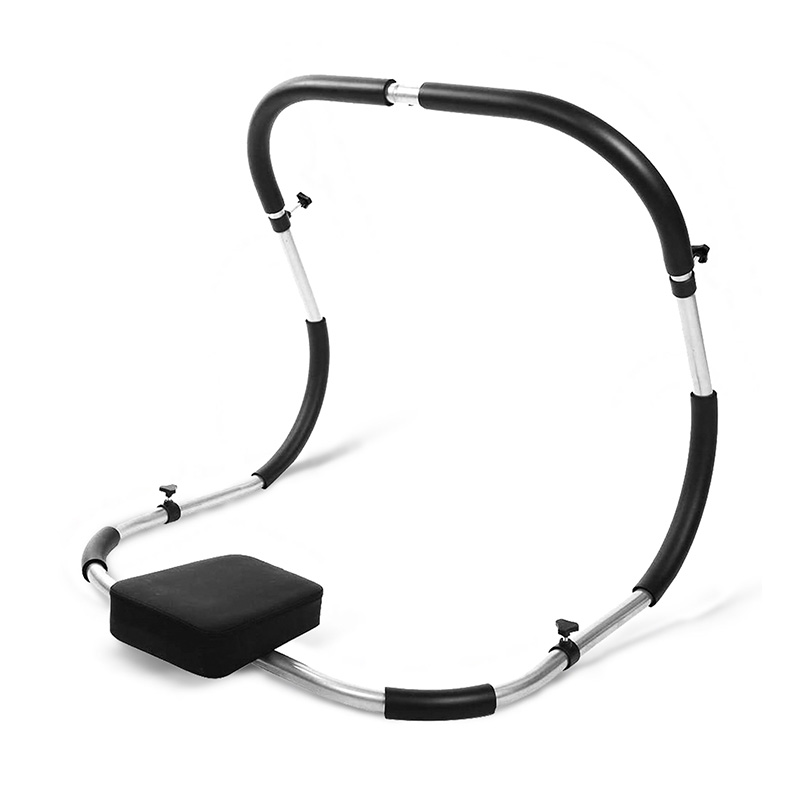
| Ab roller | Anti-extension finishers | Bodyweight | Extends the same bracing demand without spinal flexion under load |
For most home and commercial settings, a hexagonal dumbbell is the single most versatile tool on this list, since flat faces keep it from rolling away and it sits naturally against the chest or in both hands.
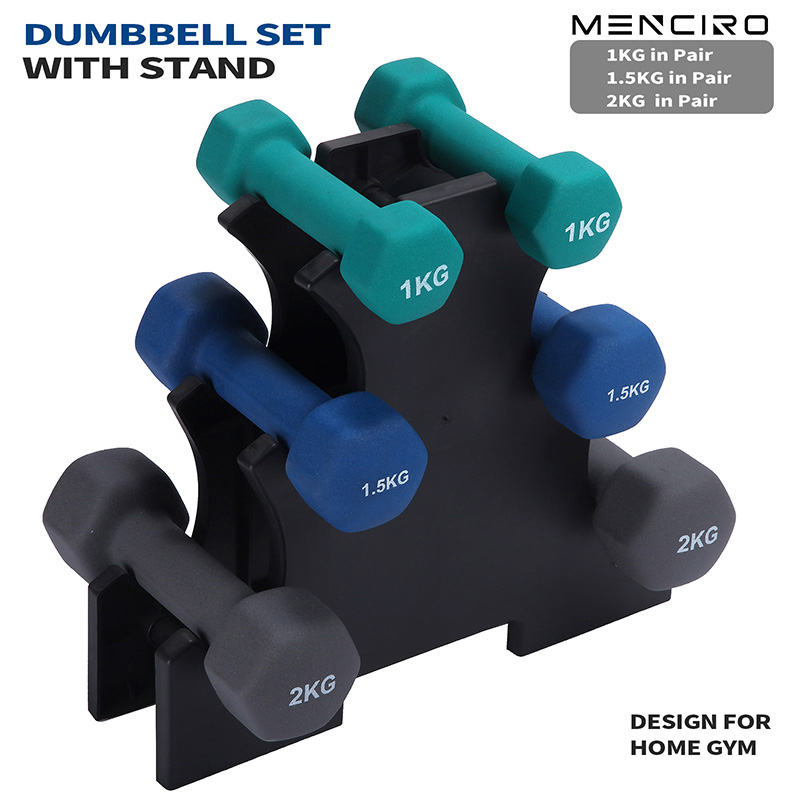 Vinyl Neoprene Rubber Coated Hex DumbbellProduct Overview The Vinyl Neoprene Rubber Coated Hex Dumbbell represents a groundbreaking innovation in fitness equipment, combining three superior coating technologi...View Product →
Upper Abs: Three Weighted Flexion Exercises
Weighted Crunch
Lie on your back with knees bent and feet flat. Hold a dumbbell with both hands at your chest, or at arm's length toward the ceiling to lengthen the lever. Curl up until the shoulder blades clear the floor, pause for one second, then lower over three seconds. Perform 3 sets of 10 to 12 reps. The overhead version increases difficulty without adding weight, which makes even small dumbbells surprisingly effective.
Dumbbell Sit-Up to Press
From the same start position, sit all the way up while pressing the dumbbell overhead, then reverse the movement under control. The press at the top forces your trunk to stabilize while the arms work, which closely mimics how the core behaves during compound lifting. Complete 3 sets of 8 to 10 reps.
Straight-Arm Pullover Crunch
Lying on a flat bench, hold one light dumbbell in both hands above your chest. Lower the weight in an arc behind your head while keeping the ribs down, then crunch the ribs toward the hips as you return the weight. The bench allows a longer range of motion than the floor, so start with only 2 to 5 kg and keep the lower back in contact with the pad.
Lower Abs and Anti-Extension Work
Weighted Reverse Crunch
Squeeze a light dumbbell of 2 to 5 kg between your feet, lie on your back with hands beside your hips, and curl the pelvis toward the ribs. Lower slowly over three seconds; the lowering phase is where the lower fibers of the rectus abdominis actually work. Aim for 3 sets of 10 reps.
Dumbbell Dead Bug
Hold a light dumbbell straight above your chest. Extend the opposite arm and leg toward the floor while keeping the lower back pressed down, return, and switch sides. Perform 3 sets of 8 reps per side. If the lower back arches, shorten the range before adding any weight.
Weighted Leg Raise
Grip a bench or a stable anchor for support, hold a small dumbbell between the feet, and raise straight legs to vertical. Lower over three to four seconds without swinging. Start with 2 kg or less, because momentum at the bottom steals the work from the abs.
Obliques and Rotational Strength
Kettlebell Swing
The swing is a hip hinge, not a squat: drive the hips forward and let the bell float to chest height. Every rep ends with a hard brace, which is why swings build powerful, fatigue-resistant abs alongside the glutes and hamstrings. Start with 3 sets of 15 reps using an 8 to 12 kg bell, and keep the arms relaxed so the hips do the work.
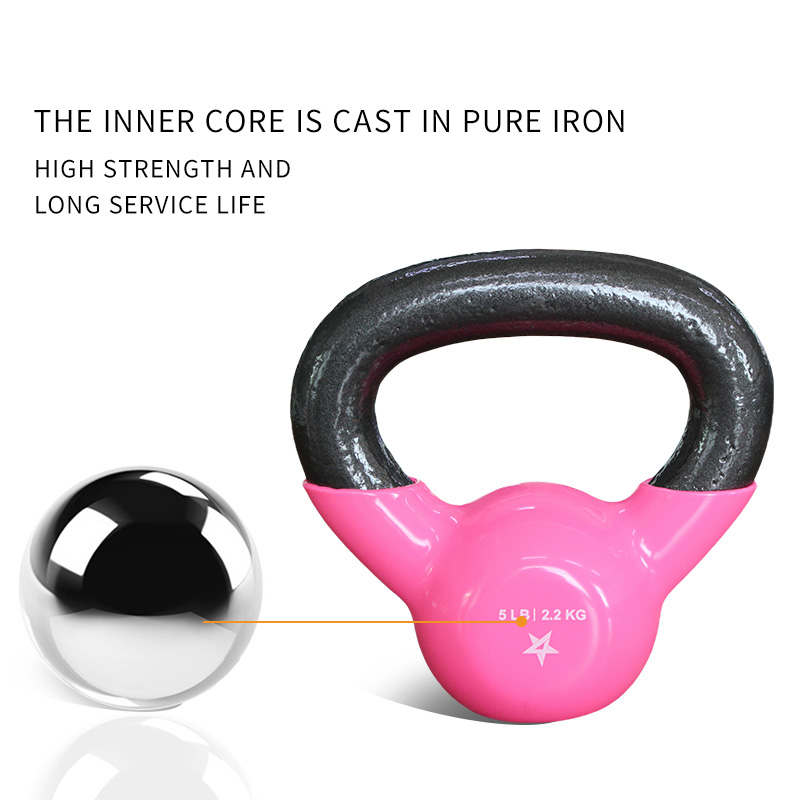 Vinyl Cast Iron Kettlebell1. Full-body training effect: The classic swing movement effectively targets upper body muscles (such as the rhomboids, trapezius, deltoids and forearms), posterior ch...View Product →
Suitcase Carry
Hold one heavy dumbbell or kettlebell at your side, stand tall, and walk 30 to 40 meters without leaning. The loaded side forces the opposite obliques to work overtime. Three carries per side is enough; choose a weight that makes the last ten meters honest.
Russian Twist and Woodchop
For twists, sit with knees bent and rotate a plate or light dumbbell from hip to hip while keeping the chest up. For woodchops, a cable or band moved low to high trains the same diagonal chain standing up. Either way, 3 sets of 10 to 12 reps per side with rotation coming from the mid-back, not the lumbar spine.
A 20-Minute Weighted Core Circuit
Run this circuit twice a week at the end of a strength session. Choose loads that leave two reps in reserve on the first round, rest 60 seconds between rounds, and complete four rounds total.
- Weighted crunch - 12 reps
- Dumbbell dead bug - 8 reps per side
- Kettlebell swing - 15 reps
- Suitcase carry - 30 meters per side
- Weighted reverse crunch - 10 reps
If rounds start taking longer than five minutes, drop one kilogram from each movement before cutting reps; the goal is quality of brace, not speed.
Programming Rules and Common Mistakes
- Frequency: train the weighted core two to three times per week with at least 48 hours between sessions; abdominal muscle recovers like any other muscle.
- Progression: add reps before weight, then add 1 to 2 kg once you own 12 clean reps.
- Breathing: exhale on the effort and never hold your breath during carries or swings.
- Neck position: support the head with cupped hands without pulling, and keep roughly a fist's width between chin and chest.
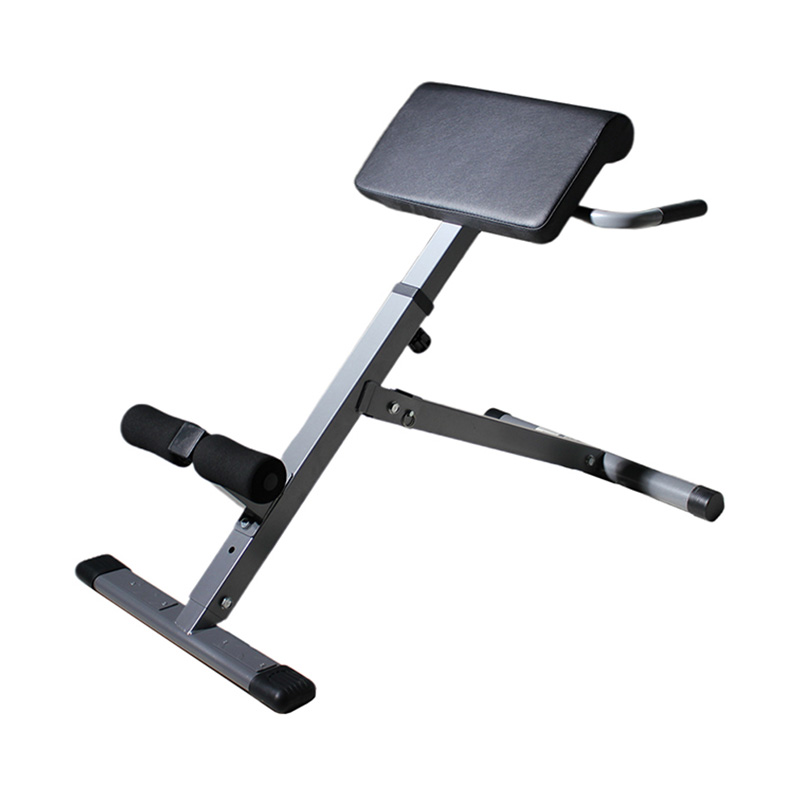
- Balance: if every session is crunches, add extension work. Hyperextensions on a Roman chair, with a light plate hugged to the chest, strengthen the posterior half of the core that flexion exercises never touch.
 Foldable Hyperextension Roman Chair1. Foldable design: The Roman chair adopts a foldable design, which can be easily folded when not in use, saving storage space, and is especially suitable for home fit...View Product →
Start with four or five of the exercises above, hold every set in the 8 to 12 rep range, and add a small plate or a kilogram whenever the final set feels smooth. Dumbbells cover most of this list, one kettlebell adds swings and carries, and a bench or Roman chair extends your range-of-motion options. If you are equipping a home gym or outfitting a commercial floor, browse the full strength training equipment range to match weights, benches and core tools in one order.