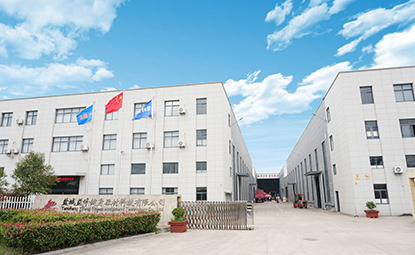
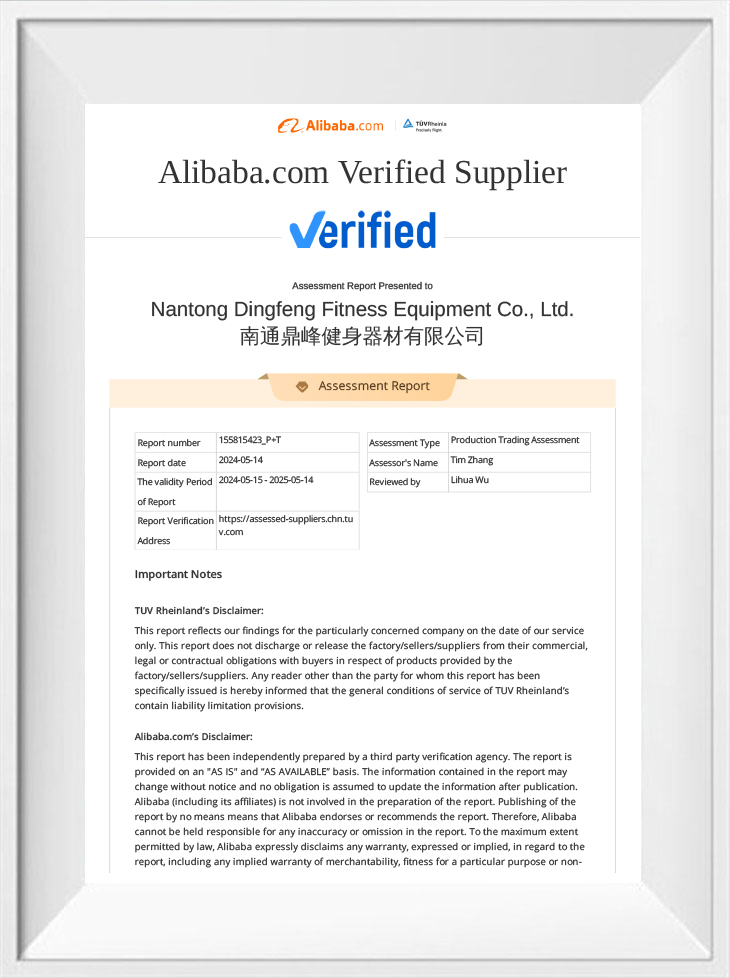
In the grand landscape of strength training and modern bodybuilding, the barbell is not only a fundamental loading tool but also the geometric center of humanity's challenge against gravity and the reshaping of physical limits. As a crucial link in the global fitness equipment industry chain, Nantong Dingfeng Fitness Equipment Co., Ltd., with its exquisite manufacturing process and profound understanding of material mechanics, has propelled "Made in China" barbells to dozens of competitive sports powerhouses, including the United States, Germany, and Japan.
Barbells: The Art of Strength Engineering
I. Steel Physical Properties and Tensile Strength
The soul of a barbell lies in the steel used for its shaft. High-specification barbells typically use heat-treated alloy steel, which determines their performance under extreme loads.
Yield Strength and Resilience: Professional barbells need to produce a slight arc (i.e., whip) under heavy load and instantly return to straightness after the load is removed, which places extremely high demands on the steel's elastic modulus.
Surface Treatment Process: To strike a balance between rust prevention and grip feel, Nantong Dingfeng widely uses hard chrome plating, decorative chrome, and the most advanced black zinc treatment in its export products, ensuring that the equipment maintains excellent anti-oxidation performance in different climatic environments (such as humid Southern Europe or dry North America).
II. The Geometric Aesthetics of Knurling
Knurling is not just a pattern on the shaft; it is the only physical connection point between the athlete and the equipment.
Pattern Distribution: According to the different needs of powerlifting and weightlifting, the depth, angle, and presence or absence of knurling in the center all have strict industry standards.
Tactile Feedback: High-quality knurling should be "sticky" to the hand without "cutting" the hand. Nantong Dingfeng uses high-precision CNC machine tools to ensure the consistency of each diamond-shaped protrusion, thus providing stable friction during extreme lifts.
III. The Precision Logic of Sleeves and Rotation Systems
The sleeves at both ends of the barbell are where the weight plates are installed, and the quality of their internal rotating structure directly affects the protection of the trainer's wrists. Bearings vs. Bushings: Weightlifting barbells tend to use high-speed needle bearings to handle high-frequency snatch and clean movements; while powerlifting barbells prefer durable bronze bushings, prioritizing rotational damping and stability.
Structural Fastening: The sleeves are typically secured using circlips or bolts. Nantong Dingfeng emphasizes strict tolerance control during manufacturing to prevent rattling or axial movement of the weight plates during rotation.
Core Parameter Specifications Quick Reference Table
The table below summarizes the general specifications logic for export-grade barbells under different training systems, which also serves as the benchmark for Nantong Dingfeng's manufacturing process against mainstream international markets:
| Feature Dimension |
Olympic Weightlifting Bar |
Powerlifting Bar |
Multi-Purpose Training Bar |
| Shaft Diameter |
Slimmer profile; optimized for grip and elastic deformation. |
Thicker profile; engineered for ultimate rigidity and minimal flexion. |
Intermediate diameter; balanced for various movements. |
| Rotation Mechanism |
Needle Bearings (High Spin performance). |
Bronze Bushings (Self-lubricating & consistent friction). |
Composite System (Hybrid bearing/bushing). |
| Whip Characteristics |
Significant whip; aids in dynamic "clean and jerk" transitions. |
Minimal whip; ensures maximum stability during heavy squats. |
Moderate balance; versatile for high-rep training. |
| Typical Coating |
Bright Chrome / Manganese Phosphate. |
Black Zinc / Raw Steel. |
Cerakote / Hard Chrome. |
| Primary Markets |
Professional teams in Europe and East Asia. |
Strength facilities in North America and Australia. |
Global commercial gyms and CrossFit boxes. |
Dingfeng Manufacturing: A Quality Chain Connecting the Globe
Nantong Dingfeng Fitness Equipment Co., Ltd. has been deeply rooted in the international market for many years. Its products traverse latitudes and longitudes, reaching high-end studios in Italy and home gyms in Canada. Its core competitiveness lies in its in-depth understanding of **"international standardization" and "regional demand customization."**
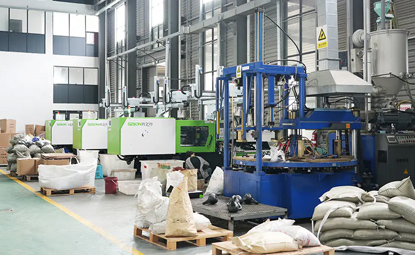
In the production process, from the inspection of raw materials upon arrival to the straightening process before the finished product leaves the factory, every step reflects a respect for physical constants. This obsession with detail makes Nantong Dingfeng's barbells not just a commodity in the international market, but a symbol representing the precision of Chinese manufacturing.
Frequently Asked Questions (FAQ)
Q: Why do barbells for different uses have different bar diameters?
A: This involves grip mechanics and material stiffness. A smaller diameter (such as 25mm or 28mm) facilitates grip and utilizes the elasticity of the bar; while a larger diameter (such as 29mm) reduces vibration during heavy squats, improving the certainty of the movement trajectory.
Q: Besides aesthetics, what are the practical functions of the barbell's surface coating?
A: The core function is corrosion resistance. The salt in sweat is highly corrosive to steel. In addition, different coatings (such as ceramic coating or zinc) directly change the sharpness of the knurling. Nantong Dingfeng will recommend the most suitable coating solution to customers based on the humidity environment of the export destination.
Q: How to judge the quality of a sleeve rotation system?
A: The quality is not determined by the length of rotation time, but by the smoothness of the rotation and its performance under load. A high-quality bearing system can still provide smooth, non-stuttering rotation even when fully loaded, effectively relieving the shearing force of weight inertia on the wrist joint.
Q: How do Nantong Dingfeng's products adapt to the standards of different countries?
A: Although different countries have different aesthetic preferences, physical specifications (such as a 50mm sleeve diameter) have become a global consensus. We strictly adhere to the requirements of international sports organizations for the geometric dimensions of equipment in our process development, ensuring that the products accurately fit whether converted to imperial or metric units.


 English
 Deutsch
 中文简体
中文简体 M0001 Silver Barbell Bar C0002