English
 Deutsch
 中文简体
中文简体Content
- Why Belly Fat Is the Last to Go — and How Fitness Equipment Helps
- The Rowing Machine: Top-Ranked Fitness Equipment for Belly Fat
- Treadmill: The Most Accessible Fitness Equipment for Consistent Cardio
- Stationary Bike: Low-Impact Fitness Equipment That Torches Calories
- Elliptical Machine: The Underrated Full-Body Fitness Equipment Option
- Strength Training Equipment and Its Role in Belly Fat Loss
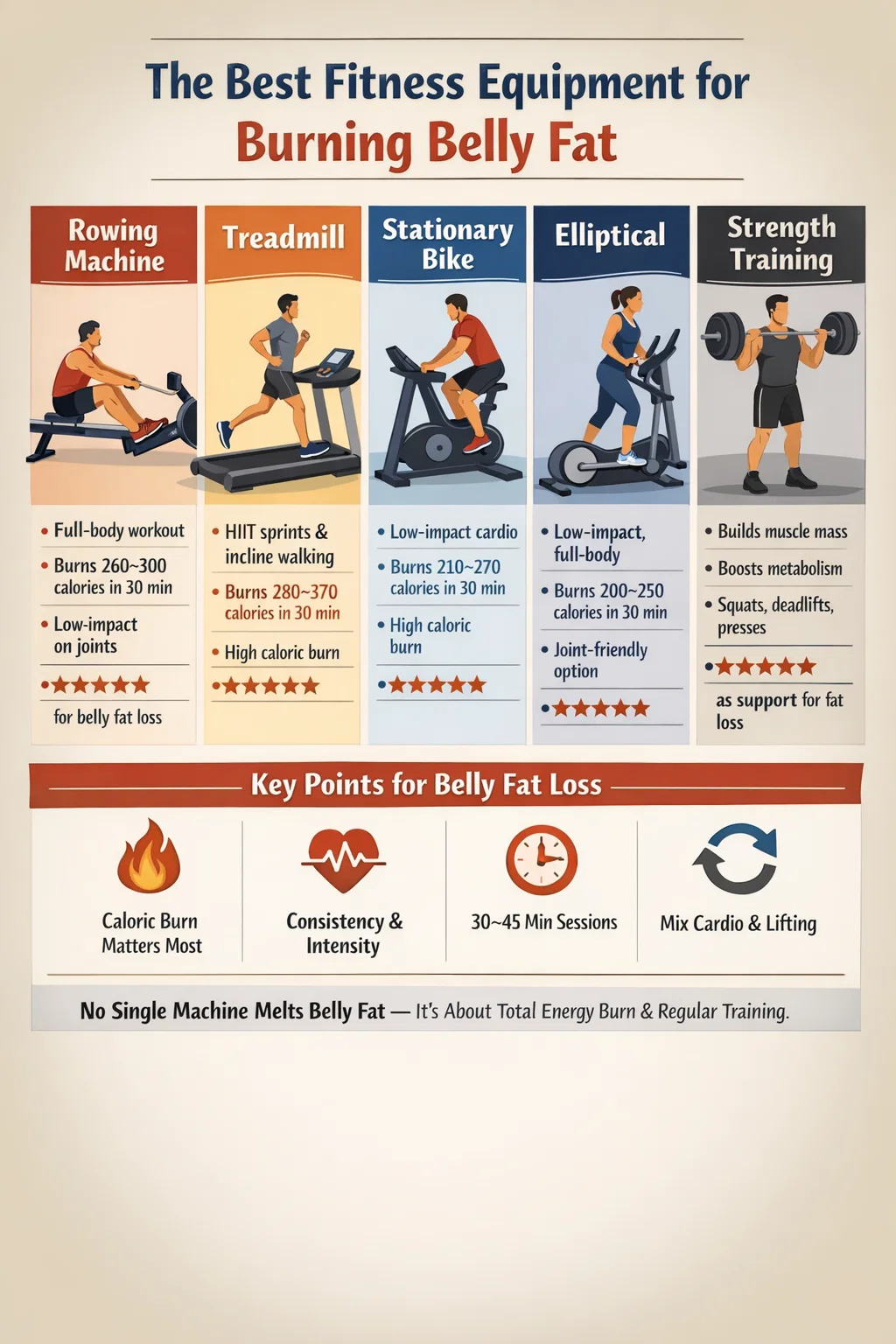
- Comparing the Top Fitness Equipment Options Side by Side
- The Stair Climber: Overlooked Fitness Equipment with High Glute and Core Demand
- How to Structure Your Fitness Equipment Use for Maximum Belly Fat Results
- Home Fitness Equipment Options When Gym Access Isn't Available
- Common Mistakes People Make with Fitness Equipment When Targeting Belly Fat
- Final Verdict: Choosing the Right Fitness Equipment for Your Situation
If you want a straight answer: the rowing machine, stationary bike, and treadmill consistently outperform other fitness equipment for burning belly fat — but only when combined with enough intensity and frequency. No single machine melts fat in isolation. What matters is how much total energy you burn, how well the equipment supports sustained cardio, and whether you can use it consistently over weeks and months. Below, this article breaks down the top options, the science behind why they work, and how to actually use them to see results in your midsection.
Why Belly Fat Is the Last to Go — and How Fitness Equipment Helps
Visceral fat — the deep abdominal fat that wraps around your organs — is metabolically active and responds well to aerobic exercise, but it doesn't disappear from targeted ab work alone. Research published in the Journal of Obesity found that aerobic exercise significantly reduced visceral fat even without dietary changes, while resistance training alone had minimal impact on abdominal fat specifically.
The mechanism is straightforward: when you sustain elevated heart rate for extended periods, your body draws on stored fat for fuel. The more muscle groups involved, the more calories burned. This is why full-body fitness equipment — machines that engage your legs, core, and arms simultaneously — gives you a higher caloric burn per session than isolated exercises.
A 155-pound person burns roughly 520 calories per hour on a rowing machine at moderate effort, compared to 260 calories doing crunches for the same duration. That gap explains everything. If your goal is belly fat reduction, your equipment choice should prioritize caloric output and full-body engagement, not ab isolation.
The Rowing Machine: Top-Ranked Fitness Equipment for Belly Fat
Among all fitness equipment options, the rowing machine has one of the strongest cases for belly fat reduction. Each stroke engages approximately 86% of your muscle mass — legs, glutes, back, core, shoulders, and arms all fire in sequence. This full-body recruitment dramatically elevates caloric burn and keeps your heart rate high throughout the session.
Calorie and Fat-Burning Potential
A vigorous 30-minute rowing session can burn between 300 and 400 calories depending on your body weight and intensity. Over the course of a week with five sessions, that's 1,500–2,000 calories — enough to create a meaningful deficit when paired with reasonable eating habits.
The rowing motion also forces you to brace your core on every pull, meaning your abdominal muscles are under constant mild tension even while you're doing cardio. This doesn't replace direct core training, but it does mean your midsection is doing real work throughout every session.
Who Benefits Most from Rowing Machines
- People with knee or hip issues who need low-impact cardio that still burns significant calories
- Anyone who finds treadmill running monotonous and needs a full-body rhythm-based movement
- Those who want to build back and shoulder muscle while simultaneously doing cardio
- Beginners who want a scalable machine — resistance adjusts easily for any fitness level
One caution: rowing requires proper form to protect the lower back. If you're new to the machine, spend the first few sessions learning the sequence (legs, lean, pull) before adding intensity. Poor form under fatigue can cause strain, which would sideline your training entirely.
Treadmill: The Most Accessible Fitness Equipment for Consistent Cardio
The treadmill remains the most used piece of fitness equipment worldwide for good reason: walking and running are natural human movements, the learning curve is essentially zero, and the caloric output scales dramatically with speed and incline.
Running vs. Incline Walking for Fat Loss
Running at 6 mph for 30 minutes burns approximately 370 calories for a 155-pound person. But here's what most people overlook: incline walking at 3.5 mph and a 12–15% grade can burn 300–350 calories in the same time, with far less joint impact and significantly lower perceived effort for beginners. This makes the "12-3-30" protocol (12% incline, 3.0 mph, 30 minutes) genuinely useful for people who can't sustain running yet.
For those who can run, interval training on the treadmill produces outsized results for belly fat. Alternating 60 seconds of sprinting with 90 seconds of walking — known as High Intensity Interval Training (HIIT) — has been shown in multiple studies to reduce visceral fat more effectively than steady-state cardio of equivalent duration. A 2012 study in the Journal of Obesity found that HIIT reduced visceral fat by 17% over 12 weeks in sedentary adults.
Treadmill Training Protocols That Work
- HIIT Sprint Intervals: 5-minute warm-up, then alternate 1 min at 8–9 mph / 90 sec at 3.5 mph, repeat 8–10 times, 5-minute cooldown. Total: ~25 minutes.
- Incline Walking: 30 minutes at 12% incline, 3.0–3.5 mph. Low impact, high burn. Excellent for recovery days.
- Progressive Tempo Run: Start at 5 mph, increase by 0.5 mph every 5 minutes for 30 minutes. Builds aerobic base while elevating fat oxidation.
Stationary Bike: Low-Impact Fitness Equipment That Torches Calories
The stationary bike is frequently underestimated. People assume it's a light workout because you're seated, but at high resistance and cadence, cycling is one of the most demanding cardiovascular activities you can do. A vigorous spin session burns 400–600 calories per hour and keeps your heart rate well within the fat-burning zone (60–80% of max heart rate) for extended periods.
Upright vs. Recumbent Bikes
Upright bikes more closely mimic outdoor cycling and engage your core more actively since you're stabilizing your torso throughout the ride. Recumbent bikes place you in a reclined position with back support — better for people with lower back problems, but they produce slightly lower caloric output because core stabilization is reduced.
For belly fat reduction specifically, the upright bike or spin bike (with clip-in pedals and heavier flywheel) gives you the most metabolic return. The ability to stand on the pedals during climbs dramatically increases intensity and recruits your glutes, hamstrings, and core to a degree that a recumbent simply can't match.
Why Cycling Works for Abdominal Fat
A study from the University of Copenhagen tracked overweight men doing stationary cycling five days a week for 12 weeks. The cycling group lost an average of 4.4 pounds of fat mass — including significant reductions in waist circumference — without changing their diet. The control group who changed diet only did not show the same waist circumference reduction, suggesting that aerobic cycling has specific effects on abdominal adipose tissue beyond general weight loss.
Elliptical Machine: The Underrated Full-Body Fitness Equipment Option
The elliptical often gets dismissed as too easy, but that reputation comes from people using it at low resistance with zero effort. When you crank the resistance and actively push and pull the handles rather than letting your arms go passive, the elliptical becomes a genuinely demanding full-body machine.
One significant advantage: the elliptical produces zero impact on joints. For people who are overweight and dealing with knee or ankle pain from running, the elliptical allows them to sustain 45–60 minute cardio sessions that would be physically impossible on a treadmill. Longer sessions mean more total calories burned, which is ultimately what drives belly fat reduction.
Getting More Out of Your Elliptical Sessions
- Increase resistance rather than speed — higher resistance forces your muscles to work harder and burns more calories per stride
- Go backwards periodically — reversing direction emphasizes your glutes and hamstrings differently and prevents adaptation
- Release the handles and let your core stabilize you — this adds a balance challenge and increases abdominal engagement
- Use interval resistance: alternate 2 minutes at high resistance with 1 minute at lower resistance throughout the session
Strength Training Equipment and Its Role in Belly Fat Loss
Cardio machines get the attention in belly fat conversations, but strength training equipment — barbells, dumbbells, cable machines, and resistance machines — plays a supporting role that shouldn't be ignored. Building muscle increases your resting metabolic rate, meaning you burn more calories even when you're not exercising.
Each pound of muscle burns roughly 6 calories per day at rest, compared to 2 calories per pound of fat. This doesn't sound dramatic, but adding 10 pounds of lean muscle over 6 months — completely achievable with consistent training — adds 40 extra calories burned daily, every day, without any additional effort. Over a year, that's nearly 15,000 calories — equivalent to about 4 pounds of fat.
Best Strength Movements for Belly Fat When Using Gym Equipment
Isolation exercises like bicep curls do almost nothing for belly fat. Compound movements that recruit large muscle groups — squats, deadlifts, bench press, overhead press, and rows — generate the metabolic disruption that leads to fat burning in the hours after training. This post-exercise oxygen consumption (EPOC) effect can elevate your metabolism for up to 24–48 hours after a heavy lifting session.
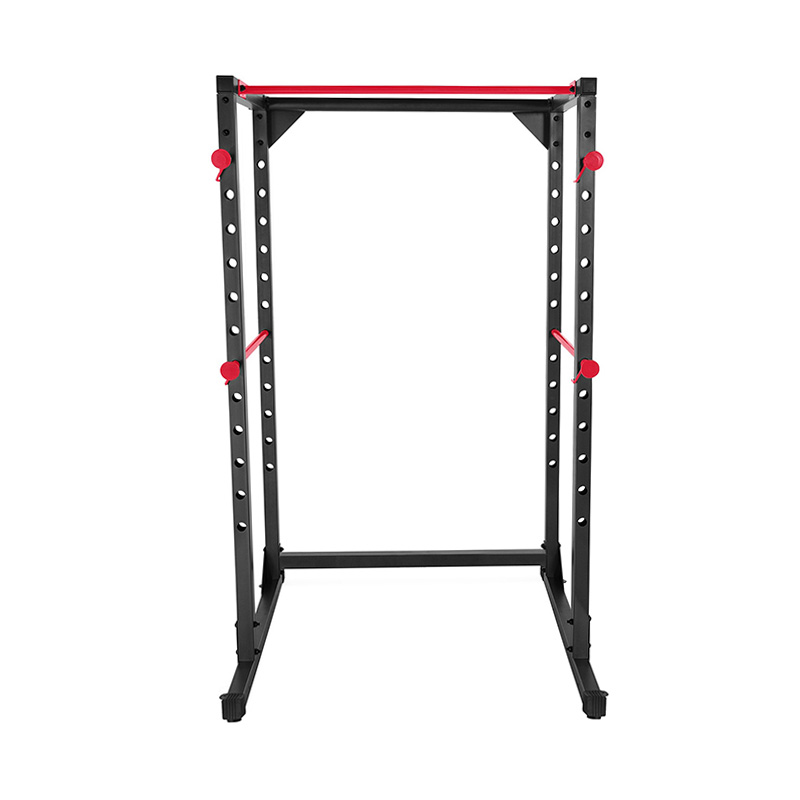
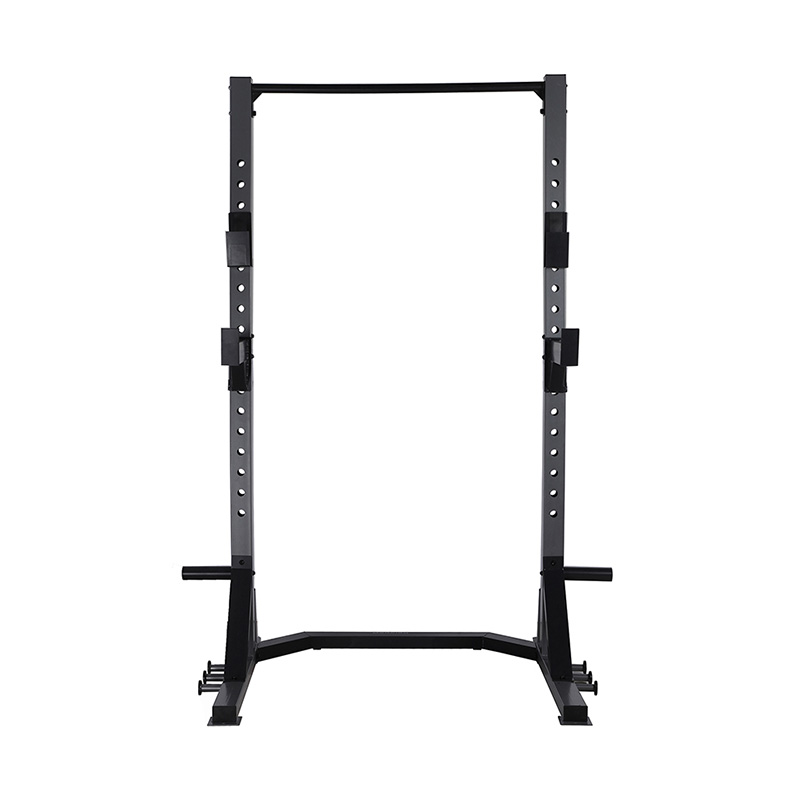
- Barbell back squat: Engages quads, glutes, hamstrings, core, and spinal erectors simultaneously
- Deadlift: The single most demanding compound movement — recruits virtually every muscle in the posterior chain
- Cable woodchop: Directly mimics the rotational core demand that targets obliques and transverse abdominis
- Farmer's carry with dumbbells: Walking under load forces extreme core bracing and burns far more calories than static holds
Comparing the Top Fitness Equipment Options Side by Side
Here's a direct comparison of the most commonly used fitness equipment for belly fat reduction, based on caloric burn estimates for a 155-pound individual at moderate-to-vigorous effort over 30 minutes, plus key practical factors:
| Equipment | Calories / 30 Min | Joint Impact | Muscle Groups | Belly Fat Effectiveness |
|---|---|---|---|---|
| Rowing Machine | 260–300 | Low | Full body (86%) | 5 |
| Treadmill (Running) | 280–370 | Moderate–High | Lower body primary | 5 |
| Stationary Bike (Upright) | 210–270 | Low | Lower body + core | 4 |
| Elliptical Machine | 200–250 | Very Low | Full body (moderate) | 4 |
| Stair Climber | 180–240 | Low–Moderate | Glutes, quads, core | 4 |
| Cable Machine (Strength) | 120–160 | Very Low | Targeted + core | 3 |
The Stair Climber: Overlooked Fitness Equipment with High Glute and Core Demand
The stair climber (or StepMill) is one of the most physically demanding pieces of fitness equipment you can find in a gym, yet it's consistently underused. The continuous stepping motion keeps your lower body under tension for the entire session while your core works to keep your posture upright. Leaning on the handrails — which most people do — significantly reduces the caloric benefit, so proper form means keeping your torso upright and touching the rails only for balance.
A 155-pound person stepping at moderate pace burns roughly 180–240 calories in 30 minutes. While that's lower than running, the muscle-building stimulus to glutes, quads, and hamstrings is substantial — which adds to the longer-term metabolic benefit discussed earlier.
For belly fat specifically, the stair climber works best as a complement to higher-calorie-burn equipment rather than a standalone strategy. Use it 2 days a week, focus on slower steps with full hip extension, and avoid the temptation to hold on.
How to Structure Your Fitness Equipment Use for Maximum Belly Fat Results
Owning or having access to the right fitness equipment only matters if you use it strategically. Random cardio sessions without structure produce slow, frustrating results. Here's a weekly framework that combines the most effective machines:
Sample Weekly Training Split Using Cardio and Strength Equipment
- Monday: Rowing machine — 20 minutes HIIT (10 rounds of 1 min hard / 1 min easy)
- Tuesday: Barbell compound lifting — squats, deadlifts, overhead press (45 minutes)
- Wednesday: Stationary bike — 40 minutes at moderate steady pace (Zone 2 cardio)
- Thursday: Cable machine + dumbbell compound movements (45 minutes)
- Friday: Treadmill — 25 minutes sprint intervals (8 rounds of 60 sec sprint / 90 sec walk)
- Saturday: Elliptical or stair climber — 45 minutes steady, moderate resistance
- Sunday: Rest or light walking
This structure creates a caloric deficit through high-output cardio sessions while preserving and building muscle through resistance training. The alternating intensity (HIIT days vs. steady Zone 2 days) prevents adaptation and keeps your metabolism responding. Consistency over 8–12 weeks with this approach, combined with a modest dietary adjustment, produces visible waist reduction in the majority of people.
Zone 2 Cardio: The Underused Tool in Belly Fat Reduction
Zone 2 training — keeping your heart rate at 60–70% of your maximum for extended periods — has gained serious attention from longevity and performance researchers. At this intensity, your body preferentially burns fat as fuel rather than glycogen. It's not glamorous, and it doesn't feel like hard work, but 40–60 minutes of Zone 2 cardio 3 times per week on any of the above machines creates a consistent fat-burning stimulus that compounds over months.
A rough guide: if you can hold a conversation but feel your breathing elevated, you're in Zone 2. If you're gasping, you've gone too hard. The stationary bike and elliptical are ideal for Zone 2 because you can fine-tune resistance to hold the exact heart rate zone without the mechanical variation of outdoor activity.
Home Fitness Equipment Options When Gym Access Isn't Available
Not everyone has access to a commercial gym, and the home fitness equipment market has matured significantly. If you're setting up a home training space with belly fat reduction as the goal, here's how to prioritize your investment:
Best Home Fitness Equipment Investments by Budget
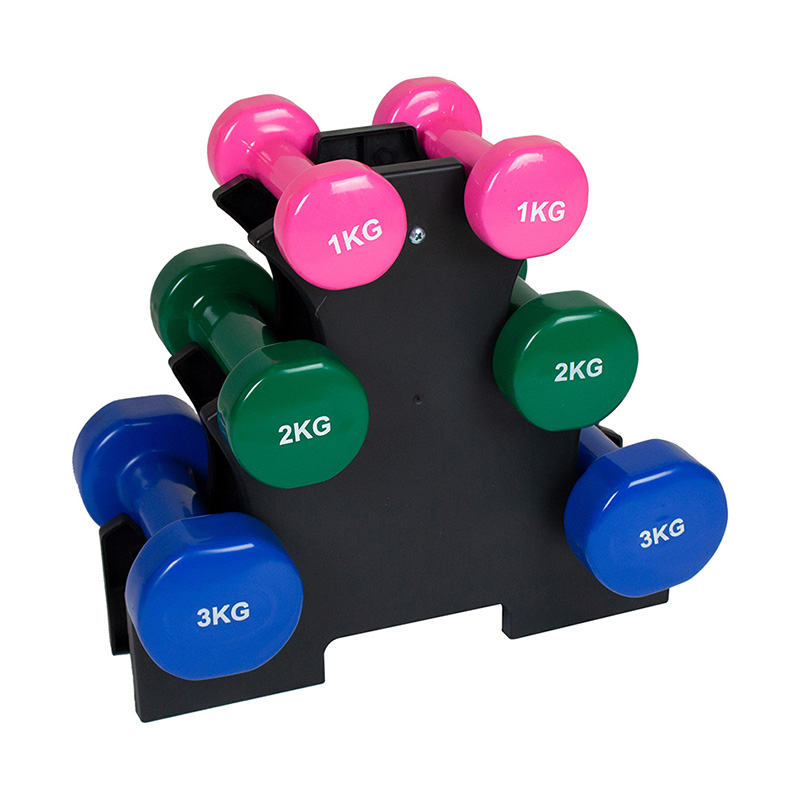
- Under $200: Jump rope, resistance bands, and a set of adjustable dumbbells. Not machines, but these allow high-intensity circuit training that burns 400+ calories per hour.
- $200–$600: A folding stationary bike or a basic rowing machine (like the Sunny Health models). Both deliver genuine cardio output for home use.
- $600–$1,500: A quality upright spin bike or a Concept2 RowErg rowing machine. The Concept2 is the industry standard — used by Olympic athletes and beginners alike — and lasts decades with minimal maintenance.
- $1,500+: A commercial-grade treadmill or an assault air bike. The air bike (like the Assault AirBike or Rogue Echo Bike) is particularly brutal — because resistance increases with pedaling speed, there's no such thing as an easy session.
The air bike deserves a specific mention here. Studies on the Wingate protocol — maximum effort cycling for 30-second bursts — show that just 4 minutes of total high-intensity work on an air bike can produce fat oxidation equivalent to 30 minutes of moderate cycling. For time-pressed people, 20 minutes on an air bike with proper intervals is one of the most efficient belly fat tools available.
Common Mistakes People Make with Fitness Equipment When Targeting Belly Fat
Having access to good fitness equipment doesn't guarantee results. These are the most common errors that stall progress:
Doing Exclusively Ab Machines
The ab crunch machine, cable crunch, and Roman chair sit-up all strengthen abdominal muscles — but they burn so few calories per session that their contribution to fat loss is negligible. You cannot spot-reduce fat. Doing 200 cable crunches does not make your stomach smaller; it just builds muscle underneath the fat layer that's still there. The path to visible abs is caloric deficit and full-body cardio, not endless ab exercises.
Using Equipment at the Wrong Intensity
Reading a book while on the elliptical at level 2 resistance is not a fat-burning workout. If you can read comfortably, you're not working hard enough. Your heart rate should be elevated enough that you're aware of your breathing, and you should feel that the next 5 minutes might be a challenge. This doesn't mean every session must be brutal, but even Zone 2 cardio should feel like genuine effort — not leisure.
Not Progressing Over Time
Your body adapts to repeated stimuli. If you do the same 20-minute treadmill walk at 3.0 mph every week for a year, the caloric burn from that session decreases over time as your cardiovascular efficiency improves. Progressive overload applies to cardio just as it does to strength training: increase speed, incline, duration, or resistance by small amounts every 2–3 weeks to keep challenging your body.
Ignoring Sleep and Stress
This isn't an equipment issue per se, but it's worth stating: cortisol — the stress hormone — directly drives abdominal fat storage. People who sleep fewer than 6 hours per night consistently show higher levels of visceral fat even when exercising regularly. Using the best fitness equipment in the world won't overcome a cortisol imbalance caused by chronic sleep deprivation. Recovery is part of the system.
Final Verdict: Choosing the Right Fitness Equipment for Your Situation
There's no single piece of fitness equipment that works for every person. The best machine for belly fat is the one you'll actually use consistently at sufficient intensity. That said, the evidence clearly points toward a hierarchy:
- Highest overall effectiveness: Rowing machine (full-body engagement, low impact, high caloric burn)
- Best for HIIT and maximum caloric burn: Treadmill (running intervals) or assault air bike
- Best for joint-sensitive individuals: Stationary bike or elliptical
- Best for long-term metabolic improvement: Barbell and cable strength equipment combined with any of the above
The most effective approach is not picking one machine — it's rotating between two or three to prevent adaptation, reduce injury risk, and keep training mentally sustainable. Pair your equipment use with a modest caloric deficit (200–500 calories below maintenance is enough), prioritize sleep, and give it at least 8 weeks before judging results. Belly fat, especially visceral fat, responds to sustained effort — not short bursts of intensity followed by weeks of inactivity.