English
 Deutsch
 中文简体
中文简体Content
- 1. What is a Roman Chair?
- 2. Core Benefits and Muscle Groups Targeted
- 3. Key Features to Look For
- 4. Types & Variations
- 5. Detailed Specifications (What to Look For)
- 6. Buying Guide: What to Consider
- 7. Assembly, Safety & Maintenance
- 8. Sample Workout Routines
- 9. Comparison with Similar Equipment
- 10. Common Mistakes & How to Avoid Them
- 11. Common Exercises Performed on a Roman Chair
- 12. In-Depth Maintenance & Longevity Guide
- 13. Expanded Buying Guide: Lifestyle Matching
- 14. Buying Checklist (Quick Reference)
- 15. Rehabilitation & Therapeutic Use
- 16. Accessory & Upgrade Options
- 17. Shipping, Assembly, & Warranty Checklist
- 18. Frequently Overlooked Tips
- 19. Maintenance & Longevity Tips
- 20. Alternative & Complementary Equipment
- 21. Troubleshooting & Common Mistakes
- 22. Comparative Analysis: Roman Chair vs. Alternative Modalities
- 23. Frequently Asked Questions (FAQ)
1. What is a Roman Chair?
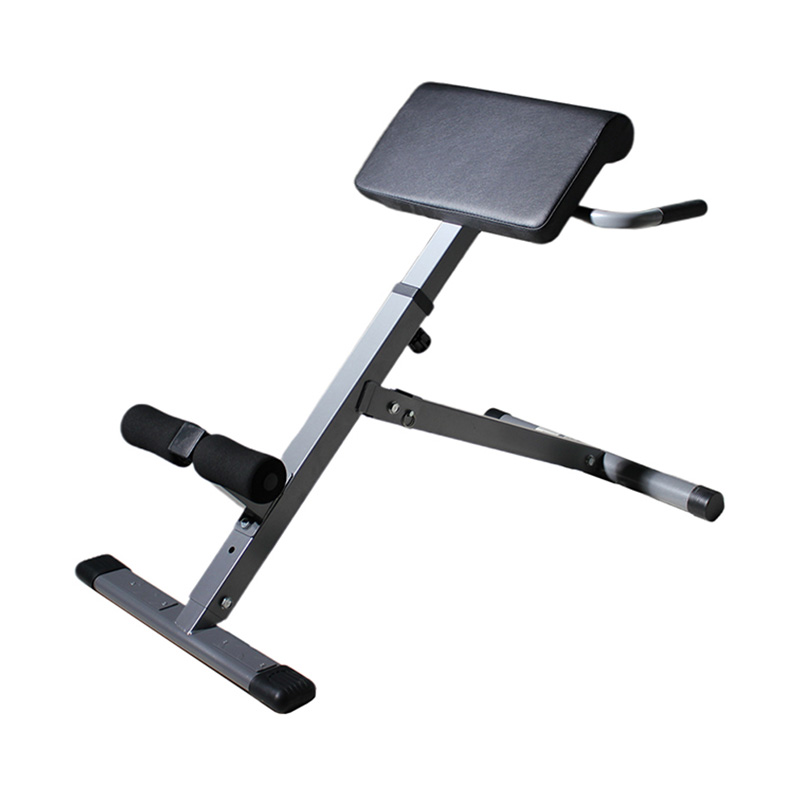
A Roman Chair is a piece of fitness equipment designed primarily for hyperextension and back extension exercises. It typically consists of a padded bench with foot rollers and hand grips, allowing users to strengthen the lower back, glutes, hamstrings, and core muscles.
2. Core Benefits and Muscle Groups Targeted
| Benefit | Muscles Targeted |
|---|---|
| Strengthens Lower Back | Erector Spinae (spinal extensors) |
| Enhances Core Stability | Rectus Abdominis, Obliques, Transverse Abdominis |
| Improves Glutes & Hamstrings | Gluteus Maximus, Hamstring Group |
| Boosts Posture & Balance | Core stabilizers and spinal alignment muscles |
3. Key Features to Look For
| Feature | Why It Matters |
|---|---|
| Adjustable Pads | Accommodates various heights and ensures proper alignment |
| Heavy-Gauge Steel Frame | Provides durability and stability, especially for heavier users |
| Wide Base | Prevents rocking and enhances safety during extensions |
| Weight Capacity | Should support at least 250-300 lbs for most users, some models up to 700 lbs |
| Foot Rollers | Allows for full range of motion and comfort during hyperextensions |
4. Types & Variations
| Variation | Description | Ideal For |
|---|---|---|
| Standard Hyperextension Bench | The classic design with a horizontal bench and two foam rollers for legs. | Home gyms, basic core workouts. |
| Roman Chair with Back Support | Includes a padded backrest for added comfort during back extensions. | Users with lower back issues or beginners. |
| Multi-Function Roman Chair | Combines a Roman Chair with a sit-up bench or dip station. | Small spaces, versatile training. |
| Commercial-Grade Roman Chair | Heavy-duty steel construction, often with adjustable foot pads and higher weight capacity. | Gyms, high-traffic areas. |
| Portable/Adjustable Roman Chair | Foldable or easily disassembled for storage. | Apartment dwellers, renters. |
5. Detailed Specifications (What to Look For)
| Specification | Typical Range | Why It Matters |
|---|---|---|
| Material | Heavy-gauge steel frame, DuraFirm® or high-density foam padding. | Determines durability and weight capacity. |
| Dimensions | Length: 46" - 51" Width: 27" - 30" Height: 40" - 45" |
Affects space requirements and user comfort. |
| Weight Capacity | Standard: 250 lbs - 300 lbs Commercial: Up to 400 lbs |
Essential for safety, especially for heavier users. |
| Adjustability | Adjustable foot rollers (horizontal & vertical), sometimes adjustable bench angle. | Allows a custom fit for different heights and workout variations. |
| Price Range (2025-2026) | Budget: 130 (basic models) Mid-Range: 200 (better padding, adjustability) Premium/Commercial: $200+ (heavy-duty steel, extra features) |
Guides budgeting and expected quality. |
| Popular Brands | Body-Solid, Flybird, Powerline, Lifespan, Gymleco. | Brand reputation often correlates with build quality and warranty support. |
6. Buying Guide: What to Consider
Space Availability: Measure the area where you plan to place the Roman Chair. Ensure there’s enough clearance for the bench and leg rollers to move freely.
User Weight & Height: Check the maximum weight capacity and ensure the bench length accommodates your height comfortably.
Adjustment Needs: Look for models with easy-to-use foot pad adjustments, especially if you’re taller or shorter than average.
Padding Quality: Thicker, high-density foam pads provide better comfort and reduce wear over time.
Intended Use: If you’re a casual user, a budget model may suffice. For frequent, heavy use (e.g., in a home gym with multiple users), invest in a commercial-grade model.
Warranty & Support: Look for at least a 1-year warranty on the frame and 90 days on moving parts.
7. Assembly, Safety & Maintenance
| Aspect | Guidance |
|---|---|
| Assembly | - Read the Manual: Before assembling, read the entire instruction manual to understand the process and safety warnings. - Tools Needed: Most models require basic tools like a wrench or screwdriver. - Check Screws: Ensure all bolts and screws are tightened securely after assembly. |
| Safety Tips | - Start Light: Begin with bodyweight only to master the form before adding external weight. - Controlled Movement: Avoid using momentum; perform extensions and returns in a controlled manner. - Foot Placement: Keep feet firmly secured on the foot pads to prevent slipping. |
| Maintenance | - Regular Inspection: Periodically check for any signs of rust, loose bolts, or damaged padding. - Lubrication: Apply grease or lubricant to moving joints if recommended by the manufacturer. - Cleaning: Wipe down the padding with a damp cloth; avoid harsh chemicals that could degrade the foam. |
8. Sample Workout Routines
Below are structured routines that incorporate the Roman Chair, catering to different fitness levels and goals. All exercises assume the Roman Chair is set up on a stable, flat surface.
A. Beginner Core & Back Strength Routine (3 Sets Each)
| Exercise | Reps | Description |
|---|---|---|
| Bodyweight Hyperextensions | 12-15 | Align hips on the pad, cross arms over chest, lower torso until a stretch is felt, then raise back to neutral. |
| Roman Chair Sit-Ups | 10-12 | Sit on the bench, hook feet under the pads, perform a controlled sit-up, and lower slowly. |
| Reverse Hyperextensions (If Available) | 10-12 | Face down, hook legs under the foot pads, lift legs until parallel to the floor, and lower gently. |
| Side Plank (Off the Bench) | 30 sec each side | Use the bench edge for hand placement to increase stability. |
B. Intermediate Hypertrophy Routine (4 Sets Each)
| Exercise | Reps | Description |
|---|---|---|
| Weighted Hyperextensions | 8-10 | Hold a plate or dumbbell against your chest to increase resistance. |
| Roman Chair Leg Raises | 12-15 | Hang from the top bar (if present) or use the bench for support, raise legs to a 90-degree angle. |
| Incline Sit-Ups with Twist | 10 each side | Perform a sit-up and twist your torso to the left, then return to center and repeat on the right. |
| Back Extension Hold | 20-30 sec | At the top of the hyperextension, hold the position to increase isometric strength. |
C. Advanced Strength & Conditioning (5 Sets Each)
| Exercise | Reps | Description |
|---|---|---|
| Heavy Weighted Hyperextensions | 6-8 | Use a heavy plate or a barbell (if the bench can support it). |
| Roman Chair Decline Sit-Ups | 12-15 | Adjust the bench to a decline angle (if adjustable) for added difficulty. |
| Reverse Hyperextensions with Band | 10-12 | Loop a resistance band around your ankles for added tension. |
| Roman Chair Burpees | 8-10 | Perform a burpee using the bench for a push-up and a jump onto the bench for a squat. |
To give you a concrete roadmap, here's an 8-week progressive plan that gradually increases intensity while minimizing injury risk. Adjust the weight (or use a weighted vest) based on your perceived exertion (RPE 6-8).
| Week | Monday | Wednesday | Friday |
|---|---|---|---|
| 1-2 | 3x12 Bodyweight Hyperextensions | 3x10 Sit-Ups (slow) | 3x12 Reverse Hyperextensions |
| 3-4 | 4x10 Weighted Hyperextensions (5-10 lbs) | 4x8 Incline Sit-Ups with Twist | 4x10 Reverse Hyperextensions (band added) |
| 5-6 | 5x8 Heavy Weighted Hyperextensions (15-20 lbs) | 5x6 Decline Sit-Ups (if adjustable) | 5x8 Reverse Hyperextensions (heavier band) |
| 7-8 | 5x6 Heavy Weighted Hyperextensions (25+ lbs) | 5x5 Roman Chair Burpees (explosive) | 5x6 Reverse Hyperextensions (max tension) |
9. Comparison with Similar Equipment
Understanding how a Roman Chair stacks up against other core training tools can help you decide if it's the right addition to your gym.
| Feature | Roman Chair | Roman Chair with Back Support | Traditional Back Extension Machine | Stability Ball |
|---|---|---|---|---|
| Primary Focus | Lower back, glutes, hamstrings | Same focus, added comfort | Lower back, more guided motion | Core stability, balance |
| Space Requirement | Compact (≈ 4' x 2.5') | Slightly larger due to backrest | Large footprint, often > 6' x 4' | Minimal (ball only) |
| Adjustability | Foot pads, sometimes bench angle | Same + backrest angle | Usually multiple weight stacks | None |
| Weight Capacity | 250-400 lbs | Similar | Often > 500 lbs | N/A |
| Cost | 200+ | 250+ | 800+ | 50 |
| Portability | Moderate (some foldable models) | Low (bulkier) | Low (stationary) | High (inflatable) |
| Versatility | Hyperextensions, sit-ups, leg raises | Same + added comfort for rehab | Primarily hyperextensions | Sit-ups, planks, push-ups, stretches |
10. Common Mistakes & How to Avoid Them
| Mistake | Why It's Problematic | Correct Form |
|---|---|---|
| Overextending the Lower Back | Can lead to hyperlordosis and strain. | Extend only until you feel a stretch, not beyond. |
| Using Momentum | Reduces muscle activation, increases injury risk. | Perform slow, controlled movements; pause at the top. |
| Improper Foot Placement | Can cause slipping or uneven load distribution. | Secure feet firmly under the pads, adjust height for comfort. |
| Neglecting Core Engagement | Turns a back exercise into a risky spinal extension. | Keep your core braced throughout the movement. |
| Skipping Warm-Up | Increases the risk of muscle strains. | Perform dynamic stretches (e.g., cat-cow, hip circles) before starting. |
11. Common Exercises Performed on a Roman Chair
| Exercise | Primary Muscles Worked | Description |
|---|---|---|
| Back Extension (Hyperextension) | Lower back, glutes, hamstrings | Anchor feet, hinge at hips, lift torso up |
| Roman Chair Sit-Up | Upper abs, hip flexors | Secure feet, perform a sit-up motion |
| Side Bends | Obliques, lower back | Perform lateral flexion while anchored |
| Reverse Hyperextension | Glutes, lower back | Often performed on a specialized version, lifts legs upward |
12. In-Depth Maintenance & Longevity Guide
| Maintenance Aspect | Recommended Action | Frequency |
|---|---|---|
| Structural Inspection | Check bolts, screws, and welds for any signs of loosening or cracks. Tighten any loose bolts using a standard wrench. | Monthly |
| Padding Care | Spot-clean the foam padding with a mild detergent and a damp cloth. Avoid soaking the padding to prevent mold. | As needed |
| Floor Protection | Place a rubber mat or protective flooring underneath to prevent floor scratches and reduce vibration. | Every use |
| Lubrication | If the chair has any moving parts (e.g., adjustable foot rollers), apply a light silicone spray to ensure smooth operation. | Quarterly |
| Weight Check | Ensure the user does not exceed the manufacturer’s stated weight capacity, as this can compromise structural integrity. | Every use |
13. Expanded Buying Guide: Lifestyle Matching
| Lifestyle | Ideal Model Type | Reason |
|---|---|---|
| Home Gym Enthusiast | Foldable or Compact Models (e.g., Synergee Standard) | Space-saving, easy to store in a garage or closet. |
| Commercial Gym Owner | Heavy-Duty Steel Frames (e.g., BodyKore Elite) | Designed for high traffic, robust construction, often includes commercial warranty. |
| Beginner/Physical Therapy | Adjustable, Low-Resistance Models (e.g., BodySolid GRCH322) | Allows for gradual progression and precise adjustments for comfort. |
| Budget-Conscious | Basic Multipurpose Chairs (e.g., SculptTrainer) | Offers core functionality at a lower price point. |
14. Buying Checklist (Quick Reference)
Before making a purchase, tick off the following items to ensure you select the best Roman Chair for your needs:
▸ Measure Your Space: Ensure at least 5 feet of length and 3 feet of width.
▸ Check Weight Capacity: Must exceed your body weight by at least 50 lbs for safety.
▸ Inspect Padding: Look for high-density foam; test comfort if possible.
▸ Verify Adjustability: Ensure foot pads and bench angle can be easily adjusted.
▸ Read Warranty Terms: Prefer at least a 1-year frame warranty.
▸ Consider Future Use: If you plan to add heavy plates, opt for commercial-grade steel.
15. Rehabilitation & Therapeutic Use
While the Roman Chair is primarily a strength tool, it can be adapted for therapeutic purposes under professional guidance.
| Rehab Goal | Adaptation | Key Considerations |
|---|---|---|
| Lower Back Pain (Acute) | Isometric Holds: Hold the hyperextension at a neutral spine for 10-20 seconds. | Avoid full range of motion; focus on pain-free positions. |
| Hamstring Tightness | Assisted Leg Curls: Perform reverse hyperextensions with a light resistance band. | Ensure the movement is slow and controlled to prevent strain. |
| Core Activation (Post-Surgery) | Seated Core Bracing: Sit on the bench, engage the core, and perform diaphragmatic breathing. | Prioritize breathing and gentle activation over movement. |
| Postural Retraining | Dynamic Stretching: Combine hyperextensions with thoracic extensions (arch the upper back). | Maintain a neutral pelvis; avoid excessive lumbar extension. |
16. Accessory & Upgrade Options
Many users enhance their Roman Chair setup with additional accessories for variety and safety.
| Accessory | Purpose | Typical Cost |
|---|---|---|
| Weighted Vest | Adds uniform load for bodyweight hyperextensions. | 120 |
| Resistance Bands | Provides variable resistance for reverse hyperextensions. | 30 |
| Floor Mats | Protects flooring and reduces noise. | 40 |
| Extension Handles | Allows for overhead triceps extensions while seated. | 45 |
| Seat Cushion | Increases comfort for extended sit-up sessions. | 35 |
17. Shipping, Assembly, & Warranty Checklist
Before finalizing a purchase, verify these logistical details to avoid post-purchase issues.
| Item | What to Verify |
|---|---|
| Shipping Dimensions | Ensure the package fits through your doorways and elevators. |
| Assembly Time | Most Roman Chairs require 30-60 minutes; check if tools are included. |
| Warranty Length | Look for at least a 1-year warranty on the frame; some brands offer lifetime frame warranties. |
| Return Policy | Verify if the seller accepts returns for damaged or defective units. |
| Spare Parts Availability | Check if replacement pads or bolts are sold separately. |
18. Frequently Overlooked Tips
| Tip | Why It Matters |
|---|---|
| Foot Pad Positioning | Adjust the foot pads so that your hips are slightly above your knees at the start; this ensures a safe range of motion. |
| Head Alignment | Keep your head in a neutral position, looking slightly forward, to avoid neck strain. |
| Breathing Technique | Exhale during the extension (lifting phase) and inhale during the lowering phase to maintain core stability. |
| Progressive Overload | Increase weight or reps by no more than 5-10% per week to avoid overtraining. |
| Avoid Hyperextension | Never arch your back beyond a neutral spine; the goal is to strengthen, not to bend excessively. |
19. Maintenance & Longevity Tips
A well-maintained Roman Chair can last 5-10 years with minimal wear. Follow these routine checks:
| Maintenance Task | Frequency | What to Look For |
|---|---|---|
| Tighten Bolts & Screws | Monthly | Ensure all connections are snug; no wobbling. |
| Inspect Padding | Every 6 months | Look for cracks, tears, or loss of density. Replace if needed. |
| Lubricate Moving Parts | Annually | Apply a light silicone spray to hinges and sliders. |
| Check Weight Limits | Annually | Verify that the frame shows no signs of bending or stress. |
| Clean Dust & Debris | Weekly | Wipe down the metal surfaces and foam pads to prevent wear. |
20. Alternative & Complementary Equipment
If space or budget constraints prevent you from acquiring a Roman Chair, consider these alternatives that can mimic similar movements:
| Alternative | How It Replicates | Pros | Cons |
|---|---|---|---|
| Stability Ball (Swiss Ball) | Perform ball hyperextensions and ball sit-ups. | Low cost, improves balance. | Less stability for heavy loading; requires good core control. |
| Glute-Ham Developer (GHD) | Offers a similar hinge pattern with added ankle fixation. | Superior for advanced athletes; great for GHD sit-ups. | Expensive, larger footprint. |
| Adjustable Bench + Smith Machine | Use the bench for bench hyperextensions and the Smith bar for weighted sit-ups. | Utilizes existing gym equipment. | Limited range of motion; less ergonomic for lower back. |
| Resistance Bands + Floor | Anchor bands for banded reverse hyperextensions. | Portable, great for rehab. | Harder to gauge exact load; less stable. |
21. Troubleshooting & Common Mistakes
| Issue | Symptoms | Solution |
|---|---|---|
| Lower Back Pain During Hyperextensions | Sharp pain, tingling, or inability to complete reps. | Reduce range of motion; keep the spine neutral. Check foot pad height. |
| Hip Hinge Not Engaging | Using the arms to lift rather than the hips. | Focus on pushing the hips forward; imagine a "hinge" rather than a "sit-up". |
| Foot Pad Too Low | Knees lock out, causing knee strain. | Raise the foot pads so the hips are above the knees at the start. |
| Excessive Arching | Overextending the lumbar spine (hyperlordosis). | Stop the movement at a neutral spine; avoid going beyond a straight line. |
| Uneven Weight Distribution | One side feels weaker or wobbles. | Check that the foot pads are centered and the frame is level. |
22. Comparative Analysis: Roman Chair vs. Alternative Modalities
To make an informed equipment investment, compare the Roman Chair against other core and posterior chain training tools.
| Feature | Roman Chair | GHD (Glute-Ham Developer) | Stability Ball | Cable Rope Extensions |
|---|---|---|---|---|
| Primary Muscle Emphasis | Erector spinae, glutes, hamstrings | Hamstrings, glutes, lower back | Core stabilizers, rectus abdominis | Lower back (isolation) |
| Load Capacity | 250-500 lbs (varies) | 300-600 lbs (commercial) | Bodyweight + light dumbbells | Adjustable via weight stack |
| Space Requirement | Compact (≈4' x 2') | Larger footprint (≈5' x 3') | Minimal (ball only) | Requires cable machine |
| Skill Curve | Low to moderate | High (requires hip extension strength) | Low (balance focus) | Low (machine-guided) |
| Versatility | Hyperextensions, sit-ups, dips, pull-ups | Hyperextensions, GHD sit-ups | Core work, hamstring curls | Isolated back extensions |
23. Frequently Asked Questions (FAQ)
Below is a curated list of common queries regarding Roman Chairs, based on user feedback from forums and product reviews (2024-2026). This section aims to resolve lingering doubts and provide actionable advice.
Q1: Can I use a Roman Chair for upper body exercises?
Short Answer: Yes, many models double as a dip station or a pull-up bar.
How: If the chair includes parallel handles, you can perform triceps dips. Some models also feature a lat pull-down attachment or a cable pulley system for rows and pull-ups. This transforms the equipment into a full-body station, maximizing ROI.
Q2: Is a Roman Chair safe for beginners?
Short Answer: Absolutely, if used with proper form.
Why: Unlike free-weight back extensions, the Roman Chair provides a fixed range of motion, reducing the risk of uncontrolled movement. Start with bodyweight and focus on mastering the hinge pattern before adding any resistance.
Q3: How much weight can a typical home-use Roman Chair support?
Short Answer: Most home models support 250-300 lbs (113-136 kg). Commercial-grade units can handle 400-500+ lbs.
Tip: Always check the manufacturer’s specifications before loading the equipment. Overloading can compromise the frame and safety locks.
Q4: Will using a Roman Chair help with a “hunchback” posture?
Short Answer: It can be part of a solution.
Explanation: While the Roman Chair primarily strengthens the lower back (erector spinae), a balanced program should also include thoracic extensions and upper back rows to counteract forward rounding. Combining hyperextensions with face pulls or reverse flyes yields the best postural improvements.
Q5: Can I replace my gym’s “back extension machine” with a Roman Chair?
Short Answer: Yes, for many functional training programs.
Considerations: A Roman Chair offers a more functional range of motion (similar to a deadlift hinge) compared to a traditional machine, which often isolates the muscles. However, for maximal loading (e.g., 400+ lbs), a commercial plate-loaded machine might still be preferable.