English
 Deutsch
 中文简体
中文简体Content
- What the GIF Shows Better Than a Static Photo
- Step-by-Step: Reading the Dumbbell Romanian Deadlift GIF Cue by Cue
- Dumbbell vs Barbell Romanian Deadlift: What the GIF Cannot Compare
- Three GIF Mistakes That Cause Lower Back Fatigue
- Choosing Dumbbells for Romanian Deadlifts: A Buyer's Checklist
- Programming the Movement: From GIF Practice to Progressive Load
You open a dumbbell Romanian deadlift GIF, watch the hips travel back, and try to copy the motion. Ten reps later your lower back feels tight, not your hamstrings. The GIF is not wrong; it simply cannot see your stance, your dumbbell path, or how much load you grabbed from the rack. The fastest fix is to treat the GIF as a tempo and shape reference, then add three personal checks: hip hinge depth, dumbbell tracking, and load increment. This article explains what the animation teaches well, where it fails, and how to select dumbbells that make the pattern repeatable for home gyms, commercial floors, and B2B programs.
What the GIF Shows Better Than a Static Photo
A dumbbell Romanian deadlift GIF loops the entire repetition, so you can see the relationship between the hips, knees, and arms. A static photo captures one frame and often hides whether the model started the movement with a hip hinge or a knee bend. In a good animation, the shins stay nearly vertical, the torso leans forward as one unit, and the dumbbells travel close to the legs. That visual rhythm is useful when you are learning the difference between a Romanian deadlift and a conventional deadlift.
The limitation is equally important. Most GIFs use light dumbbells or no load at all. They cannot show how your grip fatigues, how your upper back holds position under 20 kg per hand, or how your hamstrings feel when you stop the descent at the right depth. A GIF demonstrates shape, not intensity. Use it to memorize the path, then load the movement with weights that match your current strength and equipment.
Step-by-Step: Reading the Dumbbell Romanian Deadlift GIF Cue by Cue
Watch any clean dumbbell Romanian deadlift GIF and you will see the same sequence repeated. The following checklist turns that loop into a set of physical instructions you can practice in front of a mirror or with a phone recording.
- Set your feet hip-to-shoulder width apart, with dumbbells resting at your sides and palms facing your thighs or each other.
- Brace your core, soften your knees slightly, and push your hips straight back as if closing a car door with your glutes.
- Let your torso lean forward only as far as your hamstrings allow, keeping your spine neutral and your neck in line with your back.
- Lower the dumbbells along the front of your legs. Stop when you feel a strong stretch in the hamstrings, not when the weights touch the floor.
- Drive your hips forward and squeeze your glutes to return to standing. Keep the dumbbells close to your body the entire time.
In the GIF, the descent usually takes two to three seconds, the pause at the bottom is brief, and the return is controlled. Copy that tempo before you copy the weight. A slow, deliberate repetition exposes balance problems early, when they are easy to correct. If you rush the descent, the dumbbells drift forward, and your lower back takes over the work.
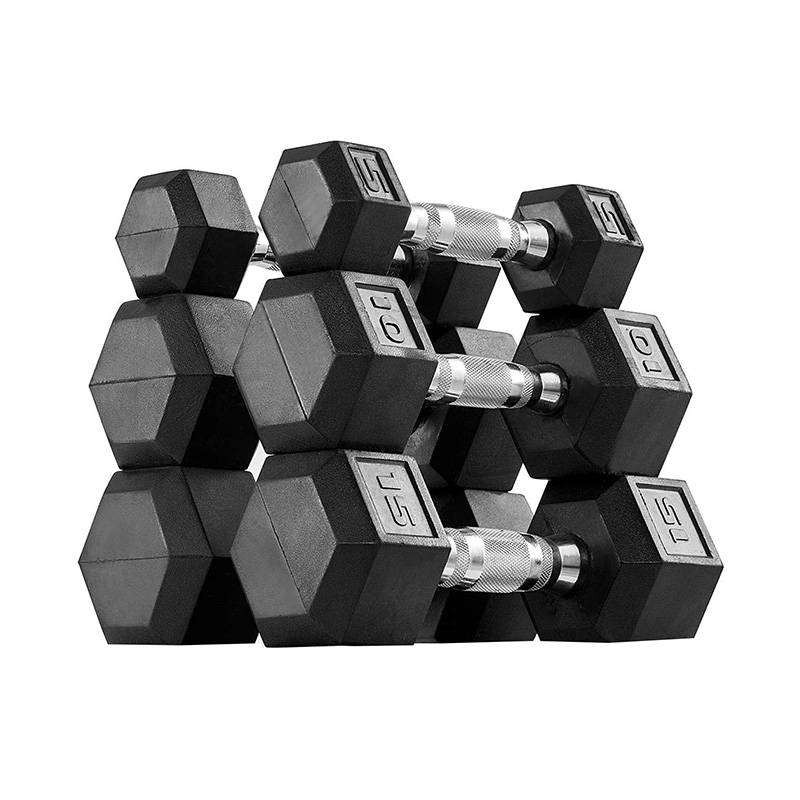 Black Multi-Sized Rubber Dumbbell Set1. Durability and wear resistance: Made of high-quality rubber material, it has excellent durability and wear resistance and can withstand long-term and high-intensity...View Product →
Dumbbell vs Barbell Romanian Deadlift: What the GIF Cannot Compare
A GIF of a dumbbell Romanian deadlift tells you nothing about how the same movement feels with a barbell. Both patterns train the hamstrings, glutes, and spinal erectors, but the setup, grip demands, and load ceiling differ. The table below summarizes the practical differences for lifters, coaches, and equipment buyers.
| Factor | Dumbbell RDL | Barbell RDL |
|---|---|---|
| Starting position | Dumbbells at sides, neutral grip | Barbell in front of thighs, pronated or mixed grip |
| Load ceiling | Limited by hand grip and dumbbell size | Higher, suitable for strength and powerlifting |
| Core demand | Greater anti-lateral flexion demand | Greater anti-flexion demand |
| Learning curve | Easier to adjust path and depth | Requires precise hip hinge before loading |
| Best use case | Home gyms, small spaces, B2B dumbbell sets | Commercial gyms, barbell clubs, maximal strength |
If you are comparing loading tools more broadly, this dumbbell or barbell bench press comparison covers how grip width and stability change between the two. The same logic applies to Romanian deadlifts: dumbbells offer independent arm paths and easier storage, while a barbell allows heavier loading and simpler progression with plates.
Three GIF Mistakes That Cause Lower Back Fatigue
Most people who search for a dumbbell Romanian deadlift GIF are trying to fix form, not add complexity. These three errors appear in real gyms every day, and each one shifts tension away from the hamstrings and into the lower back.
Mistake 1: Letting the Dumbbells Drift Forward
When the dumbbells move away from the legs, the moment arm increases and your lower back must resist more force. In the GIF, the weights stay within a few centimeters of the thighs and shins. Practice that path with light dumbbells, or stand sideways to a mirror so you can see the gap.
Mistake 2: Squatting Instead of Hinging
A Romanian deadlift is not a squat with dumbbells. If your knees bend deeply and your hips drop, you turn the movement into a partial squat. The GIF shows a slight knee bend that stays almost constant while the hips travel backward. Cue yourself to reach your hips toward the wall behind you.
Mistake 3: Chasing Depth With a Rounded Spine
Depth is individual. Hamstring flexibility, arm length, and dumbbell size all affect how low you can go. Rounding your back to touch the floor defeats the purpose. Stop at the point where your spine stays neutral and your hamstrings are loaded. A shorter range with control beats a deeper range with a rounded back.
Choosing Dumbbells for Romanian Deadlifts: A Buyer's Checklist
If you are equipping a home gym, a studio, or a commercial floor, the dumbbells you choose for Romanian deadlifts affect comfort, safety, and long-term cost. Fixed dumbbells are faster to grab, while adjustable sets save space but add setup time. Here are the specifications that matter most.
- Weight increments: 2 kg or 2.5 kg jumps let you progress without overshooting your hamstring strength.
- Handle diameter: 28 to 32 mm fits most hands; thicker handles increase grip fatigue during high-rep sets.
- Surface material: Rubber and vinyl coatings protect floors and reduce noise; urethane offers the highest durability for commercial use.
- Shape: Hexagonal heads resist rolling, while round heads are easier to clean but may move between sets.
- Loading style: Fixed dumbbells suit fast circuits; adjustable dumbbells suit small spaces and progressive overload.
For B2B buyers, the decision often comes down to container efficiency, warranty terms, and whether the dumbbell set matches an existing rack system. A mixed set of rubber-coated and vinyl-dipped dumbbells gives you options for different price tiers without changing the lifting experience.
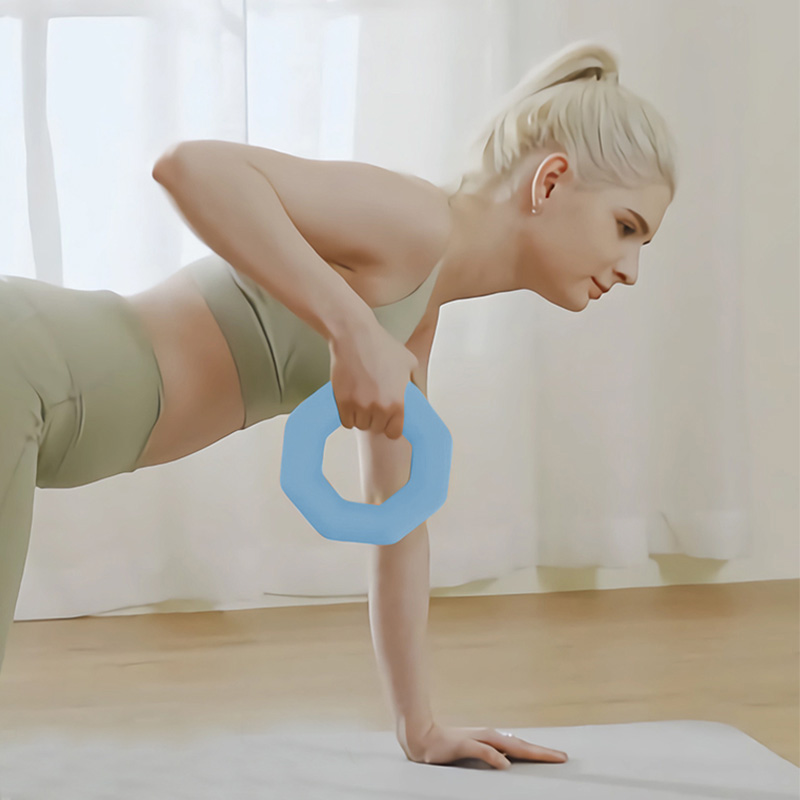 2kg High-Density Training DumbbellProduct Overview The 2kg High-Density Training Dumbbell represents the perfect fusion of precision engineering and versatile functionality in lightweight strength trai...View Product →
 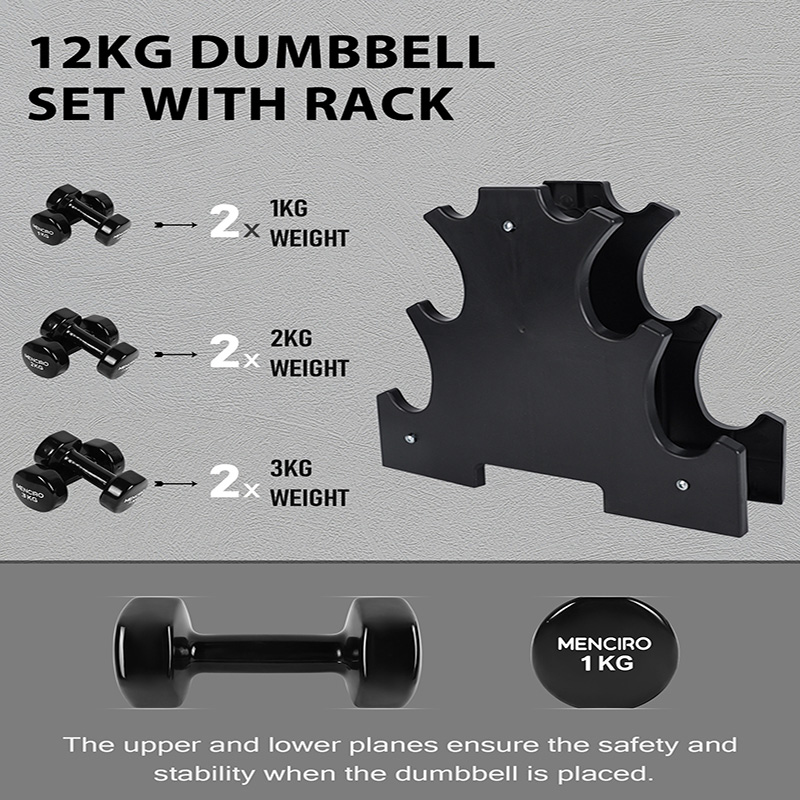 Black Vinyl Dipped Dumbbell SetProduct Overview The Black Vinyl Dipped Dumbbell Set embodies professional excellence in strength training equipment, combining timeless aesthetic appeal with uncompro...View Product →
Programming the Movement: From GIF Practice to Progressive Load
Once the pattern feels natural, program the dumbbell Romanian deadlift like any other hinge movement. Start with two sets of eight to ten repetitions using a load you can control for a three-second descent. Add one set or one small weight increment each week. Most lifters can train the movement twice per week without interfering with squat or deadlift recovery.
Pair it with upper-body pulling, core work, or unilateral leg training. Because the dumbbells are independent, you can also use them for single-arm Romanian deadlifts to address side-to-side differences. If you train in a commercial gym, check that the dumbbells you select are compatible with the rack spacing and that the handles are not too worn for heavy sets.
For coaches and facility managers, the same progression logic applies to group programming. A dumbbell Romanian deadlift works well in small-group training because it requires minimal equipment and scales from 5 kg to 40 kg per hand. The GIF remains a useful visual reference for new members, but the real coaching happens when you watch their hip path and adjust the load.
The next time you open a dumbbell Romanian deadlift GIF, use it as a rehearsal tool rather than a final answer. Check your hip hinge, keep the dumbbells close, and choose a weight that lets you own the descent. The GIF shows the shape; your setup, load, and control determine the result. Whether you are buying a single pair for a home gym or sourcing dumbbell sets for a commercial floor, prioritize handle feel, coating durability, and weight increments that match real training progress.