English
 Deutsch
 中文简体
中文简体Content
- Quick Answer: Best Dumbbell Exercises For Shoulder Training
- Why Dumbbells Are the Smartest Choice for Shoulder Work
- The Six Best Dumbbell Shoulder Exercises
- A Dumbbell Shoulder Workout You Can Run Today
- How to Choose the Right Dumbbells for Shoulder Work
- Five Mistakes That Kill Shoulder Progress
- Final Thoughts
Quick Answer: Best Dumbbell Exercises For Shoulder Training
The most effective shoulder exercises performed with a dumbbell are the shoulder press, the lateral raise, the front raise, the rear delt fly, the Arnold press, and the shrug. These six movements target the anterior, medial, and posterior deltoid heads plus the upper traps, allowing balanced shoulder development. A routine of 2 to 4 sets per exercise, trained twice a week with at least 48 hours of rest between sessions, is enough to build noticeable shoulder width and stability.
A dumbbell is one of the most effective tools for shoulder training because each arm must move independently, reducing joint stress compared with a fixed-bar barbell press. This makes dumbbells a preferred choice for lifters who want both strength and long-term shoulder health.
Why Dumbbells Are the Smartest Choice for Shoulder Work
The shoulder joint trades stability for mobility. It is the most movable joint in the human body, and that freedom makes it vulnerable under fixed-load patterns. A barbell forces both arms into a single plane, which can push the joint into impingement-prone positions. Dumbbells allow each arm to follow its own natural arc. That small difference reduces joint stress and lets you press through a fuller range of motion.
Each Arm Works Independently
Dumbbells also expose strength imbalances. With a bar, the stronger side quietly takes over the load. With two dumbbells, each deltoid must produce its own force. Exercise science consistently shows that unilateral training recruits more stabilizing muscles around the rotator cuff compared with bilateral barbell pressing. The trade-off is a lower absolute load, and that is a feature, not a flaw. The deltoids respond to consistent tension through a full range of motion, not to maximal weight.
Choosing Between Pressing Styles
If you are still deciding between the two pressing styles, our comparison of dumbbell versus barbell bench press explains how the movement patterns and joint stress differ.
The Six Best Dumbbell Shoulder Exercises
The six exercises below cover the anterior, medial, and posterior deltoid heads plus the upper traps. Run them in the order given for a complete session, or pick three for a shorter routine.
1. Dumbbell Shoulder Press
Target: anterior delts, medial delts, triceps. Sit on a bench with back support and hold a dumbbell in each hand at shoulder height, palms forward. Press the weights overhead until your arms are fully extended, then lower until the dumbbells reach ear level. Keep your ribs down and your core braced; do not arch your lower back. If you have to lean backward to finish a rep, the load is too heavy. Work in the 8 to 10 rep range.
2. Dumbbell Lateral Raise
Target: medial delts. Stand tall with dumbbells at your sides. Raise your arms out to the sides with a soft bend in the elbows, stopping at shoulder height. Lead with your elbows and tilt your pinky fingers slightly upward at the top, as if pouring water from a glass. Pause for one second, then lower slowly. The medial delt is a small muscle; leave the ego at the rack and aim for 12 to 15 controlled reps.
3. Dumbbell Front Raise
Target: anterior delts. Hold dumbbells in front of your thighs with palms facing your body. Raise one arm forward to eye level, keeping a slight bend in the elbow. Lower under control and alternate sides. Do not rock your torso. The anterior delt already works hard during pressing, so two to three sets of 10 to 12 reps are sufficient.
4. Rear Delt Fly
Target: posterior delts, rhomboids. Hinge forward at your hips with a flat back, or set an incline bench to a low angle and lie chest-down. Hold dumbbells with palms facing each other, and open your arms outward like spreading wings, squeezing your shoulder blades at the top. Lower slowly. The rear delt is the most ignored part of the shoulder, and it is precisely the head that gives your upper body a full, rounded look.
5. Arnold Press
Target: all three deltoid heads. Start with dumbbells in front of your shoulders, palms facing you. Press upward while rotating your palms to face forward at the top. Reverse the rotation as you lower. The rotation increases time under tension and shifts more work to the medial delt compared with a standard press. Use a lighter load than your regular shoulder press and control the descent.
6. Dumbbell Shrug
Target: upper traps. Hold the heaviest pair you have at your sides, stand tall, and shrug your shoulders straight up toward your ears. Pause at the top for one second, then lower slowly. No rolling; the movement is strictly vertical. The traps recover quickly and respond well to high volume; three sets of 12 to 15 reps works well.
A Dumbbell Shoulder Workout You Can Run Today
The workout below combines all six exercises into a balanced session. Warm up first with two light sets of shoulder presses and lateral raises to prepare the joint.
| Order | Exercise | Sets | Reps | Rest |
|---|---|---|---|---|
| 1 | Dumbbell Shoulder Press | 4 | 8-10 | 90 sec |
| 2 | Dumbbell Lateral Raise | 3 | 12-15 | 60 sec |
| 3 | Rear Delt Fly | 3 | 12-15 | 60 sec |
| 4 | Dumbbell Front Raise | 2 | 10-12 | 45 sec |
| 5 | Arnold Press | 3 | 8-10 | 90 sec |
| 6 | Dumbbell Shrug | 3 | 12-15 | 60 sec |
Progression is simple. Add one rep per set each week. When you hit the top of every rep range, add 1 to 2 kg to the pressing movements and keep the isolation exercises light. Train shoulders twice a week with at least 48 hours between sessions.
How to Choose the Right Dumbbells for Shoulder Work
The right dumbbell weight is the one that lets you complete every rep with clean technique. For presses, you need a heavy pair in the 8 to 10 rep range. For lateral raises and rear delt flys, a light pair in the 12 to 15 rep range. Most lifters own far too few light weights; shoulder isolation exercises fail because the smallest available dumbbell is still too heavy.
Material Matters
Material affects the training experience more than most people expect. Rubber dumbbells absorb impact, protect floors, and hold up well in busy gyms. Hex-shaped dumbbells do not roll away when set down, which keeps workouts smooth during bench and floor movements. Vinyl-coated options are comfortable to grip and suit lighter home training. Coating quality matters: a cheap coating peels and leaves sticky residue, while a properly cured rubber or vinyl coating stays intact for years.
For most home and commercial setups, a black multi-size rubber dumbbell set is the practical choice, giving you the whole loading spectrum for presses, raises, and flys without taking up a full wall of weight trees.
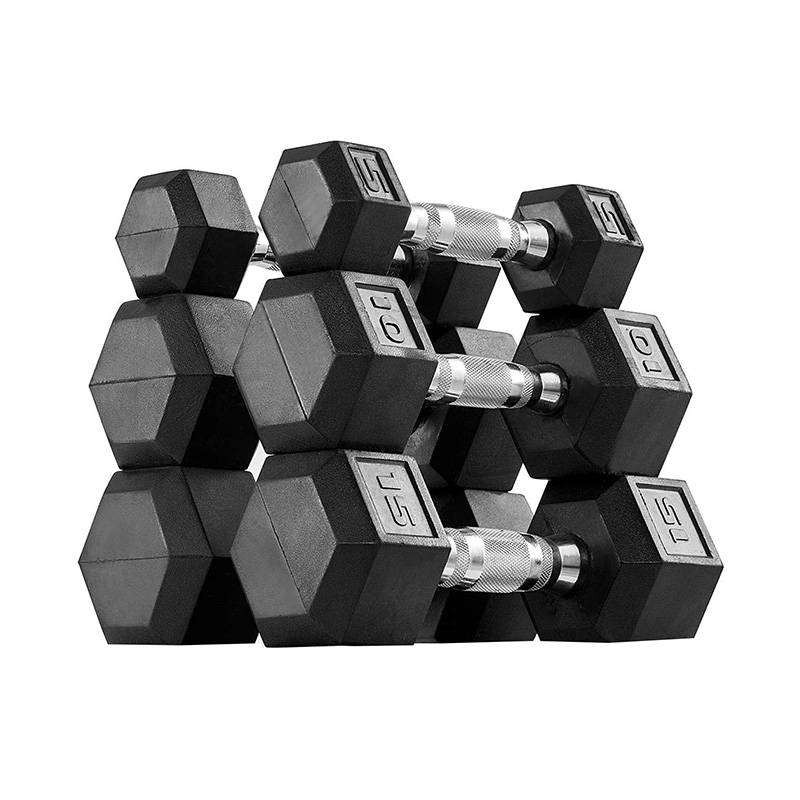 Wholesale Black Multi-Sized Rubber Dumbbell Set Suppliers, Company - Nantong DinNantong Dingfeng Fitness Equipment Co., Ltd is China Wholesale Black Multi-Sized Rubber Dumbbell Set suppliers and company .1. Durability...View Product →
If you train on hard floors and want a reliable grip during lateral raises, a vinyl neoprene rubber-coated hex dumbbell provides a non-slip surface and stays exactly where you put it.
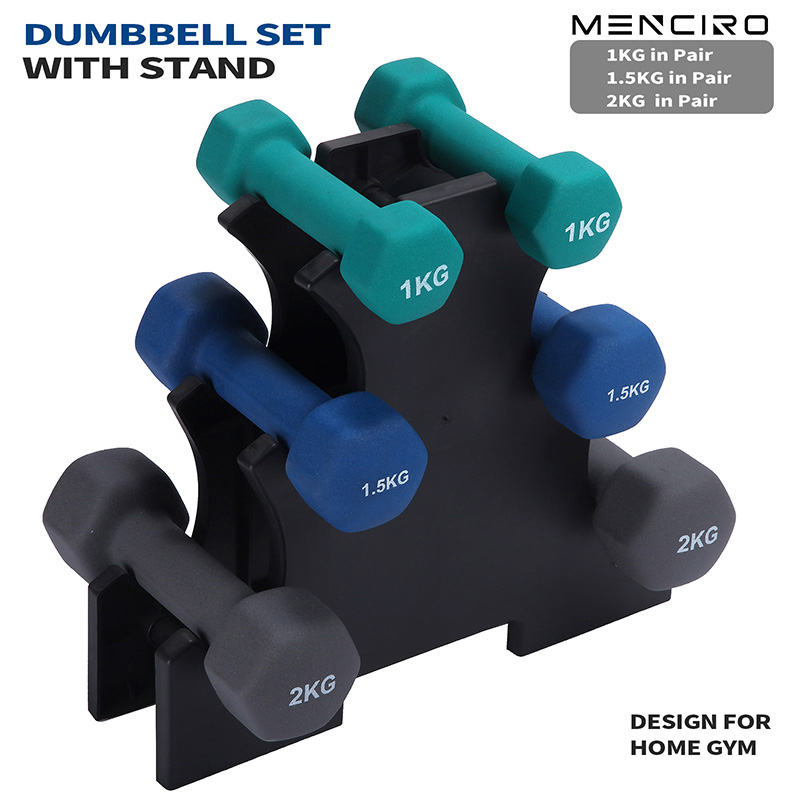 Wholesale Vinyl Neoprene Rubber Coated Hex Dumbbell Suppliers, Company - NantongNantong Dingfeng Fitness Equipment Co., Ltd is China Wholesale Vinyl Neoprene Rubber Coated Hex Dumbbell suppliers and company .Product O...View Product →
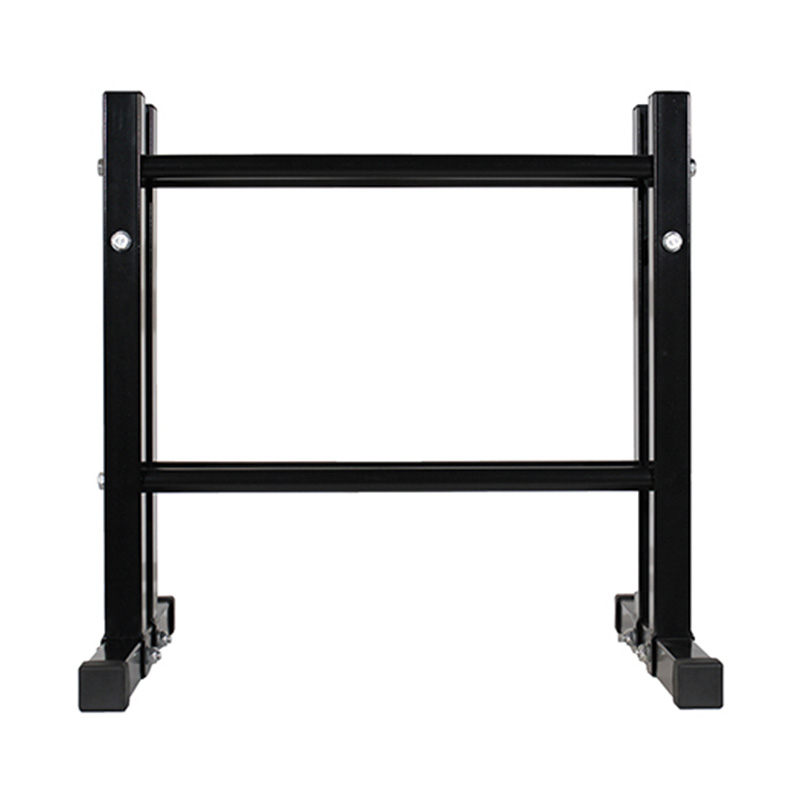
As your collection grows, an F0001 dumbbell rack keeps every pair organized and within reach, so you spend less time hunting for weights and more time training.
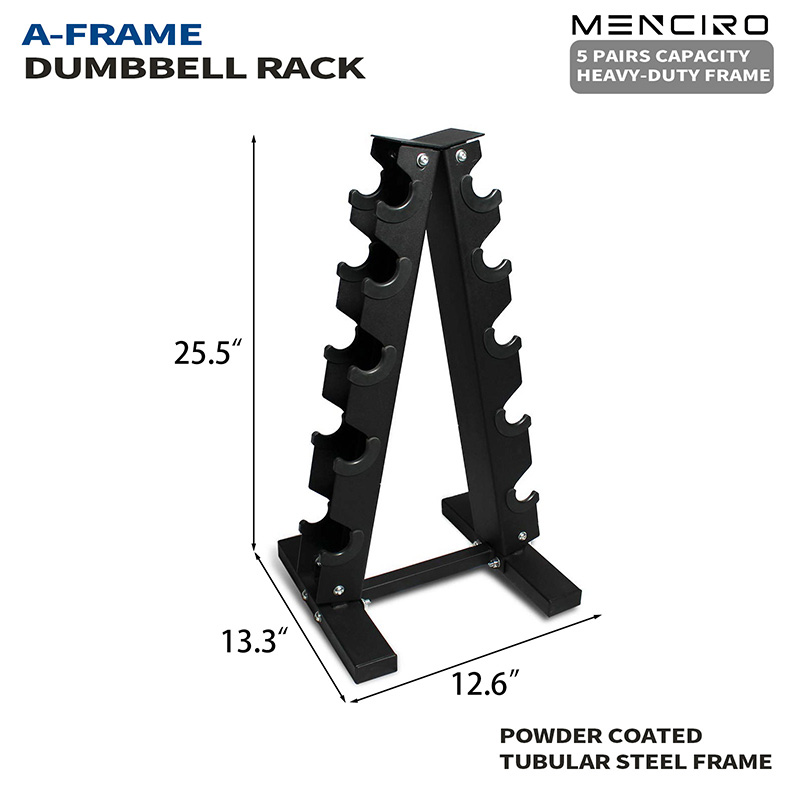 Wholesale Space-Saving Dumbbell Rack Suppliers, Company - Nantong Dingfeng FitneNantong Dingfeng Fitness Equipment Co., Ltd is China Wholesale Space-Saving Dumbbell Rack suppliers and company .Product OverviewThe Spac...View Product →
Five Mistakes That Kill Shoulder Progress
Even with the right exercises, small technique errors can stall your progress. Avoid these five.
- Using momentum. If your torso rocks on the press or your arms swing during raises, the delts are doing less of the work than you think. Drop the weight and slow the tempo.
- Skipping the rear delt. Front and side delts get all the mirror time, but a weak posterior shoulder leaves you prone to imbalance and impingement.
- Resting too long. Isolation moves work best with short rest, roughly 45 to 60 seconds. Long rests cool the muscle down and lower training density.
- Locking the elbows. A full lockout on raises shifts tension from the delt to the elbow joint. Keep a constant, soft bend through the entire set.
- Ignoring the negative. Dropping the weights instead of lowering them under control removes half of the stimulus. Lower in about two seconds on every rep.
Final Thoughts
Dumbbell shoulder exercises offer the best balance of safety, range of motion, and muscle activation of any shoulder training method. Press overhead for strength, raise laterally for width, and fly for rear delt balance. Train twice a week, choose the load that lets you keep clean form, and build progressively. Do that consistently, and your shoulders will look fuller, feel more stable, and perform better in every pushing movement you attempt.