English
 Deutsch
 中文简体
中文简体Content
- Quick Answer: Best Bicep Exercises With A Hand Dumbbell
- Why Hand Dumbbells Are Effective For Bicep Training
- Top 5 Bicep Exercises Using A Hand Dumbbell
- Muscle Activation Comparison By Exercise
- Sample 4-Week Hand Dumbbell Bicep Routine
- How To Choose The Right Hand Dumbbell Weight
- Common Mistakes To Avoid During Bicep Exercises
- Safety And Form Tips For Hand Dumbbell Training
- Hand Dumbbells For Commercial And Home Gym Use
- Frequently Asked Questions
Quick Answer: Best Bicep Exercises With A Hand Dumbbell
The most effective bicep exercises performed with a hand dumbbell are the standing dumbbell curl, the hammer curl, the concentration curl, the incline dumbbell curl, and the alternating curl. These five movements target the biceps brachii and brachialis from different angles, allowing for balanced arm development. A basic routine of 3 sets of 10-12 reps per exercise, performed two to three times per week, is enough to build noticeable strength and size within 6-8 weeks for most beginners and intermediate lifters.
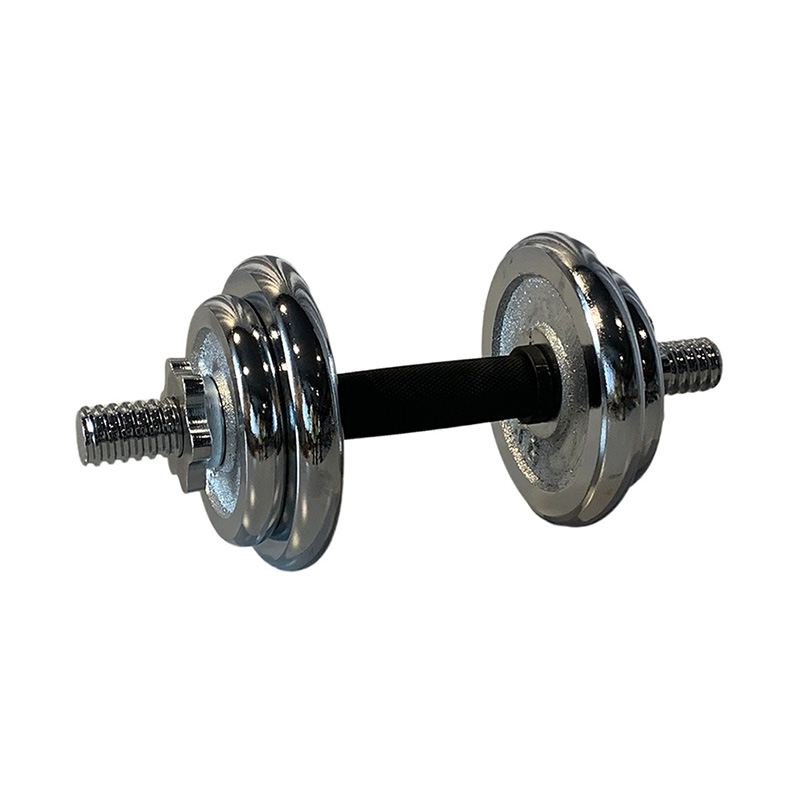
A hand dumbbell is one of the most versatile pieces of free weight training equipment because it allows a full range of motion, isolates one arm at a time, and can be used standing, seated, or lying down. This flexibility makes it a preferred choice for both home gym owners and commercial fitness facilities.
Why Hand Dumbbells Are Effective For Bicep Training
Unlike a barbell, a hand dumbbell lets each arm move independently. This unilateral movement pattern forces the weaker arm to work as hard as the dominant arm, correcting strength imbalances that are common with bilateral lifts. Research on unilateral versus bilateral resistance training has consistently shown that single-arm dumbbell work increases muscle activation in stabilizer muscles compared to fixed-bar movements.
Greater Range Of Motion
Because a hand dumbbell is not connected to a fixed bar, the wrist can rotate freely during the lift. This allows exercises such as the hammer curl and the incline dumbbell curl to stretch the biceps further at the bottom of the movement and contract more fully at the top, which is difficult to replicate with a barbell or machine.
Adjustable Resistance For Every Level
Hand dumbbells are typically available in graduated weight increments, often starting around 1 kg and going up to 50 kg or more in commercial settings. This makes it easy to progressively overload the biceps over time, a key requirement for continuous muscle growth.
Top 5 Bicep Exercises Using A Hand Dumbbell
Below are the five most reliable hand dumbbell exercises for building bicep strength and size, listed in a recommended training order.
- Standing Dumbbell Curl: Stand with feet shoulder-width apart, hold a hand dumbbell in each hand with palms facing forward, and curl both weights toward your shoulders while keeping elbows close to your torso.
- Hammer Curl: Hold the hand dumbbell with a neutral grip (palms facing each other) and curl upward. This variation places more emphasis on the brachialis and forearm muscles.
- Concentration Curl: Sit on a bench, rest your elbow against the inside of your thigh, and curl a single hand dumbbell slowly to maximize peak contraction.
- Incline Dumbbell Curl: Lie back on an incline bench set to roughly 45-60 degrees to place the biceps under constant tension throughout the entire curl.
- Alternating Dumbbell Curl: Curl one hand dumbbell at a time while the opposite arm remains extended, allowing for better focus on form and mind-muscle connection.
Muscle Activation Comparison By Exercise
Not every hand dumbbell curl targets the arm equally. The table below summarizes which muscles are emphasized most by each movement, based on general biomechanical analysis of curl variations.
| Exercise | Primary Muscle | Secondary Muscle | Difficulty |
|---|---|---|---|
| Standing Curl | Biceps Brachii | Forearm Flexors | Beginner |
| Hammer Curl | Brachialis | Brachioradialis | Beginner |
| Concentration Curl | Biceps Peak | Short Head | Intermediate |
| Incline Curl | Long Head | Anterior Deltoid | Intermediate |
| Alternating Curl | Biceps Brachii | Core Stability | Beginner |
Sample 4-Week Hand Dumbbell Bicep Routine
Progressive overload is the foundation of muscle growth. The routine below gradually increases volume and intensity over four weeks using only hand dumbbells.
| Week | Sets x Reps | Rest Between Sets | Frequency |
|---|---|---|---|
| Week 1 | 3 x 12 | 60 seconds | 2x per week |
| Week 2 | 3 x 10 | 60 seconds | 3x per week |
| Week 3 | 4 x 10 | 75 seconds | 3x per week |
| Week 4 | 4 x 8 | 90 seconds | 3x per week |
How To Choose The Right Hand Dumbbell Weight
Choosing an appropriate hand dumbbell load is critical for both safety and progress. A weight that is too light will not stimulate growth, while one that is too heavy compromises form and increases injury risk. As a general guideline, the last two repetitions of each set should feel challenging but still controlled.
- Beginners: Start with a hand dumbbell between 2-5 kg per side and focus on mastering form before adding weight.
- Intermediate lifters: A hand dumbbell in the 6-12 kg range typically allows for productive strength gains while maintaining full range of motion.
- Advanced lifters: Loads above 12 kg per hand dumbbell are common, often combined with slower tempo and drop sets for increased intensity.
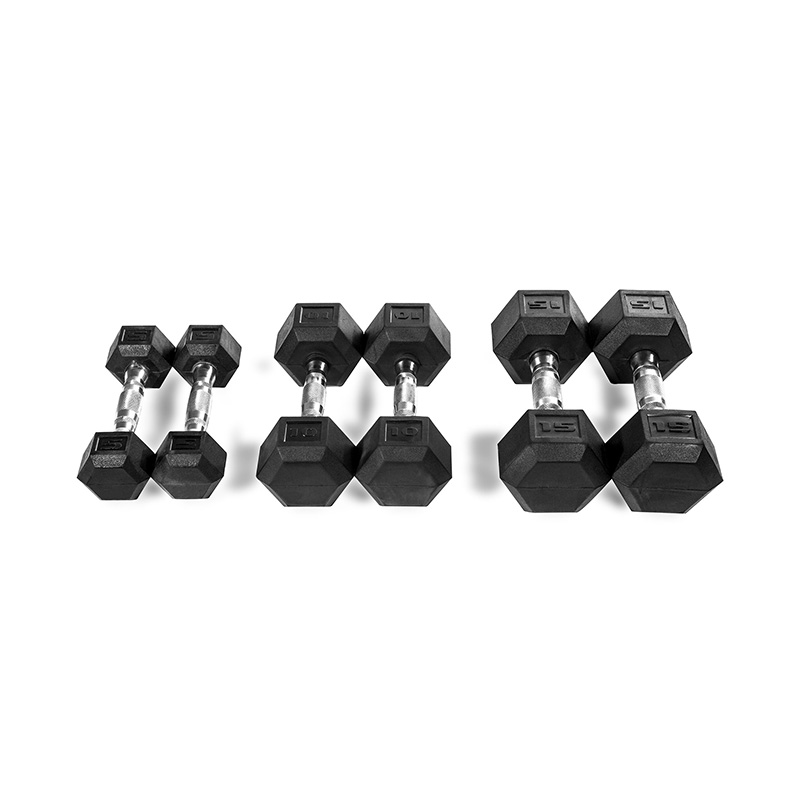
Many commercial gyms stock hand dumbbells in a full rack ranging from 1 kg to over 40 kg, allowing members of all fitness levels to progress without needing to switch equipment types.
Common Mistakes To Avoid During Bicep Exercises
Even experienced lifters make technical errors that reduce the effectiveness of hand dumbbell training. Avoiding these mistakes ensures faster progress and fewer injuries.
- Swinging the torso to generate momentum instead of isolating the biceps.
- Allowing the elbows to drift forward away from the body during the curl.
- Using a weight that is too heavy, which shortens the range of motion.
- Rushing the lowering (eccentric) phase instead of controlling it for 2-3 seconds.
- Locking the elbow fully at the bottom of every rep, which increases joint stress over time.
Safety And Form Tips For Hand Dumbbell Training
Warm Up The Elbow And Wrist Joints
Before starting any bicep exercises, perform 5-10 minutes of light cardio followed by arm circles and wrist rotations. This increases blood flow to the connective tissue around the elbow, which absorbs significant stress during dumbbell curls.
Maintain A Neutral Wrist Position
Keep the wrist straight and avoid bending it backward while gripping the hand dumbbell. A bent wrist shifts stress away from the biceps and onto the tendons, which can lead to overuse injuries such as tendinitis.
Breathe With The Movement
Exhale during the lifting phase and inhale during the lowering phase. Holding your breath during heavy sets can cause unnecessary spikes in blood pressure.
Hand Dumbbells For Commercial And Home Gym Use
Whether training in a commercial fitness facility or a home gym, the quality and range of available hand dumbbells directly affects training outcomes. Commercial-grade hand dumbbells are typically built with knurled or rubber-coated grips for better handling during sweaty sessions, and are offered in fine weight increments so members can progress gradually without large jumps in resistance.
For facility owners setting up a dedicated free weight area, a full hand dumbbell rack covering a wide weight range supports members across all training stages, from beginners performing bodyweight-assisted curls to advanced lifters chasing heavier loads. Durable construction and consistent weight calibration are two of the most important factors when selecting hand dumbbells for high-traffic environments.
Frequently Asked Questions
How Often Should I Train Biceps With A Hand Dumbbell?
Most lifters see good results training biceps 2-3 times per week, with at least 48 hours of recovery between sessions targeting the same muscle group.
Can Hand Dumbbells Alone Build Significant Arm Size?
Yes. Consistent progressive overload with hand dumbbells, combined with adequate protein intake and recovery, is sufficient to build noticeable bicep size over several months of training.
What Is The Difference Between A Hammer Curl And A Standard Curl?
A standard curl uses a palms-up grip that isolates the biceps brachii, while a hammer curl uses a neutral grip that shifts emphasis toward the brachialis and forearm muscles.