How to Do a Pullup: The Complete Guide for Every Level
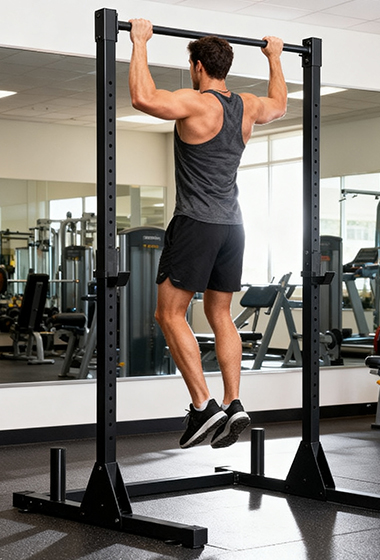
A pullup is one of the most effective upper-body exercises you can do with minimal fitness equipment. Grip the bar with palms facing away (overhand/pronated grip), hands slightly wider than shoulder-width apart, hang fully, then pull your body up until your chin clears the bar — that is one rep. That's the core movement. But executing it correctly, building to your first rep, and progressing beyond it requires understanding your muscles, your setup, your form, and your programming.
Whether you are working out in a gym stocked with premium fitness equipment or training from a doorframe pullup bar at home, this guide covers everything: the mechanics, the muscles, the common errors, the progressions, and the programming strategies that actually produce results.
Key Fact
A 2020 study published in the Journal of Human Kinetics found that the pullup activates the latissimus dorsi at 117–130% of maximum voluntary contraction — higher than most cable pulldown machines can replicate.
Which Muscles Does a Pullup Actually Work?
Before touching any fitness equipment, it helps to understand exactly what is being trained. The pullup is a compound movement, meaning it recruits multiple muscle groups simultaneously.
Primary Movers
- Latissimus Dorsi — The broad muscle of your back, responsible for pulling the arms downward and backward. This is the main engine of the pullup.
- Biceps Brachii — Assists with elbow flexion throughout the entire range of motion.
- Brachialis — Sits beneath the biceps, heavily loaded during the pulling phase.
Secondary & Stabilizers
- Teres Major — Works alongside the lats to produce shoulder extension.
- Rear Deltoids — Stabilize the shoulder joint and contribute to scapular retraction.
- Trapezius (lower fibers) — Depresses and retracts the scapulae during the pull.
- Core Musculature — The abs and obliques brace the trunk to prevent swinging.
- Forearm Flexors — Grip the bar and sustain tension throughout each set.
This broad muscle recruitment is why strength coaches consistently rank the pullup among the top five upper-body exercises regardless of what fitness equipment is available in a given facility.
Fitness Equipment You Need to Do Pullups
One of the great appeals of pullups is that the fitness equipment requirement is extremely low. You need one thing: a bar you can hang from safely. Beyond that, optional fitness equipment can help you progress faster or train more comfortably.
Essential: A Sturdy Pullup Bar
Your primary piece of fitness equipment should be rated for at least 300 lbs (136 kg) of static load, even if you weigh far less — dynamic loads during reps can exceed your bodyweight by 1.5x or more. Common options include:
- Doorframe pullup bars — Affordable, portable fitness equipment that fits most standard door frames. Priced between $20–$60. Suitable for beginners and intermediate trainees up to roughly 250 lbs.
- Wall-mounted pullup bars — Bolted directly to studs. More stable fitness equipment, supports heavier loads and weighted work. Cost ranges from $40–$150.
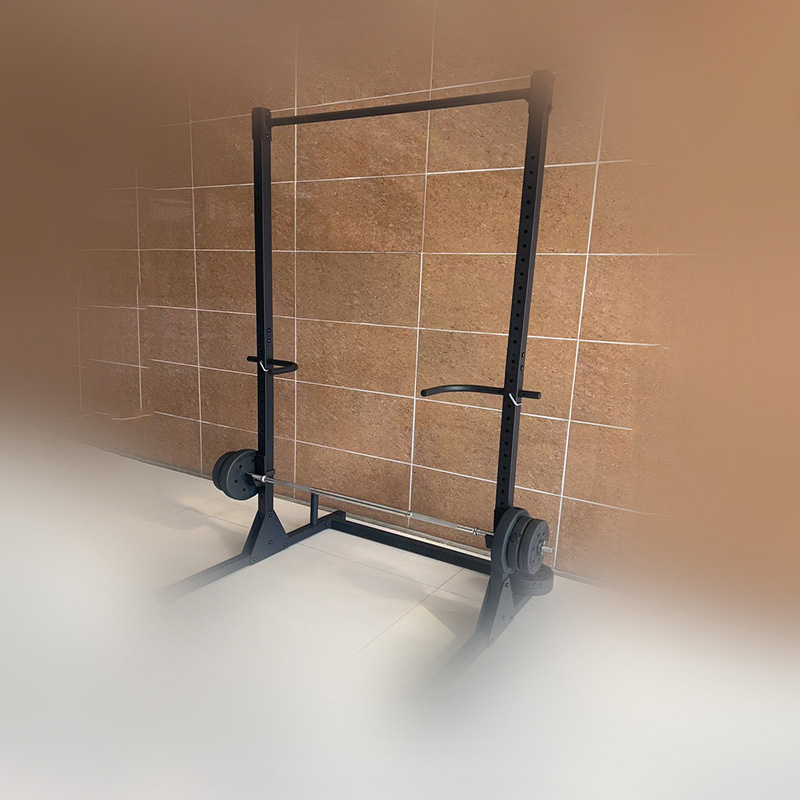
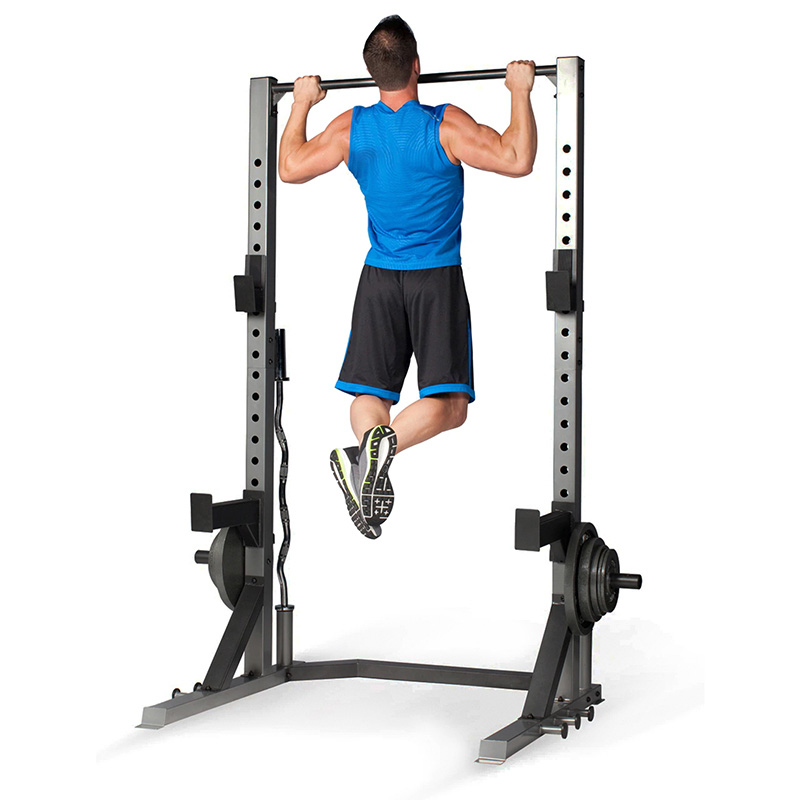
- Freestanding power racks / squat cages — Full gym fitness equipment that includes an integrated pullup bar. Ideal if you have space and want multiple training stations. Costs $300–$2,000+.
- Gymnastics rings — Advanced fitness equipment that introduces instability, dramatically increasing core and shoulder stabilizer demand.
Optional but Helpful Fitness Equipment
| Fitness Equipment |
Purpose |
Approximate Cost |
Who Needs It |
| Resistance Bands |
Assisted pullup training for beginners |
$10–$40 |
Beginners, those rehabbing injuries |
| Dip Belt + Weight Plates |
Add load for weighted pullups |
$30–$80 |
Intermediate to advanced |
| Gymnastic Chalk |
Improve grip on high-rep sets |
$5–$15 |
Anyone doing 10+ rep sets |
| Assisted Pullup Machine |
Counterweight system for assisted reps |
$500–$3,000 |
Gym settings, beginners |
| Ab Straps / Sling Straps |
Reduce grip fatigue, hang for core work |
$15–$35 |
Anyone with grip limitations |
Optional fitness equipment to support pullup training at various levels
Step-by-Step Pullup Technique: Exactly How to Do Each Rep
Form is not optional. Poor technique reduces muscle activation, increases injury risk, and caps your progress. Here is how to execute a technically sound pullup from start to finish.
01
Set Up Your Grip
Use an overhand (pronated) grip for a standard pullup. Place hands slightly wider than shoulder-width — typically 1.5–2x your biacromial width (the distance between your shoulder joints). A grip that is too narrow shifts load heavily to the biceps; too wide reduces range of motion and stresses the shoulder capsule. Your thumbs should wrap around the bar, not rest alongside it (false grip increases fall risk on a bar).
02
Achieve a Dead Hang
Before pulling, hang with arms fully extended. This full extension is critical — starting from a partially bent elbow shortens your range of motion and lets the biceps escape peak stretch load. Let your shoulder blades elevate slightly (shrug up passively) and feel your lats lengthen.
03
Depress and Retract the Scapulae
Before the pull begins, initiate movement by depressing (pulling down) and retracting (squeezing together) your shoulder blades. Think: pull your shoulders away from your ears and toward your back pockets. This sets the rotator cuff in a safer position and pre-loads the lats. Many people skip this step and go straight to arm pulling — this is the single most common form error in recreational pullup training.
04
Pull Your Elbows Down and Back
Drive your elbows toward your hip pockets, not directly down. This cue engages the lats more effectively than thinking "pull yourself up." Keep elbows pointed roughly 45 degrees to the side rather than flared wide, which can impinge the shoulder.
05
Reach Chin Over Bar
Pull until your chin clears the bar. The standard pullup test requires the chin to be at or above bar level — not just approaching it. At the top, your upper chest should be close to the bar. Avoid jutting the chin forward to fake range of motion; this places stress on the cervical spine without increasing muscle activation.
06
Lower Under Control
The eccentric (lowering) phase is often undertrained. Research from the European Journal of Applied Physiology shows eccentric-focused training produces 40% greater strength gains per unit time than concentric-only training. Take 2–3 seconds to lower yourself to full extension. Dropping rapidly wastes half the set.
Common Pullup Mistakes That Stall Your Progress
Even experienced gym-goers make technique errors that limit their pullup development. Here are the most frequently observed problems and how to fix them.
Kipping or Swinging the Body
Using momentum from the hips and lower body to swing into the movement reduces lat and bicep engagement dramatically. While kipping pullups are legitimate in CrossFit competition contexts, they are not a substitute for strict pullups when building raw strength. Fix: keep legs straight or crossed, squeeze glutes, brace the core before each rep.
Partial Range of Motion
Not descending to full hang, or not achieving chin-over-bar at the top, both reduce the work done per rep. Partial reps count partial results. If you cannot complete full-range reps, reduce your set volume or use fitness equipment like resistance bands for assistance.
Neglecting Scapular Control
Pulling entirely with the arms without engaging the shoulder blades puts the rotator cuff at risk and limits lat development. This is the most common cause of shoulder impingement in overhead pulling movements.
Skipping the Eccentric Phase
Dropping from the top position eliminates the most productive portion of the rep. Slow eccentrics (2–4 seconds) are one of the fastest ways to build pullup strength even when you can only do a few reps at the top.
Training Pullups Too Infrequently
Many beginners train pullups once per week. Research on skill and strength development consistently shows that frequency matters more than volume per session for skill-based movements. Training pullups 3–4 times per week with moderate volume per session outperforms one heavy session per week for most people.
Ignoring Grip as a Limiter
If your grip fails before your lats, you are leaving reps on the table. Build grip strength with dead hangs (30–60 second holds), towel pullups, and farmer carries. Chalk — one of the cheapest pieces of fitness equipment you will ever buy — can extend sets by 20–30% in humid conditions.
Pullup Progressions: From Zero to 10+ Reps
Building your first pullup — or your first ten — requires structured progressions. These movements use basic fitness equipment and build the exact strength patterns needed for a full pullup.
Stage 1: Building Foundation (0 Pullups)
- Dead Hangs — Hang from a bar for 20–60 seconds. Builds grip, shoulder stability, and gets your connective tissue prepared for load. Do 3–5 sets daily.
- Scapular Pullups — From a dead hang, depress and retract the shoulder blades without bending the elbows. The body rises 1–2 inches. This isolates the lat initiation pattern crucial to every pullup rep.
- Inverted Rows — Using a barbell in a rack (or a TRX / suspension trainer) set low, lie underneath it, grip the bar, and pull your chest to it. Start with a more upright torso (easier), progress to body horizontal (harder). This fitness equipment setup trains the same pulling muscles in a horizontal plane.
- Negative Pullups (Eccentrics) — Jump or use a box to reach the top position (chin over bar), then lower yourself as slowly as possible (aim for 5–8 seconds). This is one of the fastest-proven methods for building first-pullup strength. Studies on eccentric training show strength gains within 3–4 weeks of consistent practice.
- Band-Assisted Pullups — Loop a resistance band over the bar and place one knee or both feet in it. The band provides upward force at the bottom of the rep where you are weakest. Use lighter bands as you get stronger. This is the most accessible beginner-friendly fitness equipment method.
Stage 2: Building First Reps (1–5 Pullups)
- Grease the Groove (GTG) — Made famous by strength coach Pavel Tsatsouline, this method has you perform 40–60% of your max reps multiple times throughout the day without going to failure. If your max is 3 reps, do 1–2 reps every time you pass the bar. Many trainees double their rep count within 4–6 weeks using this protocol.
- 3x3 with Full Rest — Perform 3 reps, rest 3–5 minutes, repeat for 3–5 sets. Full recovery between sets ensures each set is performed with maximum quality rather than accumulated fatigue.
- Assisted + Unassisted Supersets — Do as many strict pullups as possible, then immediately use a band or assisted pullup machine (fitness equipment found in most gyms) to complete additional reps at the same muscle tension.
Stage 3: Building Volume (5–10+ Pullups)
- Pyramid Sets — 1 rep, rest 30 sec, 2 reps, rest 30 sec, 3 reps … up to your max, then back down. Total volume adds up quickly without ever reaching failure.
- EMOM (Every Minute on the Minute) — Set a timer. Do 5–7 reps (60–70% max) at the start of each minute. Rest until the next minute. Do 10–20 minutes. This builds volume and work capacity simultaneously.
- 3-5 x Max Reps — Standard strength protocol. Do 3–5 sets of as many reps as possible with 90 seconds to 3 minutes rest between sets. Stop each set 1–2 reps before true failure to protect form and recovery.
Stage 4: Advanced Variations
Once you can perform 10 clean pullups, weighted variations and grip changes become the primary drivers of progress. Use a dip belt and weight plates — common fitness equipment in any well-equipped gym — to add load incrementally.
- Weighted Pullups — Add 5–25 lbs with a dip belt. Even 5 lbs of added load will feel significant. Train in the 4–8 rep range with full recovery between sets.
- L-Sit Pullups — Hold legs straight out in front at 90 degrees throughout the set. Dramatically increases core demand and makes the movement harder without adding external load.
- Archer Pullups — One arm pulls while the other assists from an extended position. A stepping stone toward the one-arm pullup.
- One-Arm Negative Pullups — Jump to the top with one arm, lower as slowly as possible. A serious advanced movement requiring months of dedicated preparation.
Pullup vs. Chinup vs. Neutral Grip: Which Should You Do?
The same fitness equipment — a pullup bar — can be used for three distinct grip variations that each have meaningful differences in muscle emphasis and joint stress.
| Variation |
Grip Direction |
Primary Emphasis |
Joint Stress |
Difficulty |
| Pullup |
Overhand (pronated) |
Lats (width), rear delt |
Moderate elbow, low bicep |
Hardest |
| Chinup |
Underhand (supinated) |
Biceps, lower lats |
Higher bicep tendon |
Easiest |
| Neutral Grip |
Palms facing each other |
Brachialis, lats |
Lowest shoulder stress |
Moderate |
Comparison of three major pullup grip variations using standard bar fitness equipment
If you have healthy shoulders and elbows, alternate all three variations across your training week. If you have elbow tendon sensitivity, the neutral grip is typically the most comfortable. If you are brand new and want to do your first pull-based rep, start with chinups — most people find them 15–20% easier than strict pullups at the same bodyweight.
How to Program Pullups Into Your Training Week
Having access to the right fitness equipment is just one piece. How often and how much you train pullups determines whether you actually improve. Below are three evidence-based templates depending on your current level.
Beginner Template (0–5 Reps Max)
- Frequency: 3–4 days per week
- Monday: 3 x max negative pullups (5–8 sec descent) + 3 x 10 inverted rows
- Wednesday: Band-assisted pullups — 4 x 5 reps with moderate band + 30-second dead hang x 3
- Friday: Scapular pullups 3 x 8 + negative pullups 3 x 3 + GTG 1 rep every 30 minutes throughout the day
- Saturday (optional): Light dead hangs only, 3–4 sets of 30 seconds for grip and shoulder health
Intermediate Template (5–10 Reps Max)
- Frequency: 3 days per week
- Day A: 5 x max reps (stop 1–2 reps before failure), rest 2 min between sets
- Day B: EMOM — 5 reps at start of each minute for 15 minutes
- Day C: Pyramid — 1, 2, 3, 4, 5, 4, 3, 2, 1 with 45-second rest between rungs
Advanced Template (10+ Reps Max)
- Frequency: 2–3 days per week
- Primary session: 4–5 x 4–6 weighted pullups (add 10–25 lbs with dip belt fitness equipment)
- Secondary session: 3 x max bodyweight pullups as a "deload" from weighted work
- Variation day: Grip rotation — neutral grip, wide grip, close grip for 3 x 6–8 each
Recovery between sessions matters as much as the sessions themselves. The back and biceps typically recover in 48–72 hours for intermediate trainees. Training on back-to-back days without variation in intensity leads to cumulative fatigue and stalled progress.
Training Pullups at Home vs. the Gym: Fitness Equipment Comparison
You do not need a commercial gym to train pullups effectively. A $30 doorframe bar is sufficient fitness equipment for most people to go from zero to 20+ pullups. That said, a fully equipped gym does offer certain advantages.
Home Fitness Equipment
- Doorframe bar or wall-mounted bar
- Resistance bands for assistance
- TRX or suspension straps for rows
- Dip belt if adding weight later
- Chalk for grip
Total investment: $30–$200 for complete pullup training capability. The absence of fancy fitness equipment is rarely the limiting factor for home trainees.
Commercial Gym Fitness Equipment
- Assisted pullup machine (great for beginners)
- Cable pulldown machine for accessory work
- Multiple bar grip widths and angles
- Weight plates and dip belts for loaded pullups
- Gymnastics rings in some facilities
The assisted pullup machine — a staple fitness equipment piece in most commercial gyms — uses a counterweight stack to reduce effective bodyweight. For someone at 220 lbs who cannot do one pullup, setting the assistance at 60 lbs means they are pulling 160 lbs of their own weight. This can bridge the gap while building raw strength.
Nutrition and Recovery: The Non-Equipment Factors
No amount of quality fitness equipment compensates for poor recovery. Pullup strength is built between sessions, not during them. Here is what the research says about the recovery side of the equation.
Protein Intake
Muscle protein synthesis — the process of building new muscle tissue — requires adequate dietary protein. The current evidence-based recommendation is 0.7–1.0g of protein per pound of bodyweight per day for those engaged in regular strength training. For a 180 lb person, that means 126–180g of protein daily. Falling short consistently will slow pullup strength development regardless of training quality.
Sleep Quality
A 2011 study in Sleep journal found that athletes sleeping fewer than 8 hours per night had significantly reduced reaction time, accuracy, and power output. For strength-focused goals like pullups, sleep is the primary recovery window where growth hormone peaks and tissue repair occurs. 7–9 hours remains the standard recommendation for athletes in strength-training programs.
Managing Elbow and Shoulder Health
Pullups place significant stress on the elbow flexors, bicep tendons, and shoulder capsule. To stay healthy over the long term:
- Warm up with 5 minutes of arm circles, band pull-aparts, and scapular pullups before loading.
- Vary your grip weekly (overhand, underhand, neutral) to distribute tendon stress.
- Do face pulls and external rotation exercises 2–3x per week to balance the internal rotation stress of heavy pulling.
- If elbow pain develops, reduce volume immediately and switch to neutral-grip variations and inverted rows until symptoms resolve.
Pullup Standards: How Many Should You Be Able to Do?
Pullup norms vary by age, sex, and training background. These figures give context for where you stand and what you are working toward — not as judgment, but as benchmarks for structured goal setting.
| Category |
Beginner |
Average |
Above Average |
Elite |
| Men (20–35) |
0–4 |
5–9 |
10–15 |
15+ |
| Women (20–35) |
0–1 |
2–5 |
6–10 |
10+ |
| Men (36–50) |
0–3 |
4–7 |
8–12 |
12+ |
| Women (36–50) |
0 |
1–3 |
4–8 |
8+ |
General pullup rep benchmarks by demographic — strict form, full range of motion
Military standards offer another useful reference point. The United States Marine Corps requires male recruits to perform a minimum of 3 pullups to pass basic training, with a perfect score at 20 pullups. The US Army uses a similar hanging test. These benchmarks confirm that 10+ strict pullups puts you firmly in excellent fitness territory for any standard.


 English
 Deutsch
 中文简体
中文简体