English
 Deutsch
 中文简体
中文简体Content
- The Direct Answer: Best Home Gym Equipment for Weight Loss in 2026
- Smart Cardio Gym Equipment Leading the Market in 2026
- Strength Gym Equipment That Raises Your Metabolic Rate in 2026
- Adjustable Dumbbells: Bowflex SelectTech 552 Remains Best-in-Class
- Kettlebells: The Highest Calorie-Burn Per Dollar of Any Gym Equipment
- REP Fitness Ares 2.0 Functional Trainer: 2026's Best Strength System
- Tonal 2: The Premium AI-Powered Strength System
- Power Rack and Barbell: The Foundation for Serious Fat Loss
- Compact and High-Intensity Gym Equipment for Small Spaces in 2026
- What a Complete Home Gym for Weight Loss Costs in 2026
- The Subscription Question: Are Connected Gym Equipment Plans Worth It in 2026?
- Training Approaches That Maximize Fat Loss From Your Home Gym Equipment
- What to Look for When Buying Home Gym Equipment for Weight Loss in 2026
- Gym Equipment to Avoid or Approach With Skepticism in 2026
- 2026 Home Gym Equipment Recommendations by Situation
The Direct Answer: Best Home Gym Equipment for Weight Loss in 2026
In 2026, the most effective home gym equipment combination for weight loss is a smart treadmill or rowing machine for cardio, adjustable dumbbells for strength, and kettlebells for high-intensity fat-burning circuits. This trio covers every metabolic demand of fat loss: sustained cardiovascular output, progressive muscle building, and explosive HIIT training. According to fitness equipment experts at BarBend and SmartHomeExplorer, the break-even point for a home gym versus a commercial gym membership is now just 12 to 18 months — and that's before factoring in the time saved on commuting and waiting for equipment.
The home gym equipment landscape has changed substantially heading into 2026. AI-powered coaching, real-time form feedback cameras, adaptive resistance systems, and Google Maps route simulation have moved from novelty to mainstream. Peloton subscribers average 55+ workout minutes per week compared to 25 minutes for traditional gym members, according to IHRSA data — which is a compelling case that the right connected gym equipment genuinely drives consistency, and consistency is the single most important factor in weight loss. This guide covers every major category of gym equipment for home use, what the calorie-burn data actually says in 2026, and how to build a setup that fits your space, budget, and training style.
Smart Cardio Gym Equipment Leading the Market in 2026
Cardio gym equipment in 2026 is no longer just about moving your legs. The leading machines now integrate AI-personalized plans, heart-rate adaptive programming, multi-user family profiles, and global content libraries with thousands of on-demand sessions. The result is that people actually use their home gym equipment consistently — which, as the data shows, makes all the difference for fat loss.
Treadmill: NordicTrack Commercial 1750 Leads the Pack
The NordicTrack Commercial 1750 has earned an 8.4/10 consensus score across major review platforms including Tom's Guide, Wirecutter, and PCMag in 2026, making it the top-rated home treadmill for weight loss. It runs from a -3% decline to a 40% incline — a range no other consumer treadmill currently offers — which transforms ordinary walking sessions into genuine hill climbing workouts. The 16-inch touchscreen connects to iFIT, which now integrates Google Maps to simulate real-world running routes: the treadmill automatically adjusts incline and speed to match terrain anywhere in the world, from Patagonia trails to Tokyo streets. Access to over 10,000 on-demand workouts is included. Retail price is $1,999 plus $39 per month for the iFIT subscription. For high-calorie burn, running on a 6% incline at 5.5 mph on this machine burns approximately 700–800 calories per hour for a 155-pound person, and the 40% incline setting pushes that significantly higher for incline walking workouts.
Budget-conscious buyers can consider the Sole F80 ($1,299) or the YOSUDA folding treadmill ($400–$600), which both lack the connected features but deliver reliable motorized performance for walkers and light joggers. If your primary goal is calorie-burning cardio and you'll use the machine five days a week, investing in a quality connected treadmill like the 1750 pays off both financially and metabolically over 12–18 months.
Rowing Machine: Aviron Strong Go Rower Tops 2026 Rankings
The rowing machine remains the most underrated piece of gym equipment for weight loss in 2026. According to BarBend's expert-reviewed rankings, the Aviron Strong Go Rower earns the top spot among home rowing machines for its compact build (84 inches long — significantly shorter than the standard 95-inch rower), a 507-pound weight capacity, gamified interactive programming, and durable aluminum-and-composite frame. It's suited to home gym environments where space is a constraint. The Concept2 Model D remains the gold standard for serious athletes and CrossFitters at around $900, with no subscription required and a near-universal reputation for reliability.
Why rowing machines for weight loss? They engage approximately 86% of the body's muscle groups in every stroke — legs, glutes, core, back, shoulders, and arms — creating a calorie burn of 400–600 calories per hour at moderate effort. Because the load is distributed so widely, there is far less joint stress than running. For anyone with knee issues or coming back from injury, a rowing machine is frequently the single best piece of cardio gym equipment to prioritize in 2026.
Spin Bike: Peloton Bike+ and Budget Alternatives
The Peloton Bike+ retains its position as the most retention-driving piece of connected home gym equipment available. Peloton reports a 96% twelve-month retention rate among subscribers — meaning 96 out of every 100 people who buy the Bike+ are still using it a year later. For weight loss, which depends more on training frequency than any other variable, that statistic matters enormously. Current pricing is around $2,499 for the Bike+ plus $44 per month for the All-Access Membership. At three or more workouts per week, the all-in cost comes to approximately $6.58 per workout — competitive with mid-range gym memberships in most major cities. The Peloton Bike+ burns 500–700 calories per hour at moderate intensity during structured spin classes, and considerably more during HIIT sprint intervals.
For those who want strong spin bike performance without the subscription commitment, the Schwinn IC4 ($700–$800) and the YOSUDA magnetic resistance bike ($300–$400) are both 2026 standout options. Magnetic resistance systems run silently — a genuine advantage in apartments — and the YOSUDA model includes a built-in tablet holder for following streaming classes independently.
Elliptical and Stair Climber: Low-Impact High Burn
Elliptical trainers remain a reliable low-impact option, burning 450–600 calories per hour and placing minimal stress on knees and hips. The dual-action elliptical — with moving arm poles — engages upper and lower body simultaneously and pushes calorie burn higher. In 2026, reputable budget models from Sunny Health & Fitness start at $500–$700, while premium ellipticals from NordicTrack and ProForm with full iFIT integration run $1,200–$2,000.
The StairMaster (stair climber) delivers one of the highest calorie burns available from any gym equipment, reaching 500–800 calories per hour due to the constant recruitment of the glutes, hamstrings, and quads — the body's three largest muscle groups. FitnessFactory.com identifies the StairMaster as one of the standout pieces of home weight-loss gym equipment for 2026, particularly for people who want low-impact but high-intensity cardiovascular training. These machines require significant floor space and cost $1,500–$5,000+ for quality home units, making them better suited to dedicated gym rooms than small apartments.
| Equipment (2026 Top Model) | Calories/Hour (155 lbs) | Impact Level | 2026 Price Range | Subscription |
|---|---|---|---|---|
| Treadmill (NordicTrack 1750) | 670–800+ | High | $1,999 | $39/mo (iFIT) |
| Rowing Machine (Aviron Strong Go) | 400–600 | Low | $900–$1,400 | Optional |
| Spin Bike (Peloton Bike+) | 500–700 | Low | $2,499 | $44/mo |
| Elliptical (NordicTrack / ProForm) | 450–600 | Low | $500–$2,000 | Optional |
| StairMaster / Stair Climber | 500–800 | Medium | $1,500–$5,000+ | None |
Strength Gym Equipment That Raises Your Metabolic Rate in 2026
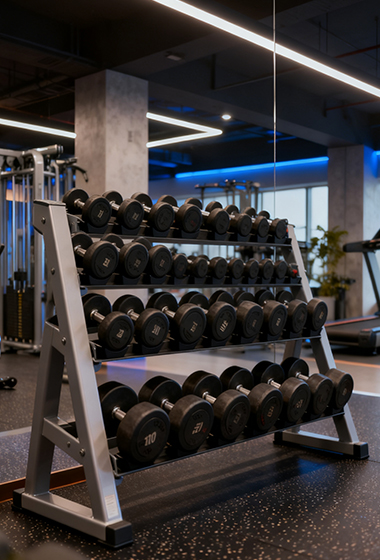
According to Dr. Christopher Mohr, PhD, RD, a fitness and nutrition expert cited in BarBend's 2026 home gym research: "Strength or resistance training can be helpful in burning fat and managing weight through built muscle." Building muscle increases your basal metabolic rate — the calories your body burns at rest. A pound of muscle burns 6–10 calories per day even while you're sitting still, compared to 2–3 calories for a pound of fat. Over a year of consistent strength training, even modest muscle gains permanently elevate your daily calorie expenditure, making strength gym equipment essential to any serious home weight-loss setup.
Adjustable Dumbbells: Bowflex SelectTech 552 Remains Best-in-Class
The Bowflex SelectTech 552 ($399 per pair in 2026) continues to be the most recommended adjustable dumbbell set for home gym use. It covers 5 to 52.5 lbs per dumbbell in a dial-adjust mechanism that replaces 30 individual dumbbells — all in a footprint the size of two shoeboxes. For fat loss through strength training, adjustable dumbbells enable hundreds of compound exercises: goblet squats, Romanian deadlifts, dumbbell rows, chest presses, overhead presses, and lunges. Compound movements are what matter most — a barbell squat burns roughly 3–5 times more calories per set than a bicep curl because it recruits far more muscle mass per movement.
FitnessFactory.com's 2026 home gym guide identifies adjustable dumbbells as essential weight-loss gym equipment because they support both unilateral training (one side at a time, which corrects muscular imbalances) and heavy compound lifting in nearly any space. For those wanting a wider range, the PowerBlock Elite goes up to 90 lbs per hand and runs $550–$700 per pair. If you can only buy one piece of strength gym equipment, adjustable dumbbells deliver the widest return on investment.
Kettlebells: The Highest Calorie-Burn Per Dollar of Any Gym Equipment
Kettlebells are unmatched for calorie-burn efficiency relative to cost. According to the Compendium of Physical Activities (2024 update), kettlebell swings carry a MET value of 9.8 — one of the highest of any single strength exercise. Translated into practical numbers: a 175-pound person performing continuous kettlebell swings burns 700–840 calories per hour. Kettlebell snatches carry an even higher MET of 10.0, making them the most calorically demanding kettlebell movement. A 20-minute swing session for a 70 kg person burns approximately 240 calories — comparable to a moderate 20-minute run.
The National Strength and Conditioning Association confirms that kettlebell workouts improve both VO₂ max (cardiovascular endurance) and core stability simultaneously — two key drivers of sustainable fat loss. For beginners, men typically start with 16–24 kg and women with 8–16 kg. Two or three kettlebells at different weights (for example, 12 kg, 20 kg, and 28 kg) cost $80–$200 total and fit in a small corner. No piece of gym equipment delivers more calorie burn per dollar spent.
A sample 10-minute HIIT kettlebell circuit using a 40-second work / 20-second rest format:
- Two-hand kettlebell swings (MET 9.8) — primary glute, hamstring, and cardiovascular driver
- Goblet squats — lower body strength, core stability
- Clean and press (MET 7.5) — full upper-body and explosive hip engagement
- Kettlebell rows — upper back, biceps, core
- Turkish get-up (MET 6.0) — full-body stabilization and shoulder health
Repeating this circuit twice produces an effective 20-minute HIIT session that combines strength and cardiovascular demands — and costs under $100 in gym equipment.
REP Fitness Ares 2.0 Functional Trainer: 2026's Best Strength System
BarBend's expert-tested 2026 home gym rankings name the REP Fitness Ares 2.0 as their top overall home gym system. This dual adjustable pulley functional trainer provides cable crossovers, lat pulldowns, seated rows, tricep pushdowns, face pulls, cable squats, and over 100 other movements in a single compact unit. It replaces multiple individual pieces of gym equipment while giving full-range, constant-tension resistance that free weights cannot replicate. A more budget-accessible alternative for space-conscious buyers is the Major Fitness F22 All-In-One Home Gym Power Rack at $929.99, which combines a squat rack, cable pulley, and pull-up bar in one footprint. Functional trainers are particularly valuable for weight loss because the constant cable tension recruits stabilizer muscles throughout each movement, burning more total calories than equivalent machine-based exercises.
Tonal 2: The Premium AI-Powered Strength System
The Tonal 2 is the most technologically advanced strength gym equipment available for home use in 2026. It is wall-mounted, occupies a 4-square-foot profile when arms are folded, and delivers up to 250 pounds of digital resistance through adaptive motors that adjust weight mid-rep with zero lag. The new Smart View coaching camera provides real-time form feedback — identifying technique errors in squats, presses, and rows and correcting them on-screen. The content library has expanded to over 200 guided programs covering strength, HIIT, Pilates, and Aero workouts. BarBend reviewers score the Tonal 2's programming at 4.75 out of 5: "The on-demand workouts are led by high-energy trainers, so there's no shortage of motivation." Price is $4,295 plus $59.95 per month for the subscription. For serious lifters who chase free weights and the sensation of iron, the Tonal 2 is not a replacement — but for people who want accessible, progressive, guided strength training in a compact home space, it represents a meaningful leap forward in 2026.
Power Rack and Barbell: The Foundation for Serious Fat Loss
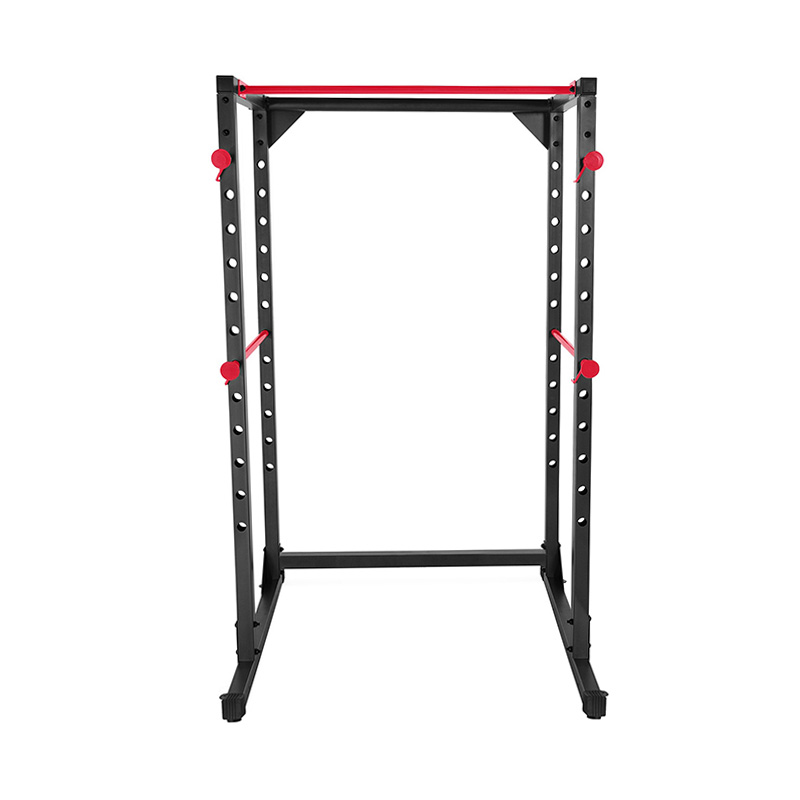
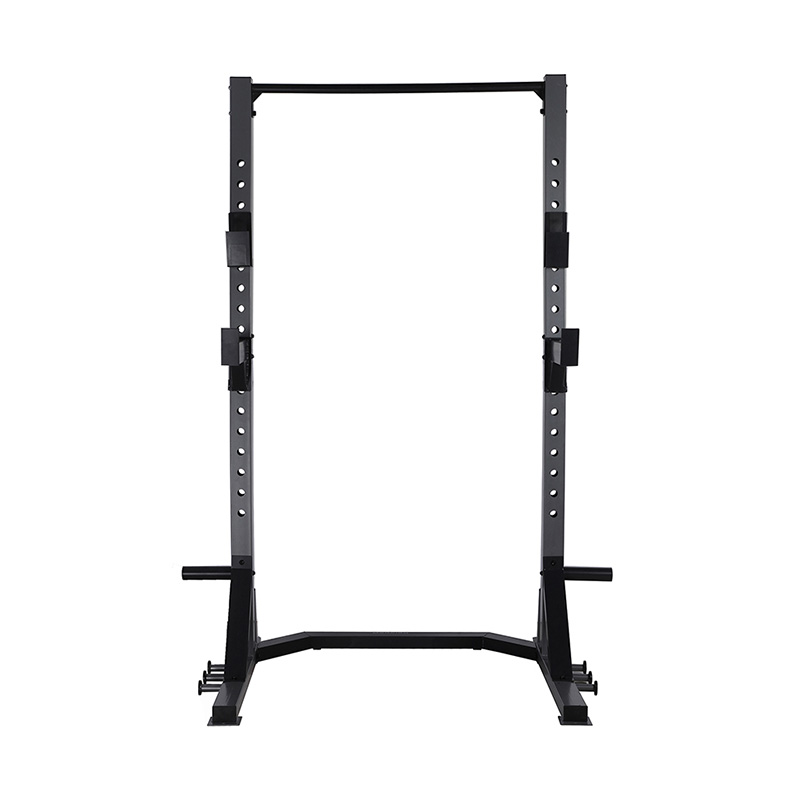
For dedicated home gym builders who want the maximum long-term metabolic impact from their strength gym equipment, a power rack and barbell setup remains the gold standard. The squat, deadlift, and bench press recruit more total muscle mass than virtually any other exercises — and more muscle activation means more calories burned both during and after training (the EPOC or "afterburn" effect). A quality power rack from Rogue, Fringe Sport, or Titan Fitness runs $400–$1,500. The Fringe Sport squat rack is highlighted in BarBend's 2026 rankings as a standout mid-price option, particularly for CrossFitters wanting pull-up bar capability and solid build quality. An Olympic barbell with 300 lbs of plates adds $400–$700. This setup requires a minimum ceiling height of 8 feet and a footprint of roughly 6 x 4 feet — but delivers the most room for progressive overload over time.
Compact and High-Intensity Gym Equipment for Small Spaces in 2026
Not every home gym occupies a full garage or spare bedroom. These compact gym equipment options deliver serious fat-burning results from apartments, living rooms, or studios — and most cost well under $200.
Jump Rope: Highest Calorie Burn Per Dollar of Any Gym Equipment
Research cited by exercise science publications confirms that jumping rope burns up to 25% more calories than running at equivalent intensity levels. A quality speed rope — brands like WOD Nation or Crossrope — costs $15–$50 and burns 600–1,000 calories per hour at sustained effort. Ten minutes of continuous jump rope at moderate pace burns approximately 100–130 calories. Weighted handle ropes increase upper-body fatigue and push calorie expenditure higher still. The only real constraints are ceiling height (at least 10 feet) and a non-carpeted surface. For outdoor spaces or homes with high ceilings, a jump rope is impossible to beat on the calorie-to-cost ratio among all gym equipment categories in 2026.
Resistance Bands: Legitimate Training Tools, Not Just Travel Accessories
In 2026, resistance bands — loop bands, tube bands with handles, and heavy fabric hip circle bands — are no longer considered merely portable gym equipment for travel. Research continues to confirm they produce similar strength and hypertrophy outcomes to free-weight training at equivalent resistance levels. Brands like TRX (suspension trainer at $200) and WHATAFIT (resistance band sets at $20–$50) are among the top-trusted names in this category according to gym equipment reviews. A complete resistance band set covering light through extra-heavy tension runs $20–$80, fits in a gym bag, and enables glute training, shoulder rehabilitation, pull-up assistance, and accessory work across every muscle group.
Assault Bike (Fan Bike): The Brutally Effective Fat-Burning Machine
The assault bike (air bike) is one of the most punishing and effective gym equipment options for weight loss in 2026. Because both arms and legs drive the fan simultaneously, resistance scales infinitely with effort — there is no coasting. Twenty minutes of structured intervals on an assault bike burns 250–400 calories while creating significant EPOC (excess post-exercise oxygen consumption), meaning elevated calorie burn continues for 12–24 hours post-workout. The Assault AirBike retails at $700–$800 in 2026 and is a staple of CrossFit-style home gyms. For time-limited training schedules, assault bike intervals deliver results comparable to 45-minute steady-state cardio sessions in roughly 20 minutes.
Plyo Box and Battle Ropes: Explosive Training for Maximum Calorie Burn
A 3-in-1 wooden plyo box ($60–$120) enables box jumps, step-ups, Bulgarian split squats, and incline push-ups. Box jumps at sustained effort burn approximately 800–1,000 calories per hour — among the highest of any exercise modality — while also building explosive lower-body power. Battle ropes ($80–$150 for a 40-foot, 1.5-inch rope) deliver 300–400 calories burned per 20-minute session of continuous wave and slam patterns. Both pieces of gym equipment require minimal space and no ongoing subscription costs, making them strong value picks for apartment-friendly home setups in 2026.
What a Complete Home Gym for Weight Loss Costs in 2026
According to independent research from BestHomeGymMachines.com and BarBend, home gym setups in 2026 fall into three practical tiers based on goals and budget. The sweet spot for most users is $1,500–$3,000, which covers comprehensive cardio and strength training gym equipment that lasts 5–10 years.
Starter Build: Under $400 (Small Spaces, Tight Budgets)
- Speed jump rope — $20–$50 (primary fat-burning cardio)
- Two kettlebells (12 kg and 20 kg) — $80–$120 (full-body compound training)
- Resistance band set (WHATAFIT or equivalent) — $25–$50
- Doorframe pull-up bar — $25–$50
- 3-in-1 plyo box — $60–$100
- Exercise mat — $25–$40
This starter build fits in a corner of any apartment, requires zero subscription, and covers all three fat-loss training modes: high-intensity cardio (jump rope), explosive compound strength (kettlebells), and bodyweight progression (pull-up bar, plyo box). Total cost: $235–$410.
Mid-Range Build: $1,000–$2,500 (Best Value for Most People)
- Bowflex SelectTech 552 adjustable dumbbells — $399 (replaces full rack)
- Concept2 Model D rowing machine — $900 (primary cardio, no subscription)
- Adjustable weight bench (FLYBIRD or YOLEO) — $150–$250
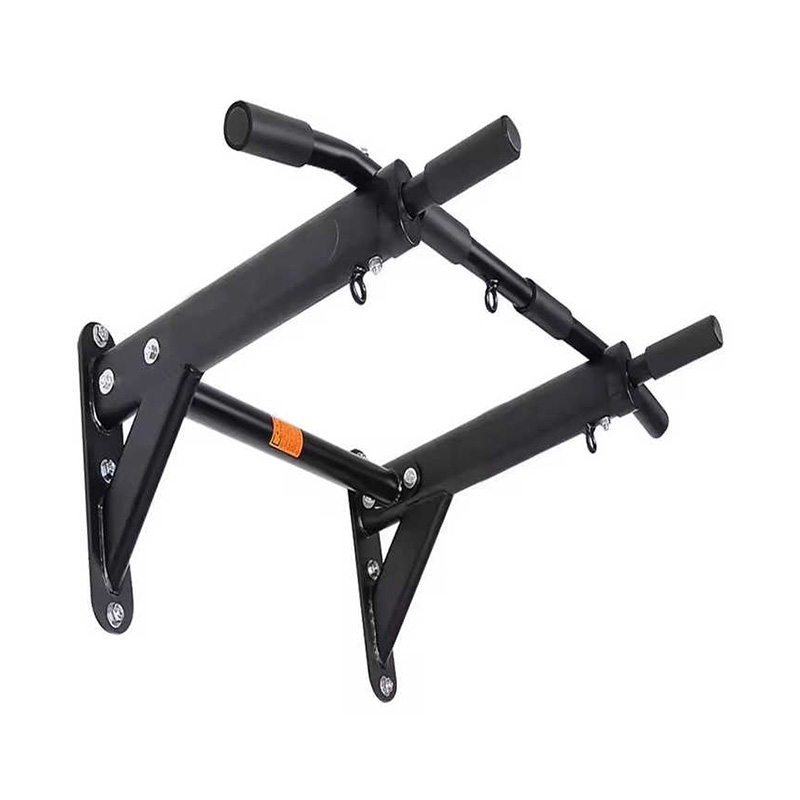
- Pull-up bar or wall station — $50–$150
- Kettlebell set (16 kg, 24 kg) — $80–$120
- Rubber flooring tiles — $100–$200
The Concept2 rower folds vertically for storage and requires no subscription — a significant long-term cost advantage over connected cardio machines. Combined with adjustable dumbbells and kettlebells, this setup handles all major weight-loss training protocols. Total cost: $1,680–$2,020.
Premium Build: $3,000–$7,000+ (Full Home Gym Replacement)
- NordicTrack Commercial 1750 treadmill — $1,999 + $39/month iFIT
- REP Fitness Ares 2.0 functional trainer or Major Fitness F22 ($929.99) — full cable system
- Assault AirBike — $700–$800 (HIIT intervals)
- Bowflex SelectTech 552 adjustable dumbbells — $399
- Adjustable bench — $150–$300
- Kettlebell set (3 weights) — $120–$200
- Rubber floor tiles — $100–$300
A premium build mirrors what a well-equipped commercial gym offers. With this gym equipment setup, you have every tool needed for cardio, HIIT, strength, and progressive overload. At 3–5 sessions per week, this investment pays for itself within 18 months compared to most mid-tier gym memberships.

The Subscription Question: Are Connected Gym Equipment Plans Worth It in 2026?
In 2026, most major cardio gym equipment platforms have significantly improved their subscription value. AI-personalized workout plans, heart-rate adaptive training, and multi-user family plans are now standard across iFIT, Peloton, and Aviron. Independent research shows that if you use connected gym equipment three or more times per week, a subscription costing $180–$540 per year is typically worth the cost — structured, coach-led sessions consistently outperform self-directed training for consistency over 12-month periods.
One important development in 2026: most smart cardio machines now operate in open or manual mode without an active subscription. You're not locked into paying monthly to use the hardware — but you lose AI coaching, live classes, and adaptive programs. This is relevant for budget planning. The NordicTrack 1750 runs as a standard treadmill without iFIT. The Peloton Bike+ functions as a stationary bike without the membership, though much of its value disappears. Consider your actual usage patterns before committing to subscription-dependent gym equipment.
For buyers who want strong programming without subscription lock-in, the Concept2 rower (no subscription, ever) and the Bowflex SelectTech dumbbell system (no subscription) paired with free YouTube-based programming from certified coaches represents a genuinely complete weight-loss gym equipment stack with zero ongoing cost beyond the initial purchase.
Training Approaches That Maximize Fat Loss From Your Home Gym Equipment
The gym equipment you choose is only half the equation. How you use it determines your actual fat-loss results. Three training approaches consistently outperform standard steady-state cardio in 2026 research:
HIIT: The Most Time-Efficient Fat-Loss Protocol
A 2024 meta-analysis published in the British Journal of Sports Medicine, covering 36 randomized controlled trials, found that HIIT reduced total body fat by 28.5% more than continuous moderate-intensity exercise over comparable time periods. HIIT also drives EPOC — elevated calorie burn for 12–24 hours after the session ends — which amplifies total daily energy expenditure. On a treadmill, a simple HIIT protocol looks like 30 seconds at 8–9 mph followed by 90 seconds at 3 mph, repeated 8–10 times. On a rowing machine: 10 rounds of 250-meter sprints with 90-second rests. On the assault bike: 20 seconds maximum effort, 40 seconds rest, repeated 10 times. Any of these gym equipment approaches delivers measurable fat-loss results in under 25 minutes per session.
Compound Circuit Training: Combining Strength and Cardio Simultaneously
Circuit training with minimal rest keeps heart rate elevated throughout a strength session, blending cardiovascular and muscular demands in every set. Using only adjustable dumbbells and a pull-up bar, a sample circuit that burns 300–500 calories per 40-minute session:
- Dumbbell goblet squat — 12 reps
- Push-ups — 15 reps
- Dumbbell Romanian deadlift — 10 reps
- Pull-ups or dumbbell bent-over rows — 8–10 reps
- Dumbbell overhead press — 10 reps
- Kettlebell swings — 20 reps
Rest 60 seconds between rounds. Complete 3–5 rounds. This approach maximizes the metabolic benefit from modest gym equipment investments and avoids the plateau that comes from doing only steady-state cardio.
Progressive Overload: The Non-Negotiable Principle for Long-Term Results
Progressive overload — systematically increasing weight, reps, or training volume over time — is the mechanism behind both muscle building and sustained metabolic adaptation. It's the reason adjustable gym equipment (adjustable dumbbells, barbells with plates, multi-level cable machines) is superior to fixed-resistance equipment for long-term fat loss. If you're lifting the same weights in the same rep ranges six months into a program, your body has adapted and is burning fewer calories than it was when the training was novel. Tracking workouts — even in a simple phone note — and aiming to add one more rep or 2.5 more pounds per session maintains the stimulus that keeps fat loss moving forward. The Tonal 2's adaptive resistance system automates this process; for free-weight gym equipment users, tracking manually achieves the same result.
What to Look for When Buying Home Gym Equipment for Weight Loss in 2026
Build Quality and Warranty
Warranties are the most reliable proxy for build confidence in 2026. Look for lifetime frame warranties on motorized treadmills and ellipticals, and multi-year motor warranties (3–5 years minimum). Cheap gym equipment under heavy regular use fails fast. Steel-framed cardio machines, cast-iron or rubber-coated free weights, and weight capacities that exceed your body weight by a meaningful margin are all markers of gym equipment built to last. Independent testing by BarBend rates durability based on 30-hour minimum testing protocols per product.
Noise and Apartment Compatibility
Treadmills generate the most noise of any home gym equipment — both from foot impact and motor vibration — and budget models are significantly louder than premium ones. Magnetic resistance exercise bikes and magnetic rowing machines are the quietest options and are well-suited to apartments and shared living spaces. Water rowers (like the WaterRower Natural) produce a pleasant swooshing sound that most neighbors tolerate. Air rowers and assault bikes are louder. For pre-6 a.m. workouts or thin-walled apartments, a stationary bike on rubber flooring tiles is the most neighbor-friendly gym equipment setup available in 2026.
Rubber flooring tiles ($1–$2 per square foot) reduce vibration transfer to floors below, protect both your floor surface and your gym equipment's structural components, and are recommended by every major gym equipment maintenance guide. For treadmills specifically, additional maintenance points to note for 2026: lubricate the belt with silicone lubricant every 3–6 months, check belt tension quarterly, and keep the surrounding area clear of dust.
Space Requirements and Storage
A standard treadmill occupies approximately 7 x 3 feet. A power rack requires a minimum of 6 x 4 feet of floor space plus 8 feet of ceiling clearance. The Aviron Strong Go Rower at 84 inches long is meaningfully shorter than the typical 95-inch rowing machine footprint. The Concept2 Model D folds vertically to a 25 x 47-inch footprint for storage. The Tonal 2 requires only 4 square feet when arms are folded, though the brand states you need roughly 64 square feet of available workout space around the unit to perform its full exercise library. Measure your available space carefully before purchasing any large gym equipment — returned treadmills and power racks are cumbersome and expensive to ship.
Total Cost of Ownership, Not Just Sticker Price
In 2026, evaluating gym equipment on sticker price alone misses a large portion of the real cost. A Peloton Bike+ at $2,499 plus $44/month adds up to approximately $7,779 over five years. A Concept2 rower at $900 with no subscription costs $900 over five years. The NordicTrack 1750 at $1,999 plus $39/month equals approximately $4,339 over five years. If connected programming genuinely drives you to train more consistently, the premium justifies itself. If you're self-motivated and will follow your own programming, subscription-free gym equipment delivers far better total value.
Gym Equipment to Avoid or Approach With Skepticism in 2026
The fitness equipment industry continues to sell products that overpromise results. These gym equipment categories in 2026 are significantly less effective for weight loss than their marketing claims:
- Whole-body vibration platforms: Claims of fat-burning through involuntary muscle contractions remain poorly supported by research. Most studies show minimal calorie expenditure compared to any conventional gym equipment.
- Dedicated ab machines: Spot reduction — burning fat from a targeted body part through direct exercise — has been debunked across multiple decades of research. Ab rollers and crunch machines build core strength but do not preferentially burn belly fat.
- Under-desk mini bikes at sedentary resistance levels: Pedaling a passive desk bike while seated burns roughly 100–150 calories per hour — far less than any active cardio gym equipment. They reduce sedentary time meaningfully but are not primary weight-loss tools.
- Budget home gym systems with fixed, limited resistance: Units with only 3–5 resistance levels plateau quickly, preventing the progressive overload that drives ongoing fat loss and muscle building. Many of these appear in department stores and online marketplaces under $200 with bold claims.
- EMS (electrical muscle stimulation) suits: These generate social media interest but produce negligible fat loss compared to active training. They are not a substitute for gym equipment-based exercise.
2026 Home Gym Equipment Recommendations by Situation
The single most important factor in weight loss is the training you actually do, not the training you plan to do. Choose gym equipment that matches your lifestyle, not just your aspirations.
| Your Situation | Top 2026 Recommendation | Reason |
|---|---|---|
| Small apartment, limited budget | Kettlebells + jump rope + pull-up bar | Maximum calorie burn per dollar; fits anywhere |
| Joint issues, injury recovery | Concept2 rower or magnetic spin bike | Low-impact; 86% muscle engagement; no knee stress |
| Need motivation and structure | Peloton Bike+ or NordicTrack 1750 | 96% retention rate proves consistency; AI coaching drives results |
| Serious about long-term muscle building | Power rack + barbell + Bowflex SelectTech 552 | Best progressive overload potential; raises metabolic rate permanently |
| Want all-in-one premium solution | Tonal 2 ($4,295) or REP Fitness Ares 2.0 | Compact, AI-coached, 250 lb digital resistance; replaces full gym |
| Time-limited, want maximum efficiency | Assault AirBike + kettlebells | 20-minute HIIT sessions match 45-minute steady-state cardio for fat loss |
| No subscriptions, no monthly costs | Concept2 rower + Bowflex SelectTech 552 + kettlebells | One-time purchase; covers full cardio and strength spectrum permanently |
Whatever gym equipment you choose, the underlying principles do not change in 2026: train consistently, apply progressive overload week over week, combine cardiovascular and strength work, and maintain a caloric deficit through diet. The equipment enables and facilitates the process — but no piece of gym equipment, however advanced or expensive, replaces the habits that drive sustained fat loss. Start with what you can afford, use it with genuine intensity and structure, and add gym equipment progressively as your fitness and budget grow.