English
 Deutsch
 中文简体
中文简体Content
- Why Glute Stretches Matter for Strength and Movement Quality
- The Anatomy Behind Tight Glutes
- Five Glute Stretches Worth Prioritizing
- Pairing Glute Stretches With Training Sled Sessions
- Building a Simple Weekly Routine
- Common Mistakes That Limit Progress
- Adjusting the Routine for Different Training Levels
- Frequently Asked Questions
Quick Answer: The most effective glute stretches — the figure-four stretch, kneeling hip flexor stretch, pigeon pose, and standing glute stretch — work best when paired with posterior-chain strength work like sled pushes and drags. Stretching alone improves range of motion, but combining it with resistance-based sled training builds the strength to actually use that mobility under load, which is the combination most strength coaches recommend for lasting results.
Why Glute Stretches Matter for Strength and Movement Quality
The glutes are the largest muscle group in the human body and play a central role in hip extension, external rotation, and pelvic stability. When the gluteus maximus, medius, and minimus become tight or underactive, the body compensates by shifting load elsewhere — often to the lower back, hamstrings, or knees. This compensation pattern is one of the most common reasons athletes and gym-goers develop nagging discomfort during squats, deadlifts, and sprinting drills.
Regular glute stretches help restore normal hip range of motion, which in turn allows the posterior chain to generate force more efficiently during pushing, pulling, and sprinting movements. A hip joint that moves freely through extension and rotation also reduces unnecessary strain on the lumbar spine, since the hips can absorb more of the movement instead of the lower back compensating for restricted mobility.
This connection between mobility and force output is why many strength coaches pair a glute stretching routine with functional resistance tools such as a Training Sled. Sled work loads the glutes through a long range of motion without the eccentric impact of running or jumping, making it a natural complement to a stretching program rather than a competing activity.
The Anatomy Behind Tight Glutes
Understanding why the glutes tighten in the first place makes stretching far more purposeful. Three muscles make up the gluteal group, each with a distinct role:
Gluteus Maximus
The largest and most powerful of the three, responsible for hip extension — the motion used when standing up from a squat, driving a sled forward, or sprinting. Prolonged sitting shortens this muscle's resting length, reducing its ability to fully extend the hip.
Gluteus Medius and Minimus
Located on the outer hip, these smaller muscles stabilize the pelvis during single-leg movements such as lunges and running strides. When they are tight or weak, athletes often notice hip drop or knee cave during loaded exercises, which is why lateral stretches like the figure-four should not be skipped in favor of only stretching for hip extension.
Deep External Rotators
Muscles such as the piriformis sit beneath the gluteus maximus and control rotational movement of the femur. Tightness here is frequently linked to sciatic-type discomfort, making stretches like pigeon pose particularly useful for athletes who sit for long periods between training sessions.
Five Glute Stretches Worth Prioritizing
Not every glute stretch delivers the same benefit. The stretches below target different fibers of the gluteal group and are commonly used in athletic warm-up and cool-down protocols.
| Stretch | Primary Target | Hold Time |
|---|---|---|
| Figure-Four Stretch | Gluteus medius, piriformis | 30-45 seconds |
| Kneeling Hip Flexor Stretch | Hip flexors, glute activation | 30 seconds per side |
| Pigeon Pose | Deep external rotators | 45-60 seconds |
| Standing Glute Stretch | Gluteus maximus | 20-30 seconds |
| Seated Cross-Leg Stretch | Gluteus maximus, lower back | 30 seconds per side |
Pairing Glute Stretches With Training Sled Sessions
Static stretching immediately before heavy sled loading is generally not recommended, since temporarily loosened muscle tissue can reduce power output during the first sets. A more effective sequence separates mobility work from loaded training into three distinct phases.
Before Training: Dynamic Preparation
Replace static glute stretches with dynamic variations — walking lunges with a rotation, leg swings, or bodyweight glute bridges — to raise tissue temperature and prime the hips for horizontal loading on the sled. Ten to twelve repetitions of each movement is usually enough to prepare the joint without fatiguing the muscle before the working sets begin.
During Training: Loaded Hip Extension
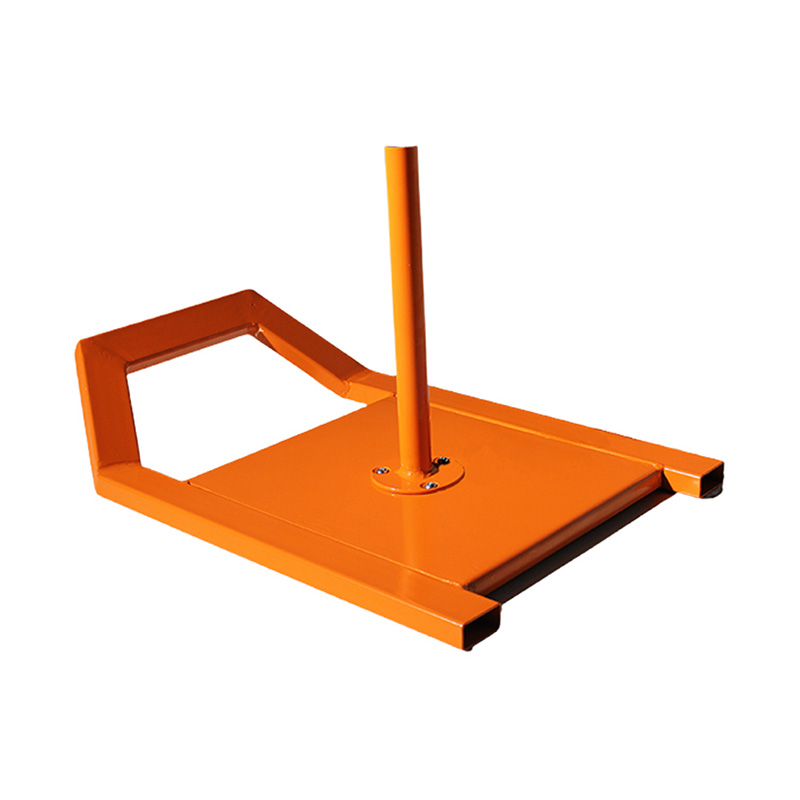
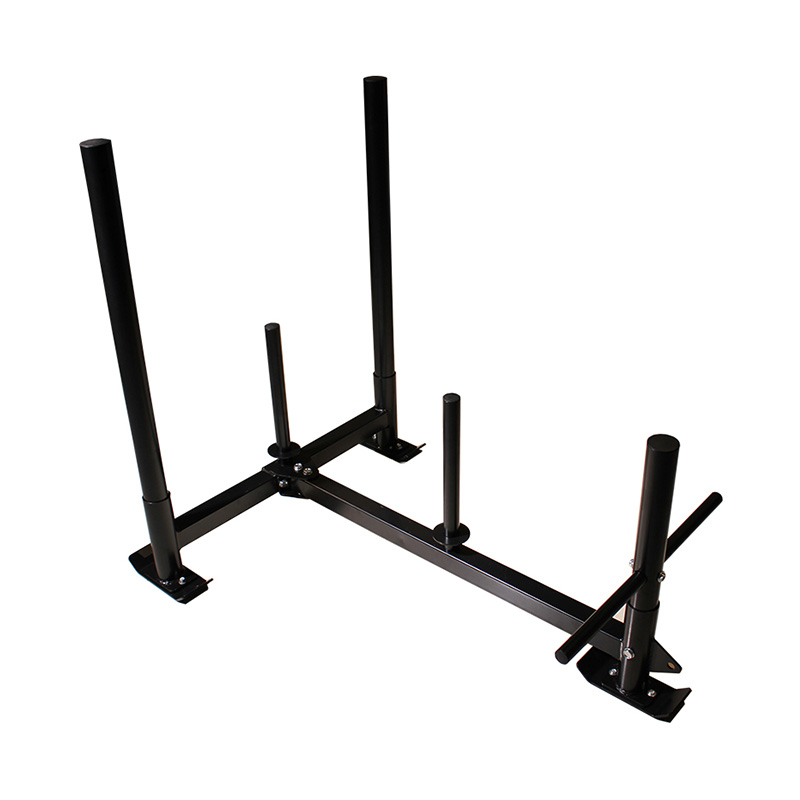
A weighted gym weight sled pushed forward with long, driving strides places continuous tension on the glutes through hip extension, reinforcing the same range of motion developed through stretching. Because sled resistance is horizontal rather than vertical, it avoids the joint-jarring impact associated with sprinting on hard surfaces, making it a lower-risk option for athletes returning from minor hip or hamstring tightness.
Both sled pushes and sled drags can be used depending on the training goal. Forward pushes emphasize concentric hip and knee drive, while backward or lateral drags shift more demand onto the gluteus medius and stabilizing muscles around the hip.
After Training: Static Recovery Stretches
Once the session is complete, static glute stretches such as pigeon pose or the figure-four stretch help lengthen tissue that has just been worked under load, supporting recovery and maintaining hip range of motion over time. This is also the ideal window to spend extra time on any side of the body that felt tighter during the sled work.
Building a Simple Weekly Routine
A practical routine does not need to be complicated. The structure below is commonly used by athletic trainers to combine mobility and posterior chain strength across a training week.
- Two to three sessions per week of dynamic hip mobility drills before sled pushes or drags
- Sled loading progressed gradually, starting light enough to maintain a tall posture and full stride length, then adding weight in small increments once form stays consistent
- Static glute stretches held for 30-60 seconds per side immediately after each session
- One additional stand-alone mobility day focused entirely on hip and glute stretching for athletes managing tightness from desk work or travel
For most recreational lifters, two to three sled sessions per week is enough to build noticeable posterior chain strength without interfering with recovery from other lower-body training days.
Common Mistakes That Limit Progress
Even a well-designed stretching and sled routine can fall short if a few common errors go unnoticed.
- Skipping dynamic preparation and going straight into heavy sled pushes with cold hips, which increases the risk of strain
- Holding static glute stretches immediately before maximal-effort sled sprints, which can temporarily reduce short-term power output
- Loading the sled too heavy too soon, causing a shortened stride that reduces hip extension range instead of reinforcing it
- Neglecting the gluteus medius by only stretching for hip extension and ignoring lateral hip mobility
- Bouncing during static stretches instead of holding a steady position, which can trigger a protective muscle contraction rather than a release
Adjusting the Routine for Different Training Levels
Not every athlete should approach glute stretching and sled work the same way. Adjusting intensity and volume based on experience level helps avoid setbacks.
Beginners
New trainees should focus on bodyweight sled pushes and shorter static stretch holds of around 15-20 seconds, gradually increasing hold time and sled resistance as hip mobility and confidence improve.
Intermediate and Advanced Athletes
More experienced lifters can incorporate heavier sled loads, shorter rest periods between pushes, and longer static stretch holds of 45-60 seconds to continue improving both strength and end-range hip mobility.
Athletes Returning From Injury
Anyone recovering from a hip, hamstring, or lower back issue should prioritize pain-free range of motion over stretch intensity, and should introduce sled loading gradually under the guidance of a qualified professional before progressing to sprint-style pushes.
Frequently Asked Questions
Q1: Should I stretch my glutes before or after sled training?
Dynamic movement is better suited before sled training, while static glute stretches are more effective afterward, when muscles are warm and the priority shifts to recovery and range-of-motion maintenance.
Q2: How does sled training help with tight glutes?
Pushing or dragging a training sled requires a long, driving stride that takes the hip through a full range of extension, which reinforces mobility gained from stretching while simultaneously building strength in that range.
Q3: How often should glute stretches be performed?
Most athletes benefit from stretching the glutes three to five times per week, ideally after training sessions or on dedicated mobility days, rather than immediately before high-intensity sled sprints.
Q4: Can beginners use a training sled safely alongside a stretching routine?
Yes. Starting with light loads and a stable, well-built sled allows beginners to develop proper hip extension mechanics gradually, while ongoing glute stretching helps maintain the mobility needed for good sled-pushing form.
Q5: Is it normal to feel tighter in one hip than the other?
Minor side-to-side differences in hip mobility are common, often related to daily habits such as which leg is favored when standing or sitting. Spending slightly more time stretching the tighter side, rather than skipping it, usually helps balance mobility over time.