English
 Deutsch
 中文简体
中文简体Content
- Why Home Fitness Equipment Outperforms Gym Memberships for Many People
- Adjustable Dumbbells: The Highest-Value Single Purchase in Home Fitness
- Cardio Equipment: Matching the Machine to Your Preferred Movement
- Resistance Bands: Underestimated and Extremely Effective
- Pull-Up Bars and Bodyweight Training Gear
- Kettlebells: One Tool, Hundreds of Exercises
- Barbells and Power Racks: For Serious Strength Training at Home
- Comparing Home Fitness Equipment by Goal, Space, and Budget
- Smart Home Fitness Equipment: Connected Technology and Whether It's Worth It
- Floor Mats, Flooring, and the Infrastructure That Protects Your Investment
- Building a Home Gym on a Tight Budget: Starter Setups That Actually Work
- What to Look for When Buying Home Fitness Equipment: Practical Buyer Criteria
- Buying Used Home Fitness Equipment: Where and What to Look For
- Conclusion: Prioritize Based on Your Actual Training Habits
The best fitness equipment for home depends on your goals, available space, and budget — but if you had to pick one category that delivers the broadest results for most people, resistance-based equipment combined with a quality cardio machine covers roughly 90% of what you'd do in a commercial gym. A set of adjustable dumbbells, a pull-up bar, and a foldable treadmill or stationary bike can support weight loss, muscle gain, cardiovascular health, and mobility work without requiring a dedicated gym room. That said, the "best" setup is genuinely personal, and this guide breaks down every major category so you can build a home gym that actually matches how you train.
Over the past several years, home fitness equipment sales have exploded. According to data from the Sports & Fitness Industry Association, the home exercise equipment market surpassed $2.3 billion in annual U.S. sales, driven by people who realized they could get serious results without a monthly membership. The challenge is that the market is now flooded with mediocre products, and it's easy to spend money on gear that collects dust. This article cuts through the noise with specific recommendations backed by performance data, user feedback patterns, and exercise science.
Why Home Fitness Equipment Outperforms Gym Memberships for Many People
Before diving into specific gear, it's worth understanding why investing in home fitness equipment makes practical sense. The average American gym member pays between $40 and $70 per month for a membership but visits the gym fewer than twice a week, according to research published in the International Journal of Health Fitness. That works out to $480 to $840 per year for infrequent use. A solid home gym setup — adjustable dumbbells, a bench, resistance bands, and a cardio option — can be assembled for $600 to $1,500 and lasts for a decade or more with minimal maintenance.
Beyond cost, convenience is the biggest factor. Studies on exercise adherence consistently show that reducing friction — like commute time and gym crowd anxiety — is one of the strongest predictors of long-term exercise consistency. When your treadmill is 20 feet from your bedroom, you're statistically more likely to use it at 6 a.m. or 10 p.m. when gym access isn't practical. For parents, shift workers, remote workers, and anyone managing a packed schedule, home fitness equipment removes the logistical barriers that kill consistency.
Adjustable Dumbbells: The Highest-Value Single Purchase in Home Fitness
If you can only buy one piece of fitness equipment, adjustable dumbbells are the most versatile and space-efficient option on the market. A single pair replaces a full rack of fixed-weight dumbbells — typically 15 to 20 individual pairs — and fits in the space of a small suitcase.
Top Picks and What Sets Them Apart
The Bowflex SelectTech 552 adjusts from 5 to 52.5 lbs in 2.5-lb increments at the lower end and 5-lb increments beyond 25 lbs. It retails for around $400 to $429 and is widely considered the benchmark for consumer-grade adjustable dumbbells. The dial adjustment mechanism is fast — under three seconds to change weight — which matters during circuit training where rest periods are short.
The PowerBlock Elite EXP uses a pin-selector mechanism and adjusts from 5 to 50 lbs (expandable to 70 or 90 lbs with add-on kits). PowerBlocks tend to be more durable under heavy use and are the preferred choice in commercial settings and by serious lifters. They're slightly bulkier in the hand but more robust long-term.
For budget-conscious buyers, the NordicTrack Select-a-Weight offers a similar dial system to Bowflex at a slightly lower price point with a 55-lb max. The tradeoff is a longer and heavier dumbbell shape that some users find awkward for exercises like lateral raises.
With a good set of adjustable dumbbells, you can perform over 50 distinct exercises targeting every major muscle group: goblet squats, Romanian deadlifts, bent-over rows, chest press, shoulder press, bicep curls, tricep kickbacks, lateral raises, lunges, single-leg deadlifts, and more. Combined with a flat or adjustable bench, the exercise variety expands further into incline and decline pressing movements.
Cardio Equipment: Matching the Machine to Your Preferred Movement
Cardio fitness equipment for home comes in several major categories, and the right one depends more on your physical preferences and joint health than on raw calorie burn data. Here's a breakdown of each major type:
Treadmills
Treadmills remain the most popular home cardio machine in the United States. Walking and running are natural human movement patterns, which makes treadmills intuitive and broadly accessible. A quality home treadmill requires a motor of at least 2.5 continuous horsepower (CHP) for walkers and 3.0 CHP for runners. Underpowered motors burn out faster and create inconsistent belt speed, which is a safety hazard.
The NordicTrack Commercial 1750 and the Sole F80 are consistently rated among the best home treadmills in the $1,500 to $2,000 price range. The Sole F80 is particularly well-regarded for its cushioning system, which reduces impact on knees and hips compared to running on pavement. Foldable treadmills — which lift the deck vertically for storage — are ideal for smaller spaces, though they typically sacrifice some stability compared to non-folding models.
Stationary Bikes
Stationary bikes are lower-impact than treadmills, making them an excellent choice for people with knee, hip, or ankle issues. They come in three main styles: upright (similar to outdoor riding position), recumbent (reclining with back support), and cycling/spin bikes (aggressive forward lean, heavier flywheel, designed for high-intensity intervals).
The Peloton Bike became the defining product of the home cycling category, though its $1,445 price plus $44/month subscription makes it a significant ongoing expense. Strong alternatives include the Schwinn IC4 ($699), which connects to third-party apps including Peloton's app, and the NordicTrack S22i, which features an adjustable incline/decline frame for simulating hill climbs and descents — a feature no other home bike offers at this price.
Rowing Machines
Rowing is one of the few cardio modalities that works the upper body, lower body, and core simultaneously. A 155-lb person burns approximately 260 calories in 30 minutes of moderate rowing, comparable to running at 5 mph. The Concept2 Model D ($1,000) is the industry standard used by Olympic athletes and CrossFit gyms globally. It uses air resistance, requires minimal maintenance, and has a performance monitor that tracks split times, watts, and stroke rate with precision. For those who prefer water resistance, the WaterRower Natural offers a quieter, visually elegant alternative with a more fluid stroke feel.
Ellipticals
Ellipticals provide a low-impact, full-body cardio workout that mimics walking or running without the ground-strike force. They're particularly popular among older adults and those recovering from lower-body injuries. The Sole E35 and NordicTrack FS14i are standout options in the mid-to-high price range. One often-overlooked feature is stride length: a stride under 18 inches feels choppy for taller users, while 20 to 21 inches suits most adults comfortably.
Resistance Bands: Underestimated and Extremely Effective
Resistance bands are frequently dismissed as beginner tools, but that view is outdated. Research published in the Journal of Human Kinetics found that resistance band training produces comparable muscle activation and strength gains to free weight training across a wide range of exercises. The key advantage is accommodating resistance — bands get harder as they stretch, loading the muscle at peak contraction rather than at the point of maximum mechanical disadvantage as free weights do.
A quality set of loop bands and tube bands costs between $20 and $60 and can be used for everything from glute activation and shoulder rehab to heavy deadlifts and assisted pull-ups. The Rogue Monster Bands and Serious Steel bands are the most durable options, rated for tens of thousands of repetitions. For travel or minimal-space setups, bands are the clear winner — they weigh under two pounds total and fit in a gym bag.
For those who want more structured resistance band training, companies like Tonal and Tempo have built smart home gym systems around motorized resistance that essentially digitizes the band training concept. Tonal's wall-mounted system offers up to 200 lbs of electromagnetic resistance, adjusts weight automatically mid-set, and provides AI-guided coaching — all for $3,495 plus installation. It's an expensive but genuinely effective product for those with the budget.
Pull-Up Bars and Bodyweight Training Gear
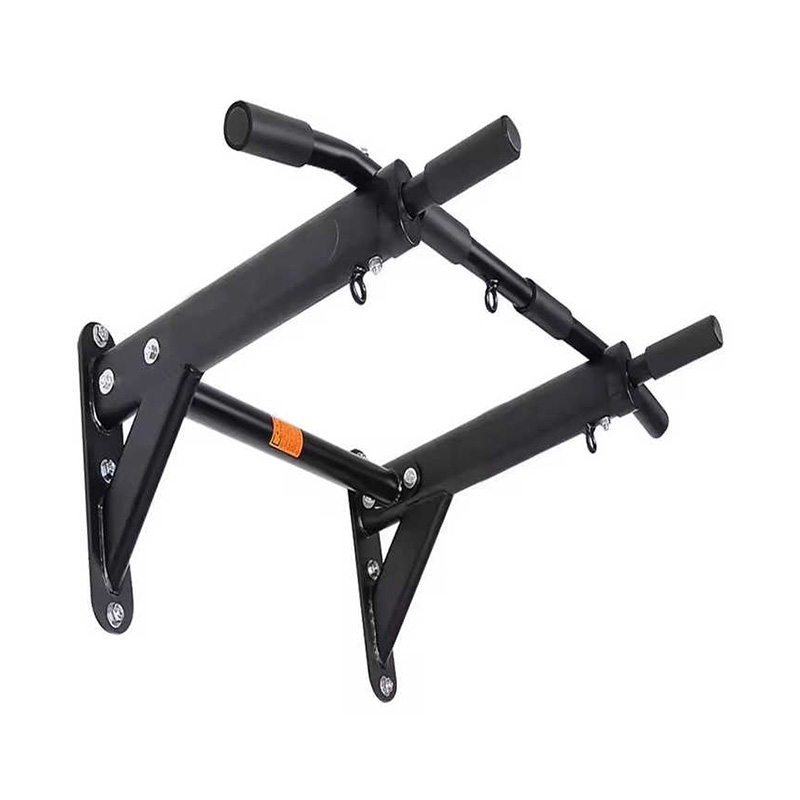
A doorframe pull-up bar costs between $25 and $50 and enables one of the most effective upper-body exercises available. Pull-ups and chin-ups train the latissimus dorsi, biceps, rear deltoids, and core simultaneously, and research consistently shows that compound bodyweight exercises build functional strength at rates comparable to machine-based training.
The Iron Gym Total Upper Body Workout Bar fits most standard door frames without requiring mounting hardware and supports up to 300 lbs. For more serious bodyweight athletes, a freestanding pull-up station — like the Rogue Monster Lite Rig or a basic power tower — allows for dips, leg raises, and more movement variety without relying on a doorframe.
Gymnastic rings are another underutilized piece of fitness equipment that provide extraordinary upper-body and core training. At around $30 to $50 for a quality pair, they offer push-up and dip variations, ring rows, muscle-up progressions, and L-sit holds — all exercises that challenge stability and coordination in ways fixed machines cannot replicate. The Nayoya gymnastics rings and Rogue wood rings both receive high marks for grip feel and strap durability.
Kettlebells: One Tool, Hundreds of Exercises
Kettlebells occupy a unique position in home fitness equipment because they enable ballistic, dynamic movements — swings, cleans, snatches, Turkish get-ups — that neither dumbbells nor barbells replicate well. These movements develop power, cardiovascular endurance, and muscular strength simultaneously, making kettlebell training highly time-efficient.
For most beginners, a 16 kg (35 lb) kettlebell for men and a 12 kg (26 lb) for women is a practical starting weight that allows proper swing mechanics without compromising form. Experienced lifters often add a 24 kg and 32 kg to create a minimal three-bell rack that covers virtually every kettlebell exercise. Cast iron kettlebells from Rogue Fitness and Kettlebell Kings are competition-grade, machined to precise tolerances, and will last indefinitely under normal use. Avoid cheap kettlebells with rough seams at the handle — they cause skin tears during high-rep swings and cleans.
A 2018 study in the Journal of Strength and Conditioning Research found that a 12-week kettlebell training program produced significant improvements in aerobic capacity, muscular endurance, and movement quality compared to a control group, with results comparable to traditional resistance training programs — but in less total training time per session.
Barbells and Power Racks: For Serious Strength Training at Home
If your primary goal is maximal strength development — and you have a garage, basement, or dedicated room — a barbell and power rack setup is the most effective home fitness equipment configuration for that purpose. Nothing builds raw strength faster than the squat, deadlift, bench press, and overhead press performed with a barbell, and a power rack allows you to train these movements safely without a spotter.
A basic garage gym setup includes:
- A Rogue RML-390F fold-back rack (~$685) or similar half rack with safety spotter arms
- A Rogue Ohio Bar or Rep Fitness EX-2000 barbell (~$250 to $350) — both use 28.5mm grip diameter, ideal for general strength training
- 300 lbs of calibrated iron plates or bumper plates if you plan to deadlift from the floor without risking floor damage (~$300 to $400)
- A flat/adjustable bench — the Rep Fitness AB-5000 at $330 supports up to 1,000 lbs and adjusts to 8 positions
- ¾-inch rubber horse stall mats from a farm supply store (~$50 for a 4x6 ft mat) to protect floors and dampen noise
Total cost for this setup runs $1,500 to $2,000, which is comparable to two to three years of gym membership costs but delivers equipment with a 20-year lifespan. The footprint is roughly 8x8 feet when training, foldable to 4x4 feet with the right rack design.
Comparing Home Fitness Equipment by Goal, Space, and Budget
The table below summarizes key fitness equipment options based on training goal, minimum space requirement, and approximate cost to help you prioritize your investment.
| Equipment | Best For | Min. Space | Approx. Cost | Noise Level |
|---|---|---|---|---|
| Adjustable Dumbbells | Strength, Hypertrophy | 25 sq ft | $300–$500 | Low |
| Treadmill | Cardio, Weight Loss | 35 sq ft | $800–$2,500 | Moderate–High |
| Stationary Bike | Cardio, Low Impact | 20 sq ft | $500–$1,800 | Low |
| Rowing Machine | Full Body Cardio | 60 sq ft | $500–$1,200 | Low–Moderate |
| Kettlebells | Power, Conditioning | 30 sq ft | $60–$300 | Moderate |
| Barbell + Power Rack | Maximal Strength | 64 sq ft | $1,500–$2,500 | Moderate |
| Resistance Bands | Rehab, Mobility, Travel | 10 sq ft | $20–$80 | Very Low |
| Pull-Up Bar | Upper Body, Core | 5 sq ft | $25–$80 | Very Low |
Smart Home Fitness Equipment: Connected Technology and Whether It's Worth It
The home fitness equipment market has been reshaped by connected technology over the past five years. Smart treadmills, bikes, and strength systems now offer live and on-demand classes, automatic resistance adjustments, performance tracking, and social features that replicate the group class experience at home.
Peloton pioneered this category and still holds significant market share despite financial turbulence. Their bike, tread, and row machines are genuinely excellent hardware paired with the best-in-class content library of any fitness platform. If you're someone who thrives on instructor motivation and community accountability, the Peloton ecosystem is difficult to beat — but the ongoing subscription cost ($44/month) is a real consideration over a 5-10 year ownership window.
NordicTrack and iFit offer a compelling alternative: their hardware is comparably priced and often features unique additions — the iFit subscription ($396/year for a family plan) includes Google Maps-based outdoor run and ride simulations where the treadmill or bike automatically adjusts incline to match real terrain. For people who love outdoor training but need indoor alternatives, this feature is genuinely engaging and helps sustain motivation.
For strength training, Tonal remains the most sophisticated connected strength system. Its AI adjusts weight automatically based on performance, identifies weak points, and periodizes training over time. Users report average strength gains of 34% over their first 6 months based on Tonal's internal data — a figure consistent with beginner-to-intermediate strength gains documented in exercise science literature. The downside is cost: $3,495 for the device plus $49/month for the subscription and the requirement of professional installation on a reinforced wall stud.
For those who want the benefits of connected fitness without premium pricing, third-party apps like Zwift (cycling), Apple Fitness+, and Future (personal training) can be paired with any compatible cardio or strength equipment at a fraction of the cost of vertically integrated systems.
Floor Mats, Flooring, and the Infrastructure That Protects Your Investment
Equipment infrastructure is frequently overlooked when people plan home gyms, and it's a mistake that causes real problems. Dropping a 50-lb dumbbell on a hardwood floor, allowing moisture from post-workout sweat to soak into carpet under a treadmill, or letting a bike's resistance mechanism rattle on an uneven surface all damage both equipment and home over time.
Rubber horse stall mats (3/4 inch thick, 4x6 feet, available at Tractor Supply Co. or Rural King for approximately $50 each) are the most cost-effective flooring solution for home gyms. They're durable, non-slip, easy to clean, dampen sound and vibration, and protect floors from dropped equipment. A typical 10x10 home gym setup requires four to five mats, covering the floor for $200 to $250 — far cheaper than purpose-branded gym flooring tiles.
For yoga, stretching, and floor exercises, a high-density foam exercise mat (at least 6mm thick) provides cushioning that rubber mats don't. The Manduka PRO ($120) and Liforme yoga mat ($150) are premium options built to last years under daily use. Budget options like the Gaiam Premium ($35 to $50) work well for occasional use.
Building a Home Gym on a Tight Budget: Starter Setups That Actually Work
You don't need to spend thousands to build a functional home fitness space. The following tiered setups represent practical starting points at different budget levels, based on maximizing training variety per dollar spent.
Under $200: Minimal but Effective
- Resistance band set with loop and tube bands (~$40)
- Doorframe pull-up bar (~$35)
- Single 16 kg or 20 kg kettlebell (~$80)
- Exercise mat (~$30)
This setup supports full-body strength training, cardio conditioning (via kettlebell circuits and band exercises), and flexibility work. It fits in a closet and works in any room.
$500 to $800: A Well-Rounded Starter Setup
- Adjustable dumbbell set (e.g., Bowflex 552, ~$400)
- Flat bench (~$100)
- Pull-up bar (~$35)
- Resistance bands (~$40)
- Two rubber mats (~$100)
At this level, you can perform nearly any dumbbell-based strength exercise and a broad range of bodyweight movements. Adding a jump rope ($15) or stationary bike on the used market ($150 to $250) covers cardio without significantly expanding the budget.
$1,500 to $2,500: A Complete Training Environment
- Adjustable dumbbells (~$400)
- Adjustable bench (~$200 to $330)
- Half rack with pull-up bar and safety arms (~$500 to $700)
- Barbell and weight plates (~$400)
- Cardio machine (used rower or budget stationary bike, ~$300 to $500)
- Full rubber flooring (~$200)
This configuration supports every major training modality and can sustain advanced programming for years. It requires a dedicated 8x10 to 10x12 foot space, such as a one-car garage portion or a large basement area.
What to Look for When Buying Home Fitness Equipment: Practical Buyer Criteria
Beyond specific product recommendations, knowing how to evaluate any piece of fitness equipment helps you make smarter purchases — especially when buying used or evaluating new brands entering the market.
- Weight capacity and structural ratings: Any piece of strength equipment should clearly state its rated capacity and be tested by the manufacturer to at least 2x the stated maximum. Cheap equipment frequently fails at the welds under regular use.
- Warranty coverage: Look for frame warranties of at least 5 years on strength equipment and at least 3 years on cardio machines. Motor warranties on treadmills and bikes should cover at least 2 years. Companies offering only 90-day warranties are often selling lower-quality products.
- Parts availability: Before buying any cardio machine, verify that replacement parts — belts, rollers, resistance elements — are available directly from the manufacturer or through third-party suppliers. Some budget brands discontinue parts support within 3 to 5 years of product launch.
- Noise and vibration output: Important if you live in an apartment, have downstairs neighbors, or train early in the morning. Magnetic resistance bikes and water rowers are genuinely quiet. Treadmills — even the best ones — produce significant impact sound that travels through floors.
- User reviews across 12+ months: First-month reviews reflect initial impressions. Reviews from users who have owned a product for 12 to 24 months reveal durability issues, mechanical failures, and long-term usability problems that short-term reviewers miss.
Buying Used Home Fitness Equipment: Where and What to Look For
The used fitness equipment market is enormous — and it's one of the best places to buy. People purchase home gym gear with the best intentions, use it infrequently, and eventually sell it at steep discounts. Facebook Marketplace, Craigslist, and OfferUp regularly feature treadmills, bikes, and rack systems priced at 30% to 60% below retail. Gym closures over the past few years pushed commercial-grade equipment into the secondary market at consumer prices.
What to inspect before purchasing used cardio equipment: check the belt for fraying or uneven wear (treadmills), listen for grinding or clicking sounds during operation, test the entire resistance range, and confirm the console electronics function correctly. For used dumbbells and barbells, inspect the knurling (grip texture) for excessive wear and check that collars and adjustment mechanisms function smoothly. Avoid used resistance bands — elastomers degrade over time regardless of visible condition, and a snapped band under tension can cause injury.
Conclusion: Prioritize Based on Your Actual Training Habits
The best home fitness equipment is the equipment you'll actually use consistently. A $2,000 treadmill that gathers dust delivers zero value; a $40 set of resistance bands used three times a week delivers real fitness outcomes. Be honest with yourself about what forms of exercise you enjoy, what time you have, and what space you're working with before spending any money.
For most people, a set of adjustable dumbbells, a pull-up bar, and one cardio option covers the full spectrum of fitness goals at a reasonable cost. Add a bench if you enjoy pressing movements. Add a kettlebell if you want conditioning work. Add a barbell rack if your primary goal is strength. Layer in connected fitness technology if you need external motivation to stay consistent.
The home gym space has never been better supplied — the breadth and quality of available fitness equipment now rivals what commercial gyms offered a decade ago, and the pricing reflects a maturing market with serious competition. That's good news for anyone ready to commit to building a training environment at home.