English
 Deutsch
 中文简体
中文简体Content
- Weighted Ab Workouts: The Direct Answer First
- Why Weighted Ab Workouts Build Core Strength Faster
- Ab Roller: The Most Effective Core Tool for Weighted Training
- Top Weighted Ab Exercises Beyond the Ab Roller
- How to Program Weighted Ab Workouts for Maximum Results
- Technique Fundamentals That Separate Good Results from Injury
- Common Mistakes in Weighted Ab Workouts and How to Fix Them
- A Complete Weighted Ab Workout You Can Do Today
- What Happens to Your Core When You Add Weighted Resistance Consistently
Weighted Ab Workouts: The Direct Answer First
If you want a stronger, more defined core faster, weighted ab workouts outperform bodyweight training by a significant margin. Studies from the National Strength and Conditioning Association show that adding external resistance to core exercises increases muscle activation by up to 30–45% compared to unweighted versions. The key is progressive overload — the same principle that builds big arms and strong legs applies directly to your midsection.
Among all the tools available for weighted ab training, the Ab Roller stands apart. It combines loaded spinal flexion, anti-extension strength, and full-range rectus abdominis engagement in a single movement. When you add a resistance band or perform rollouts on an incline, you turn a bodyweight drill into a genuine weighted ab workout that rivals cable crunches and weighted decline sit-ups.
This guide breaks down every major angle of weighted ab training — from exercise selection and programming to technique, equipment, and common mistakes. Whether you are a beginner picking up an ab roller wheel for the first time or an advanced lifter looking to load your core more intelligently, the information below gives you a clear, practical roadmap.
Why Weighted Ab Workouts Build Core Strength Faster
The abdominal muscles are like any other muscle group in the body — they respond to tension, volume, and progressive overload. Doing 100 bodyweight crunches every morning trains endurance, not strength or hypertrophy. To see measurable size and strength improvements, you need to increase the resistance over time.
Progressive Overload Works on the Core Too
The rectus abdominis, obliques, and transverse abdominis all contain fast-twitch and slow-twitch fibers. High-rep, no-load training mainly targets the slow-twitch endurance fibers. Adding weight — whether through a cable machine, a weight plate, or an ab roller with resistance bands — recruits the fast-twitch fibers responsible for muscle growth and visible definition.
Shorter Sessions with Better Results
A weighted ab workout lasting 15–20 minutes can produce more hypertrophic stimulus than a 40-minute bodyweight session. Research published in the Journal of Strength and Conditioning Research found that 3 sets of 10–15 reps with added resistance generated greater EPOC (excess post-exercise oxygen consumption) than high-rep bodyweight circuits, meaning your metabolism stays elevated longer after training.
Improved Athletic Transfer
A strong, loaded core transfers directly to deadlifts, squats, overhead pressing, and sports performance. Athletes who include weighted ab work report noticeable improvements in their compound lift numbers within 4–6 weeks. The anti-rotation and anti-extension strength gained from tools like the Ab Roller protects the spine under heavy load.
Ab Roller: The Most Effective Core Tool for Weighted Training
The ab roller — also called an ab wheel or ab roller wheel — is one of the most mechanically demanding core tools available. Unlike crunches that only move through a small range of motion, an ab roller rollout requires your core to resist spinal extension through a long lever arm, which creates massive tension through the entire anterior chain.
How the Ab Roller Creates a Weighted Effect
Even in its standard form, the ab roller creates a loaded training stimulus through leverage. When your body is extended, the distance from your hips to your hands acts as a long moment arm, dramatically increasing the torque your abs must overcome. This effect is equivalent to performing a weighted plank variation with significant load.
To explicitly add weight to ab roller training, there are three proven methods:
- Attach a resistance band from a fixed anchor to your torso for added pull-back resistance during rollouts.
- Perform rollouts on an incline surface to shift more bodyweight onto the working muscles.
- Wear a weighted vest during ab roller exercises to increase total load without altering technique.
- Progress from kneeling to standing ab roller rollouts — a transition that roughly doubles the difficulty.
A standing ab roller rollout is arguably the hardest unweighted core exercise that exists. EMG studies have measured rectus abdominis activation during standing ab roller rollouts at over 200% MVC (maximum voluntary contraction), which surpasses virtually every other ab exercise including hanging leg raises and cable crunches.
Ab Roller EMG Activation Comparison
| Exercise | Activation (%MVC) |
|---|---|
| Standard Crunch | 64% |
| Hanging Leg Raise | 112% |
| Cable Crunch (weighted) | 141% |
| Kneeling Ab Roller | 169% |
| Standing Ab Roller | 212% |
Choosing the Right Ab Roller
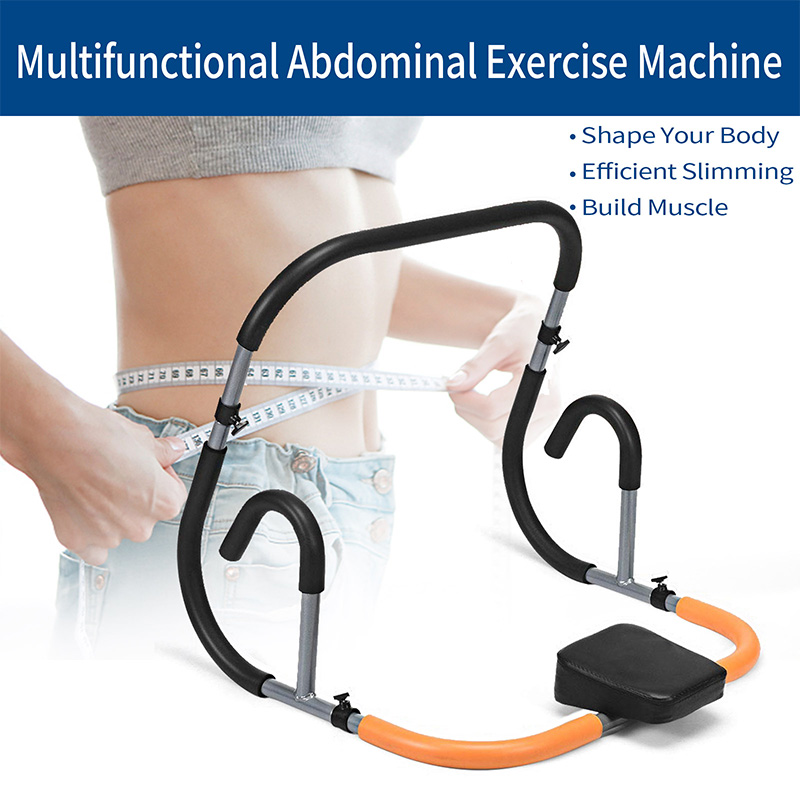
Not all ab rollers are the same. The construction of the wheel significantly affects stability, resistance, and joint safety. Here is what to look for:
- Dual-wheel design: Provides lateral stability and is better for beginners learning the movement pattern. Reduces the risk of shoulder drift under fatigue.
- Single wide wheel: Requires more active stabilization from the obliques and transverse abdominis, making it a harder and more rewarding tool for intermediate to advanced users.
- Foam or rubberized handles: Critical for grip comfort during high-rep sets. Slipping mid-rollout is both dangerous and breaks the set prematurely.
- Return spring mechanism: Some ab rollers include an auto-return spring that assists the concentric phase. This is helpful for beginners but should be avoided once strength develops.
Top Weighted Ab Exercises Beyond the Ab Roller
While the ab roller is the centerpiece of any serious weighted ab workout plan, a complete program should rotate through multiple movement patterns. The core has four primary functions — flexion, anti-extension, anti-rotation, and lateral flexion — and each needs to be trained with load for balanced development.
Cable Crunch
The cable crunch is the gold standard for directly loading the rectus abdominis. Unlike weighted sit-ups where the hip flexors take over, cable crunches isolate the upper and middle abs throughout the full range of motion. Use a rope attachment, kneel facing the cable stack, and crunch your rib cage toward your pelvis — not your head toward your knees.
Recommended loading: 3–4 sets of 12–20 reps. Most trainees find a sweet spot between 40–80 lbs depending on strength level. Track the weight weekly and add 5 lbs when you can complete all reps with a 2-second squeeze at the bottom.
Weighted Decline Sit-Up
Performed on a decline bench with a weight plate held at the chest or extended overhead, this exercise trains the full range of spinal flexion under load. Holding the plate overhead significantly increases the moment arm and the demand on the abs. Start with a 10 lb plate at chest height before progressing to overhead loading.
Key technique note: Avoid anchoring with the neck. The tension should be felt entirely in the abs. If you feel strain in the hip flexors or lower back, reduce the decline angle or lower the weight.
Pallof Press (Anti-Rotation)
The Pallof press trains the core's most overlooked function — resisting rotational force. Using a cable stack or resistance band, stand perpendicular to the anchor, hold the handle at your chest, and press it straight out. The further you press, the harder your obliques and transverse abdominis must work to prevent your torso from rotating toward the anchor.
This exercise is especially valuable for athletes and anyone who wants functional core strength that transfers to real-world activities. Start with 20–30 lbs and hold each press for 2 full seconds before returning to your chest.
Dragon Flag
Popularized by Bruce Lee, the dragon flag is a bodyweight exercise that functions as a weighted movement due to the extreme leverage involved. Lying on a bench, grip the bench behind your head and raise your entire body in a straight line, then lower it slowly under control. The eccentric (lowering) phase is where most of the training stimulus occurs.
Once you can perform 5–6 clean reps, add ankle weights or hold a light dumbbell between your feet to increase the challenge.
Dumbbell Side Bend
Holding a single heavy dumbbell in one hand and bending laterally to that side trains the obliques under direct load. This is one of the few exercises that effectively targets lateral flexion strength. Use a controlled tempo — 2 seconds down, pause, 2 seconds up — and keep the torso upright without leaning forward or backward.
A common error is performing side bends with a very light dumbbell for dozens of reps. For hypertrophy and strength, use a challenging weight for 10–15 reps per side.
Landmine Rotation
The landmine rotation trains rotational power and anti-rotation endurance simultaneously. With a barbell anchored in a landmine base, hold the end of the bar with both hands and rotate from side to side in a controlled arc. The weight of the barbell provides consistent loading throughout the range of motion, making it superior to medicine ball throws for pure strength adaptation.
This exercise also heavily recruits the serratus anterior and thoracic rotators, contributing to the athletic V-shape appearance when combined with direct ab training.
How to Program Weighted Ab Workouts for Maximum Results
Programming weighted ab workouts incorrectly is one of the most common reasons people plateau or get injured. The principles that govern programming for every other muscle group apply here — but there are a few core-specific considerations worth highlighting.
| Week | Sessions/Week | Primary Focus | Ab Roller Volume | Load Progression |
|---|---|---|---|---|
| 1 | 2 | Technique + Baseline | 3 x 8 kneeling | Bodyweight only |
| 2 | 3 | Volume Build | 3 x 12 kneeling | Light band added |
| 3 | 3 | Intensity Increase | 4 x 10 kneeling + band | Medium resistance band |
| 4 | 3–4 | Strength Peak | 4 x 8 standing/incline | Weighted vest or heavy band |
Frequency: How Often to Train Abs with Weight
The core recovers faster than larger muscle groups like the back or legs, but it still needs recovery time after heavy loading. For most people, 2–4 dedicated weighted ab sessions per week is the optimal range. Training abs daily with significant resistance leads to cumulative fatigue and diminishing returns. On off-days, light core activation work (bird dogs, dead bugs) maintains motor patterns without creating recovery debt.
Sets, Reps, and Load Guidelines
The rep range you use should match your training goal:
- Strength (1–6 reps): Heavy cable crunches, loaded dragon flags, weighted decline sit-ups with a heavy plate. Rest 2–3 minutes between sets.
- Hypertrophy (8–15 reps): The primary range for most people seeking visible abs. Use ab roller variations, cable crunches, and Pallof presses. Rest 60–90 seconds.
- Muscular endurance (20+ reps): Useful as a finisher or for sport-specific conditioning. Light resistance only. Rest 30–45 seconds.
Placement in Your Training Week
Weighted ab work is most effective when performed after your main compound lifts (not before). Heavy squats and deadlifts already demand significant core stabilization — pre-fatiguing the abs with heavy rollouts or cable crunches before deadlifting creates a genuine injury risk. Save weighted ab training for the end of your session, or dedicate a separate short session on active recovery days.
Technique Fundamentals That Separate Good Results from Injury
Technique errors in weighted ab training are extremely common and have two consequences: reduced effectiveness (wrong muscles doing the work) and increased injury risk (particularly to the lumbar spine and hip flexors). The following fundamentals apply across all weighted ab exercises.
Brace Before You Load
Before any weighted ab movement, perform a 360-degree brace — breathe in, expand your rib cage outward in all directions, and create intra-abdominal pressure. This is the same brace used before a heavy squat. Without it, spinal loading from the ab roller or a cable crunch goes into the passive structures (discs, ligaments) rather than the active core musculature.
Posterior Pelvic Tilt During Ab Roller Rollouts
The most common error with the ab roller is allowing the lower back to hyperextend as you roll out. This compresses the lumbar discs and reduces ab activation simultaneously — the worst possible outcome. Maintain a posterior pelvic tilt throughout the rollout by actively contracting your glutes and tucking your pelvis slightly. Your lower back should remain flat or mildly rounded, never arched.
Control the Eccentric Phase
The lowering or extending phase of any ab exercise is where the most muscle damage and growth stimulus occurs. During cable crunches, control the return to the starting position over 2–3 seconds. During ab roller rollouts, the roll-out phase (extension) is the eccentric — take 3–4 seconds to reach full extension. Many people rush through this phase and miss the bulk of the training stimulus.
Full Range vs Partial Range of Motion
For most weighted ab exercises, a full range of motion produces superior hypertrophy to partial reps. The exception is when full range compromises spinal position — in that case, training through a controlled partial range with proper form is always preferable to a full range with breakdown. For the ab roller specifically, rolling to where your nose nearly touches the floor is the full range — but only attempt this once you have built sufficient baseline strength from partial rollouts.
Common Mistakes in Weighted Ab Workouts and How to Fix Them
Even experienced gym-goers make these errors. Identifying and correcting them can dramatically improve the results you get from every weighted ab session.
Going Too Heavy Too Fast
Adding excessive weight to cable crunches or using a heavy resistance band on the ab roller before mastering the bodyweight version leads to compensatory movements. The hip flexors, lower back, or shoulders take over, reducing ab activation and increasing injury risk. Spend at least 2–3 weeks mastering technique at lower loads before progressively increasing resistance.
Training Abs in Isolation from the Rest of the Program
Weighted ab work should be integrated into your overall training structure. Many people do heavy ab training on days when they also plan to deadlift heavy. A pre-fatigued core is a compromised stabilizer during compound lifts — this combination is a common source of back injuries. Schedule weighted ab sessions on days with lower overall spinal loading demand.
Neglecting Anti-Extension Work (The Ab Roller Pattern)
Most people default to flexion-based ab exercises (crunches, sit-ups) and ignore anti-extension work entirely. The ab roller and its variations train anti-extension — your ability to prevent the spine from extending under load. This quality is critical for athletic performance and spinal health. Include at least one anti-extension exercise in every weighted ab session.
Skipping the Obliques and Transverse Abdominis
The six-pack (rectus abdominis) gets all the attention, but the obliques and deep transverse abdominis are equally important for core strength, posture, and the appearance of a tight, flat midsection. Pallof presses, landmine rotations, and single-arm exercises all target these supporting muscles. A program without them produces an unbalanced core with weak stabilization capacity.
Not Tracking Progressive Overload
The most common reason ab training stalls is failure to track load increases over time. Write down the weight used in every weighted ab exercise each session. When you can complete all sets and reps with clean form, increase the load by the smallest increment available — even a 2.5 lb increase per week compounds into 130 lbs of added load over a year. Consistent small increases beat random heavy attempts every time.
A Complete Weighted Ab Workout You Can Do Today
The following workout is designed for intermediate trainees who have basic core strength and are ready to apply progressive resistance. All you need is an ab roller, a cable machine or resistance bands, and a weight plate or dumbbell.
- Dead bug — 2 x 10 reps per side (controlled, slow)
- Bird dog — 2 x 10 reps per side
- Hollow body hold — 2 x 20 seconds
- Ab Roller Rollout (kneeling or standing): 4 sets x 8–10 reps. Full extension, 3 seconds out, 2 seconds back. Add resistance band if kneeling is too easy.
- Cable Crunch: 3 sets x 15 reps at challenging weight. 2-second squeeze at the bottom.
- Pallof Press: 3 sets x 12 reps per side. Hold each press for 2 seconds. Medium cable or band resistance.
- Weighted Decline Sit-Up: 3 sets x 12 reps holding a 10–25 lb plate at chest. Controlled descent.
- Dumbbell Side Bend: 3 sets x 12 reps per side with a heavy dumbbell. No momentum.
- Ab roller rollout to failure (bodyweight, kneeling) — 1 set
- Plank hold — 60 seconds with a focused brace
Total time: approximately 25–30 minutes. Perform this workout 3 times per week with at least one rest day between sessions for optimal recovery and results.
What Happens to Your Core When You Add Weighted Resistance Consistently
The adaptation timeline for weighted ab training follows a predictable pattern when programming and effort are consistent. Understanding what is happening physiologically helps maintain motivation and set realistic expectations.
Neural adaptations dominate. Your nervous system learns to recruit more motor units in the abs. Strength increases noticeably but muscle size changes are minimal. The ab roller will feel significantly easier by the end of week two even with the same load.
Hypertrophy begins. The abdominal muscles increase in cross-sectional area. The rectus abdominis becomes more prominent, and the obliques start to develop the diagonal bands that contribute to the appearance of a complete, athletic core. Most trainees report a noticeable difference in core hardness and firmness by week 4–5.
Strength and size gains continue at a steady rate. Anti-extension capacity (measured by ab roller performance) typically doubles from baseline by week 10–12 for consistent trainees. The carryover to compound lifts — heavier squats and deadlifts feeling more stable — becomes clearly noticeable during this phase.
At this stage, many intermediate trainees will have transitioned from kneeling ab roller rollouts to standing rollouts, doubled their cable crunch loading, and developed visible core musculature that holds even in a relaxed state. The combination of visible abs and functional strength is achievable within 4–6 months of consistent weighted ab training for most body compositions.