English
 Deutsch
 中文简体
中文简体Content
- Squats in a Power Cage: Why It's the Safest and Most Effective Setup
- What Is a Power Cage and How Does It Work for Squats?
- How to Set Up a Power Cage Correctly for Squats
- Squat Variations You Can Do in a Power Cage
- Beyond Squats: Every Exercise a Power Cage Supports
- Power Cage vs. Squat Stand vs. Half Rack: Which One for Squats?
- What to Look for When Choosing a Power Cage for Squatting
- Power Cage Squats for Home Gym Training: Practical Considerations
- Common Squat Mistakes a Power Cage Helps You Avoid
Squats in a Power Cage: Why It's the Safest and Most Effective Setup
Squats are the single most effective lower-body compound movement for building strength, muscle mass, and athletic performance — but performing heavy squats without proper equipment carries real injury risk. A power cage (also called a power rack or squat cage) solves this problem completely. The four-post enclosed frame with adjustable safety bars means you can squat to maximum load without a spotter, knowing that if you fail a rep, the safety bars catch the barbell before it reaches you.
The conclusion is clear: if you are serious about squatting heavy, a power cage is not optional equipment — it is the foundation of safe, progressive strength training.
What Is a Power Cage and How Does It Work for Squats?
A power cage consists of four vertical steel uprights connected by horizontal crossmembers, forming an enclosed rectangular frame. J-hooks (bar catches) hold the barbell at your chosen starting height, and adjustable safety bars span the width of the cage at a height just below your lowest squat depth. Every component is designed around one purpose: letting you push the limits of your squat safely and independently.
Key Structural Components
- Four vertical uprights: The structural core of the cage. Heavy-duty models use 11-gauge steel tubing (approximately 3 mm wall thickness) to handle loads from serious strength athletes.
- J-hooks (bar catchers): Adjustable hooks on the front uprights hold the barbell at your walkout height. Proper J-hook height — roughly at mid-chest — minimizes wasted energy unracking the bar for squats.
- Safety bars (spotter arms): Set just below your lowest squat position, these catch the bar if you miss a rep. This eliminates the need for a human spotter during solo training sessions.
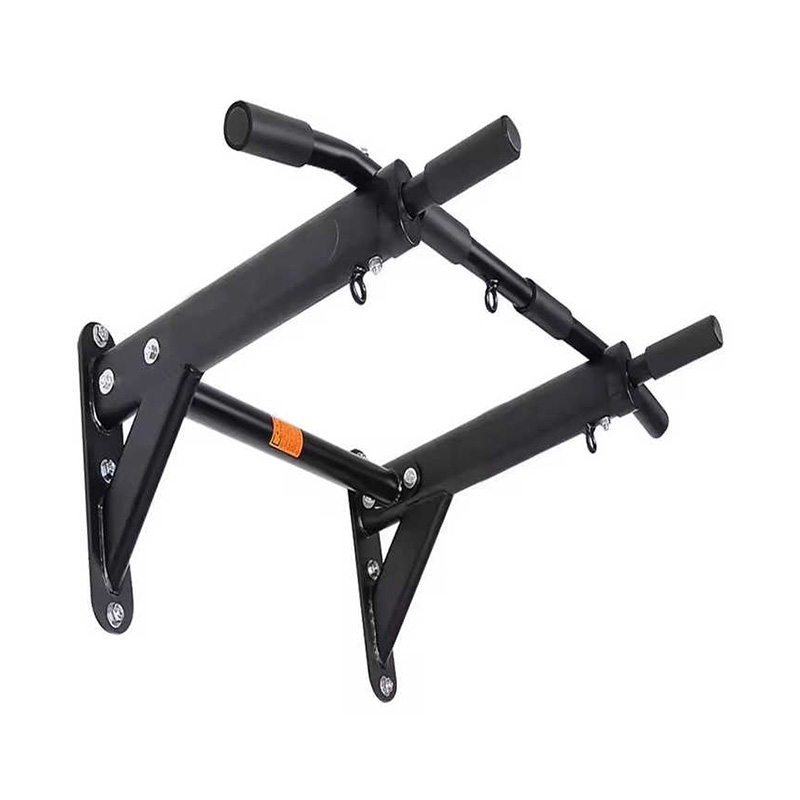
- Pull-up bar: Integrated into the top crossmember on most power cages, allowing upper-body accessory work between squat sets without moving to another station.
- Weight plate storage pegs: Built into the uprights on many models, keeping loaded plates accessible and the training area organized.
How to Set Up a Power Cage Correctly for Squats
Incorrect power cage setup is the leading cause of avoidable problems during squatting. Getting the height of both the J-hooks and safety bars right before loading the bar takes less than two minutes and makes every set dramatically safer.
- Set J-hook height: Stand inside the cage and position the J-hooks so the bar rests at approximately mid-chest height — roughly 2–3 inches below your shoulders. This lets you unrack with a slight knee bend rather than rising onto your toes or over-extending your back.
- Set safety bar height: Descend into your deepest squat position (with no bar) and note the height of your hips. Set the safety bars 1–2 inches below that point. They should never be so high that they contact the bar at the bottom of a good rep.
- Test with an empty bar: Perform 3–5 reps with an unloaded barbell to confirm both heights feel correct. Lower your hips fully and verify the bar clears the safety bars at the bottom.
- Confirm the walkout: Take 1–3 steps back to clear the J-hooks at the start, and confirm you can walk back in and re-rack smoothly at the end of each set.
- Practice the bail-out: Before loading heavy, practice deliberately setting the bar on the safety bars from your squat position. Knowing you can do this confidently removes psychological barriers to training near your limits.
Squat Variations You Can Do in a Power Cage
One of the major advantages of a power cage over a basic squat stand is that it supports a full range of squat variations safely — all at different bar heights and safety bar settings without moving the cage.
| Squat Variation | Primary Muscles Targeted | Power Cage Setup Note |
|---|---|---|
| Back Squat (High Bar) | Quads, glutes, hamstrings | Standard setup; bar on traps above rear delts |
| Back Squat (Low Bar) | Posterior chain, glutes, hamstrings | Lower J-hooks slightly; bar sits across rear delts |
| Front Squat | Quads, upper back, core | Raise J-hooks; bar rests on front delts/crossed arms |
| Box Squat | Posterior chain, glutes, hip hinge pattern | Place box inside cage; set safeties above box height |
| Pause Squat | Quads, core stability, positional strength | Standard setup; pause 2–3 seconds at bottom |
| Anderson Squat (Pin Squat) | Starting strength, sticking point development | Set safety bars at bottom position; start from dead stop |
| Goblet Squat (with landmine) | Quads, core, beginner technique | Use landmine attachment at base of cage upright |
Beyond Squats: Every Exercise a Power Cage Supports
A power cage's value extends far beyond squatting. The adjustable J-hooks and safety bars make it possible to perform virtually every major barbell movement from a single station — making it the highest-value single piece of strength equipment for a home gym or commercial training facility.
Upper Body Pressing
- Bench press: Move a flat bench inside the cage. Set safety bars at chest height. Now you can bench press heavy without a spotter — the single biggest barrier to solo bench press training is eliminated.
- Overhead press: Set J-hooks at upper-chest height and press the barbell overhead from inside the cage. Safety bars set at shoulder height protect against a missed rep overhead.
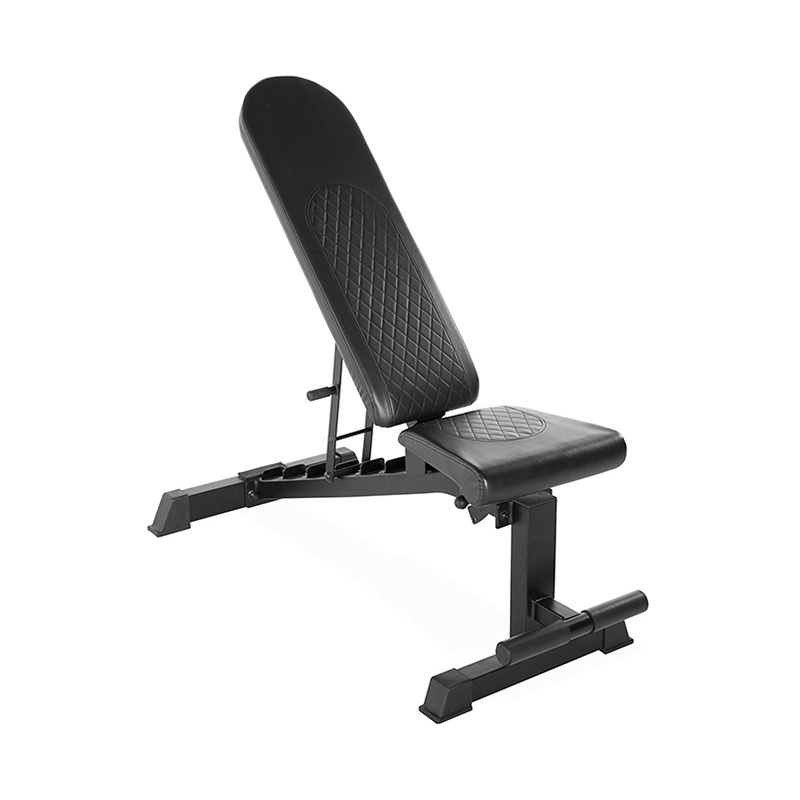
- Incline bench press: Use an adjustable incline bench inside the cage for incline pressing variations.
Pulling Movements
- Deadlift: Load the barbell inside the cage on the floor or on safety bars set to mid-shin height for rack pulls — a powerful way to overload the deadlift's lockout phase.
- Pull-ups and chin-ups: Use the integrated pull-up bar at the top of the cage for weighted or bodyweight pulling variations between barbell sets.
- Barbell rows: Perform pendlay rows or bent-over rows from the floor or from safety bars set at knee height for a reduced range-of-motion warm-up variation.
Accessory and Specialty Work
- Dip station: Many power cages include horizontal dip handles attached to the uprights or as accessory attachments, supporting weighted dips for tricep and chest development.
- Resistance band attachment: Band pegs at the base and top of the uprights allow accommodating resistance for squats and presses — a technique widely used in powerlifting programming.
- Cable pulley system: Many power cage models (including those offered by ntsporting.com) support optional cable pulley attachments, converting the cage into a functional trainer for cable rows, pull-downs, and rotational exercises.
Power Cage vs. Squat Stand vs. Half Rack: Which One for Squats?
Choosing the right squat equipment comes down to training goals, available space, and the need for safety redundancy. Here is a direct comparison of the three most common options:
| Feature | Power Cage | Half Rack | Squat Stand |
|---|---|---|---|
| Safety (solo squatting) | Maximum — full-length safety bars | Good — partial safety bars | Minimal — no safety bars |
| Exercise Versatility | Maximum | High | Limited |
| Floor Space Required | Largest footprint | Medium | Smallest |
| Attachment Options | Extensive | Moderate | Minimal |
| Best For | Solo lifters, home gym, commercial use | Intermediate lifters, space-limited gyms | Coached environments, technique work |
For anyone training alone — whether in a home gym or a commercial facility — a power cage is the clear choice. The full-length safety bars are not a luxury; they are what allows solo squatting at true working weights.
What to Look for When Choosing a Power Cage for Squatting
Not all power cages are built to the same standard. If squatting heavy is your primary use case, these are the specifications that matter most:
Steel Gauge and Frame Size
The frame tubing gauge determines structural rigidity. 11-gauge steel (approximately 3 mm wall thickness) is considered the standard for serious strength training cages; thicker is better for very high loads. Larger tubing cross-sections (such as 3×3 inch versus 2×2 inch profiles) resist lateral flex under heavy squat loads. For a home gym used by intermediate to advanced lifters, 11-gauge construction in a 2×2 inch or larger profile is a practical minimum.
Weight Capacity
Power cage weight ratings vary widely. For recreational and fitness training, a capacity rating of 400–600 lbs is sufficient. Serious strength athletes and powerlifters should look for cages rated at 1,000 lbs or more. Always verify whether the stated rating applies to the safety bars specifically, as that is the point of maximum load in a failed squat.
Hole Spacing on Uprights
The uprights are drilled with evenly spaced holes that accept the J-hooks and safety bar pins. Tighter hole spacing — 2-inch spacing or Westside spacing (1-inch in the bench zone) — allows finer height adjustment, which matters when dialing in exact safety bar positions for different squat depths and lifter heights.
Safety Bar Design
Look for safety bars with a wide contact surface and durable protective coating (such as rubber or high-density polyethylene inserts) to protect both the barbell knurling and the safety bar itself from repeated impact. Weld quality at the pin-hole attachment points is also critical — this is the highest-stress location on the entire cage.
Interior Width and Depth
The interior of the cage must be wide enough to accommodate your squat walkout — typically at least 42 inches of interior width is needed for standard Olympic barbells (86 inches between collar faces). Depth (front-to-back) determines how much space you have for stepping back from the J-hooks without hitting the rear uprights.
Power Cage Squats for Home Gym Training: Practical Considerations
A power cage transforms a home gym from a place for light conditioning work into a genuine strength training facility. Before purchasing, there are several practical factors to address:
- Ceiling height: Most full-size power cages stand 84–90 inches tall (approximately 213–230 cm). Add 6–12 inches for overhead press clearance at the top of the movement. A ceiling height of at least 100 inches (254 cm) is recommended for comfortable overhead work inside the cage.
- Floor protection: Heavy squat loads transferred through safety bars on a missed rep create significant impact force. Rubber gym flooring of at least 19 mm thickness under and around the cage protects the subfloor and protects the barbell and plates from damage.
- Footprint planning: Measure not just the cage footprint, but the full training zone — including barbell length (typically 86 inches for Olympic bars) plus clearance on both sides, and walkout space behind you. A 10×10 foot training area around the cage is a practical minimum.
- Floor anchoring: Many power cage models can be bolted to the floor for additional stability during maximum-effort squats and overhead pressing. This is strongly recommended for high-load use or if the cage will be installed on a raised platform.
- Accessory compatibility: If you plan to expand your training over time, choose a cage from a supplier — such as ntsporting.com — that offers a range of compatible attachments (cable pulleys, dip bars, landmine brackets, band pegs) for the same cage platform. This protects your investment as your training needs evolve.
Common Squat Mistakes a Power Cage Helps You Avoid
Beyond safety, training squats consistently inside a power cage addresses several of the most common squat technique errors — because the cage's structure provides immediate physical feedback and removes environmental limitations.
- Fear of going heavy: Without safety bars, many lifters subconsciously limit their working weight. The power cage removes this mental ceiling — knowing you can bail safely allows you to train at true working loads and actually progress.
- Depth avoidance: Safety bars set correctly at your target depth can be used as a depth reference — the bar should hover just above them at the bottom of each rep. This gives precise, consistent depth feedback on every set.
- Uneven bar path: The uprights of a power cage provide a visual vertical reference. If your bar drifts forward or back significantly on descent, you will notice it relative to the cage structure, prompting a technique correction.
- Skipping warm-up sets: With the barbell always accessible at the right height and plates stored on the cage, the friction of preparing for a squat session is minimized — making it far more likely you actually complete a proper warm-up before heavy working sets.